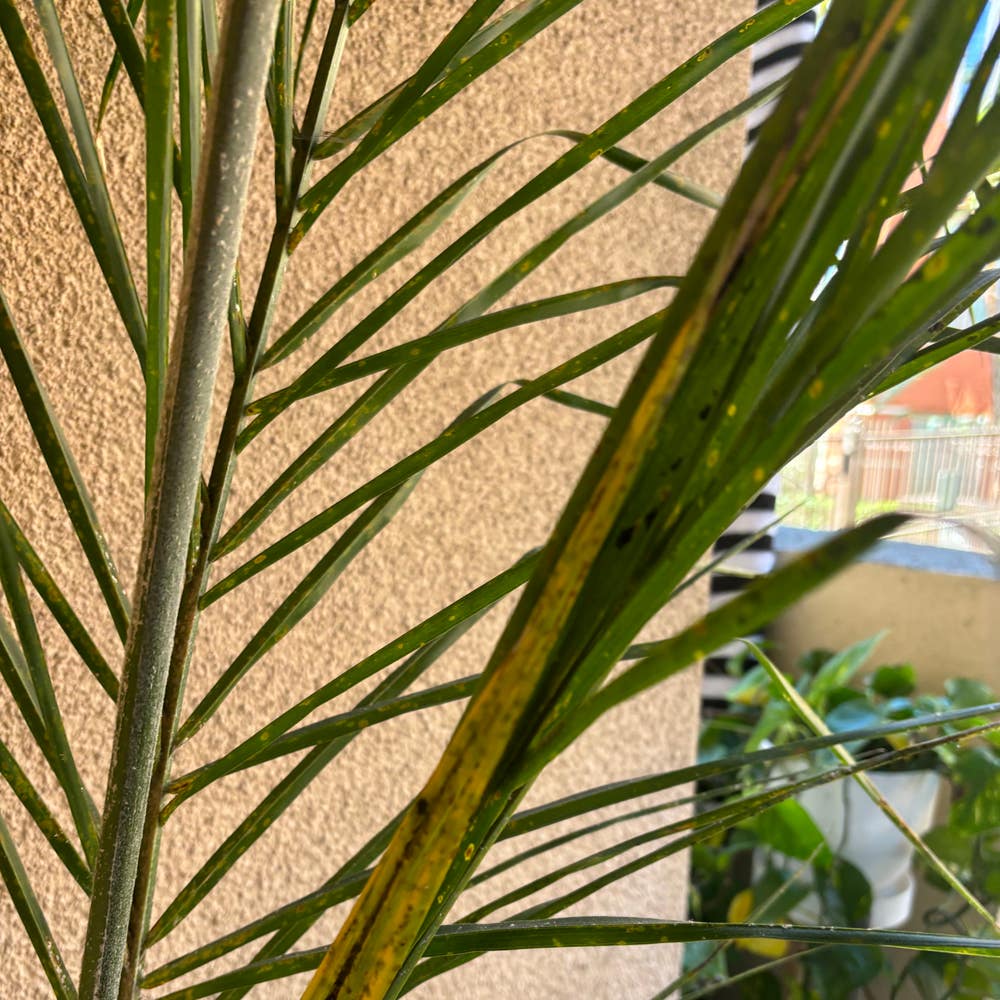
Why Are There Brown Spots on My Queen Palm?
Syagrus romanzoffiana
By the Greg Editorial Team
Jun 18, 2024•5 min read
This article was created with the help of AI so we can cover more plants for you. May contain errors. See one? Report it here.
Rescue your Queen Palm's regal look 👑 from brown spots with this essential care guide! 🌴
- Sunburn, fungi, nutrients, pests - main causes of brown spots on Queen Palms.
- Shade, fungicides, fertilizers, pest control - key to treating brown spots.
- 🌴 Seek professional help if brown spots persist or palm health declines.
Spotting the Trouble: Recognizing Brown Spots on Your Queen Palm
Queen Palms are not immune to the cosmetic blight of brown spots. Here's how to spot the signs before your palm's fronds turn into a polka-dotted eyesore.
🕵️♂️ Visual Cues: What Do the Brown Spots Look Like?
Shapes and sizes vary, from circular to elongated. These spots may start small and isolated but can merge into larger blotches. Look for discoloration that stands out against the healthy green of the leaves.
📈 Progression: How Do Brown Spots Develop and Spread on the Leaves?
Initially, you might notice a few innocuous specks. Without intervention, these specks can expand, leading to widespread foliage distress. Keep an eye on the spread; it's a race against time once the spotting begins.

The Usual Suspects: Pinpointing the Causes of Brown Spots
🌞 Overexposure to Sunlight
Sunburn isn't just for humans; Queen Palms can get it too. If your palm's leaves are sporting crispy brown patches, especially on the upper fronds, it's waving a flag for less sun. Rotate your palm or provide some shade to prevent the botanical equivalent of a nasty sunburn.
🍄 Fungal Infections
Fungal foes like leaf spot can turn your Queen Palm's leaves into a polka-dot mess. Look for uniform spots or lesions with yellow halos. These invaders thrive in dampness, so improving air circulation and reducing moisture can send them packing.
🍽️ Nutrient Deficiencies
Yellowing leaves with rusty patches? Your Queen Palm might be crying out for nutrients. Potassium deficiency is a classic culprit, often starting with older leaves. It's like the palm is on a bad diet—fix it with a balanced fertilizer that includes both potassium and magnesium.
🐜 Pest Infestations
Pests are sneaky little critters that can cause brown spots on your palm's leaves. Spider mites and scale are the usual suspects. They're like uninvited guests at a party, and they don't leave easily. Check for webbing or bumps on the leaves, and show these party crashers the door with the right insecticide.

The Rescue Plan: Treating Brown Spots on Queen Palm
☀️ Combating Overexposure
Queen Palms love the sun, but too much can lead to sunburned leaves. If your palm is basking in more light than a beachgoer without sunscreen, it's time to intervene. Provide some shade during the hottest parts of the day or consider relocating to a less intense spot. Relocation should be a last resort, though; these palms aren't fans of moving day.
🍄 Fighting Fungal Foes
Fungi, the silent saboteurs of the plant world, can wreak havoc on your Queen Palm. If you spot the telltale signs of fungal infection, reach for a fungicide containing copper hydroxide or copper salts of fatty acids. But don't just go spraying willy-nilly; improve air circulation first. This might mean spacing out your plants or trimming back excess foliage—think of it as giving your palm some breathing room.
🌿 Nourishing Your Palm
A Queen Palm with nutrient deficiencies is like a car running on fumes. Potassium and magnesium are the premium fuel for these tropical beauties. Opt for slow-release fertilizers that cater specifically to palm needs. Remember, it's a meal, not a snack—overdoing it with high-nitrogen fertilizers can lead to more harm than good.
🐜 Pest Control Tactics
Pests are the uninvited guests at your palm's dinner party. If you spot scale insects, those sticky little freeloaders, it's time for them to hit the road. A good rinse can dislodge dust and pests, but for a more stubborn infestation, horticultural oil or soap can show them the door. Ant stakes can also be a game-changer, keeping those pesky ants from protecting the scales and allowing natural predators to do their thing.

When to Call in the Cavalry: Seeking Professional Help
🚨 Recognizing the Signs
Persistent issues despite your best efforts signal it's time to consult an expert. If brown spots spread rapidly or the palm's overall health declines, don't hesitate.
🌿 Finding an Arborist
Start with a search for local arborists or plant specialists. Resources like the ISA Certified Arborist database or your county's Cooperative Extension Service are solid starting points.
💡 Quick Tips for Choosing a Specialist
- Seek recommendations from local gardening communities.
- Verify credentials and experience, especially with palms.
- Don't shy away from asking about their approach to treatment.
💰 The Cost of Expertise
Be prepared that professional advice might come with a fee. Consider it an investment in your palm's longevity and your peace of mind.
💸 Budgeting for the Call
- Get quotes from multiple experts to find the best value.
- Ask about potential follow-up visits or long-term care plans.
🕒 Acting Swiftly
The sooner you get professional input, the better the chances for your Queen Palm's recovery. Delay can mean the difference between a quick fix and a palm overhaul.
⏰ When to Make the Call
- If you've tried multiple remedies with no success.
- When the palm shows signs of severe distress.
Remember, expert intervention is not defeat—it's a strategic move to save your Queen Palm.
⚠️ Safety First
This content is for general information and may contain errors, omissions, or outdated details. It is not medical, veterinary advice, or an endorsement of therapeutic claims.
Always consult a qualified healthcare professional before using any plant as food, medicine, or supplement.
Never eat any plant (or feed one to pets) without confirming its identity with at least two trusted sources.
If you suspect poisoning, call Poison Control (800) 222-1222, the Pet Poison Helpline (800) 213-6680, or your local emergency service immediately.
Spotted an error? Please report it here.
Revive your Queen Palm's splendor by combating brown spots, and count on Greg's tailored care reminders 🌴 to keep it lush and healthy without the guesswork.