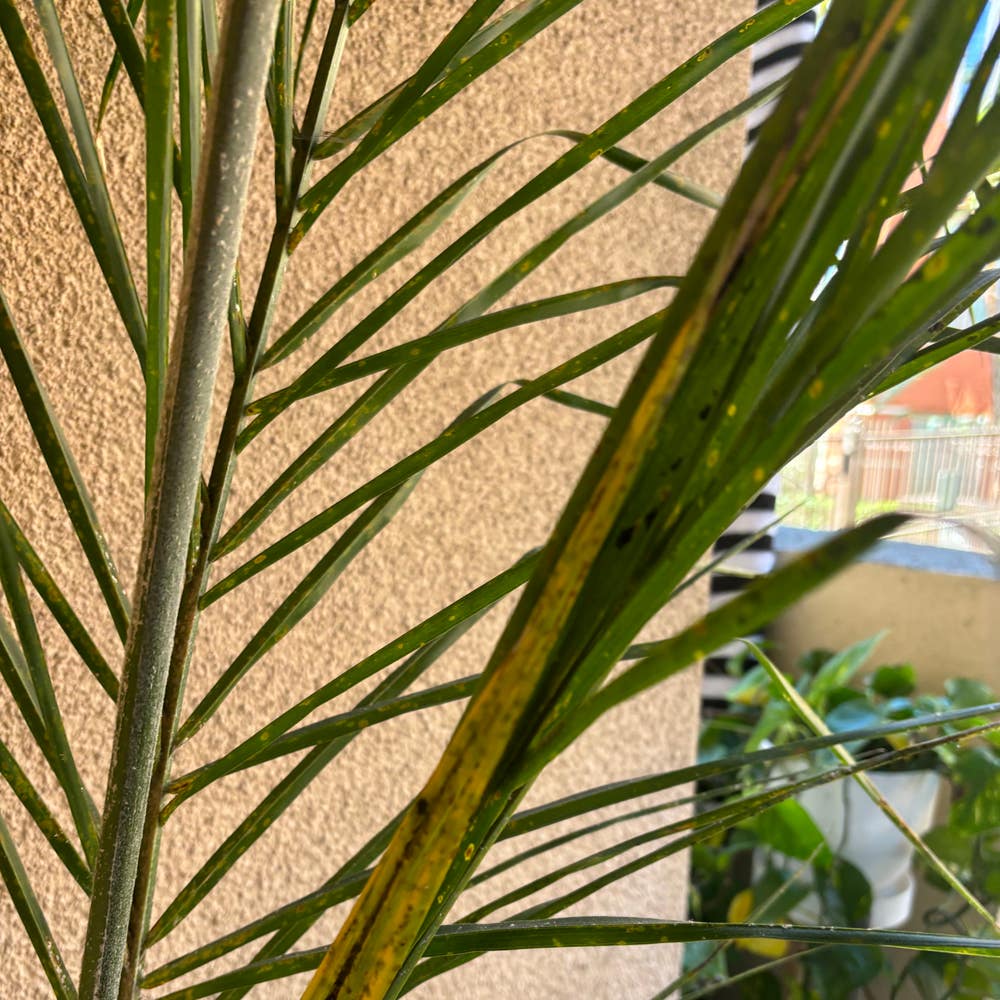
Why Are My Queen Palm Leaves Turning Yellow? 💛
Syagrus romanzoffiana
By the Greg Editorial Team
Jun 18, 2024•4 min read
This article was created with the help of AI so we can cover more plants for you. May contain errors. See one? Report it here.
Turn your Queen Palm's frown upside down 🌴—discover how to fix yellowing leaves for a thriving tropical paradise!
- 🌿 Nutrient deficiencies and pests lead to yellowing Queen Palm leaves.
- 💧 Proper watering and drainage are crucial to prevent yellowing.
- 🌱 Regular care and maintenance keep your Queen Palm vibrant and green.
Spotting the Signs: Yellowing Leaves on Queen Palms
💡 Recognizing Yellow Leaves
Yellowing leaves on your Queen Palm can be as subtle as a whisper or as loud as a shout for attention. Look for patterns in the yellowing—uniform discoloration might suggest a nutrient deficiency, while spotting could indicate pests or disease. Don't ignore the progression; if yellowing is spreading like a slow burn, it's time for action.
💭 Natural vs. Problematic Yellowing
It's a natural cycle for older, lower leaves to turn yellow and drop, but if your Queen Palm is shedding its green like it's going out of style, you've got a problem. Distress signals include yellowing at an alarming rate or affecting newer leaves. Stay sharp; natural aging shouldn't look like a plant-wide yellow alert.

Root of the Problem: Uncovering Causes of Yellowing
💧 Water Woes: Over and Underwatering
Yellowing leaves may wave a flag of distress due to water mismanagement. Overwatering can suffocate roots, leading to a nutrient blockade and a subsequent yellow parade on your palm's fronds. Conversely, underwatering turns leaves into crispy, brown-edged mementos of neglect. Balance is key; your palm's thirst isn't static and needs monitoring like a hawk.
🌿 Hungry Palms: Nutrient Deficiencies
It's not just about water; palms can get hangry too. Deficiencies in manganese or iron can turn your green beauty into a yellow mess. Leaves might yell "Feed me!" but they're picky eaters; a balanced diet is crucial. Fertilization isn't just throwing food at the problem; it's about precision and timing.
🐜 Uninvited Guests: Pest-Related Yellowing
Pests are the party crashers no one wants. They suck the life out of your palm, leaving behind a yellowing reminder of their feast. Scale bugs, spider mites, and the like are tiny but mighty foes. Early detection is your best weapon, and insecticidal soap might just be your trusty sidekick in this battle.

Turning Over a New Leaf: Treatment Strategies
💧 Adjusting Watering Practices
Overwatering and underwatering can turn your Queen Palm's leaves yellow faster than a banana left in the sun. To get it just right, allow the top inch of soil to dry out before giving your palm another drink. Ensure proper drainage to prevent your palm from drowning in excess H2O.
🌿 Feeding Your Palm Right
Yellow leaves might be your palm's way of saying, "I'm hungry!" A slow-release fertilizer can be the buffet it craves. Apply it in early spring, and watch for a nutrient boost. Remember, it's about quality, not just quantity—choose a fertilizer with the right nutrient balance for palms.
🐜 Pest Control Tactics
Pests can turn your palm into their personal salad bar. Integrated pest management is your strategic battle plan. Start with good hygiene—remove dead leaves promptly. If pests persist, show them the door with targeted treatments. It's a sniper approach: precise and effective. Keep an eye out for critters and act fast; it's the difference between a minor annoyance and an all-out infestation.

Staying Green: Prevention Tips
👀 Regular Monitoring and Maintenance
Keeping your Queen Palm in tip-top shape starts with vigilance. Like a hawk, keep a sharp eye on your palm's health. Spot changes early to prevent minor issues from escalating into full-blown problems. Check for pests, nutrient deficiencies, and water issues regularly, especially during growth spurts.
🛡️ Proactive Care for Queen Palms
Prevention beats cure when it comes to palm care. Ensure your Queen Palm never thirsts for too long or drowns in excess water. Strike a balance. Fertilize smartly—not all fertilizers are created equal. Look for ones with enough manganese to keep yellowing at bay. And remember, when it comes to trimming, less is more. Keep those fronds functional for photosynthesis.
⚠️ Safety First
This content is for general information and may contain errors, omissions, or outdated details. It is not medical, veterinary advice, or an endorsement of therapeutic claims.
Always consult a qualified healthcare professional before using any plant as food, medicine, or supplement.
Never eat any plant (or feed one to pets) without confirming its identity with at least two trusted sources.
If you suspect poisoning, call Poison Control (800) 222-1222, the Pet Poison Helpline (800) 213-6680, or your local emergency service immediately.
Spotted an error? Please report it here.
Transform your Queen Palm from yellow to green 🌿 with Greg's tailored care reminders, ensuring you tackle watering, nutrients, and pests just right from these tips!