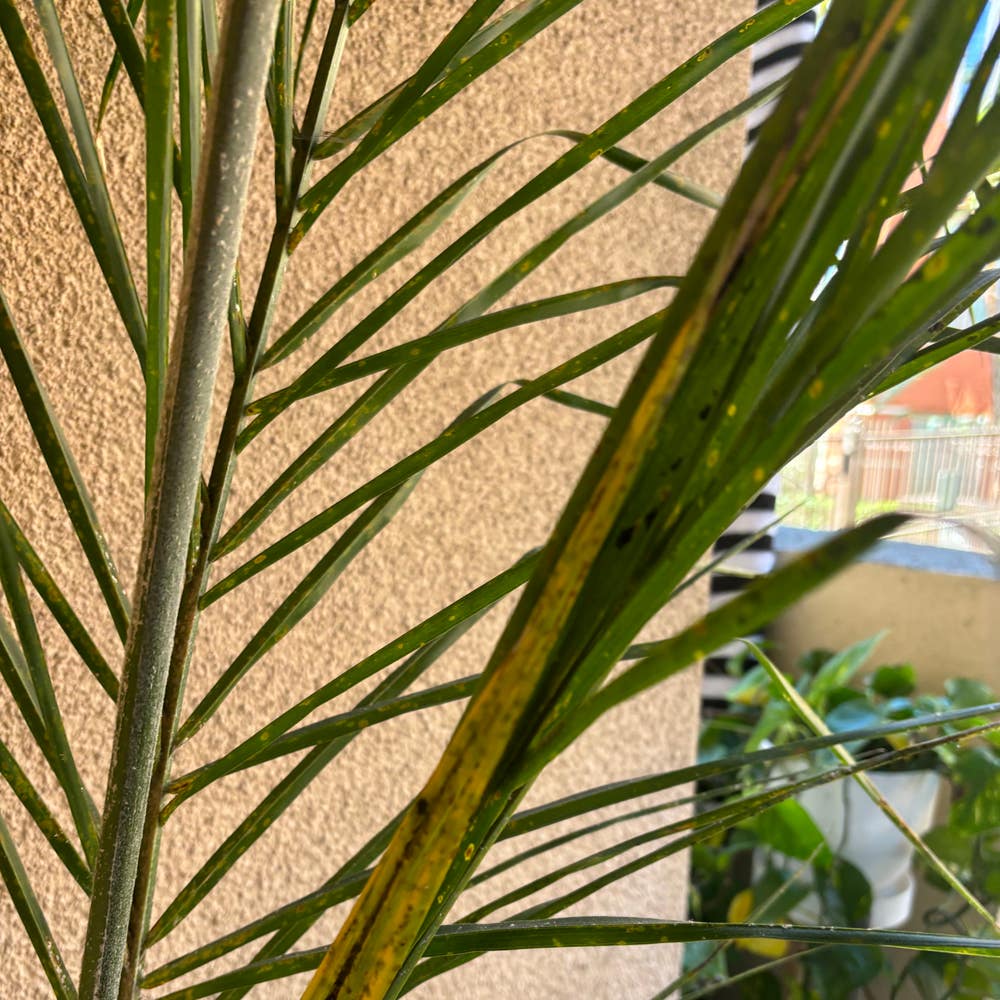
Black Spots on My Queen Palm Leaves
Syagrus romanzoffiana
By the Greg Editorial Team
Jun 18, 2024•4 min read
This article was created with the help of AI so we can cover more plants for you. May contain errors. See one? Report it here.
Protect your Queen Palm's royal foliage 👑 from black spots with this essential care guide.
- Black spots signal distress, often from fungal or bacterial infections.
- Fungicides and bactericides treat respective infections effectively.
- Prevent with sunlight, airflow, and cleanliness, and avoid overwatering.
Spotting the Trouble: Recognizing Black Spots
🕵️ What Do Black Spots Look Like?
Black spots on Queen Palm leaves are visual alarms. They may start as tiny specks and can grow into larger blotches. These spots are not just blemishes but signals of distress in your plant. Look for spots with concentric rings or distinct edges, as these are classic signs of trouble.
🕵️ Where to Find Them on Your Queen Palm
Inspect both sides of the leaves, as black spots like to play hide-and-seek on the undersides. If you find the spots are spreading or the leaf's texture is changing, it's a clear indication that your Queen Palm is calling for help. Remember, the location and spread of these spots are clues to addressing the underlying issue.

Unveiling the Culprits: Causes of Black Spots
🍄 Fungal Foes: Common Fungal Infections
Fungi are the stealthy invaders of the plant world, often causing havoc before you even notice. Circular brown lesions with yellow halos are the classic signs of a fungal infection. These spots may start as minor blemishes but can escalate to a full-scale assault on your Queen Palm's leaves.
🦠 Bacterial Baddies: How Bacteria Contribute
Bacteria are the sneaky perpetrators that thrive in the cozy, moist environments we sometimes unwittingly create for our plants. Look for spots with dark margins or concentric rings, which are clear indicators of bacterial shenanigans. These tiny invaders can transform from specks to large blotches if not addressed promptly, much like an uninvited guest overstaying their welcome.
🌿 Environmental Accomplices
It's not just about the pathogens themselves; the environment plays a role too. Overwatering, high humidity, and poor air circulation are like rolling out the red carpet for these fungal and bacterial party crashers. They're opportunistic, and given the right conditions, they'll turn your Queen Palm's leaves into their own personal dance floor.

The Battle Plan: Treating Black Spots
🦠 Decoding Symptoms: Is It Fungal or Bacterial?
Texture is your tell. Fungal spots are typically crusty or powdery, while bacterial spots feel slimy. Look for halos too; red or yellow rings often accompany fungal infections. Bacterial spots, on the other hand, lack the halo but may cause the leaf to feel wetter than usual.
💊 Fungicide to the Rescue: Treating Fungal Infections
When it's a fungal party, fungicides are your bouncers. Options range from neem oil to baking soda solutions. Mix one tablespoon of baking soda with a gallon of water and a dash of horticultural oil for adherence. Apply this mixture weekly until the fungus gets the message.
🦠 Antibacterial Action: Addressing Bacterial Issues
For bacterial uninvited guests, copper compounds and specific bactericides are your go-to. They're like the plant's immune boosters. Prune the affected areas first, then apply treatments. Remember, it's a delicate balance—too much can harm the plant, so follow the instructions like your plant's life depends on it (because it does).

Fortifying Your Palm: Prevention Tactics
🌞 Cultivating Resistance: Environmental Management
Sunlight and airflow are your Queen Palm's best pals. Position your palm where it can bask in ample indirect light, and ensure the air isn't stagnant. A gentle breeze, natural or assisted by a fan, can work wonders in deterring diseases.
🌿 Pruning and Cleanliness: Keeping Infections at Bay
Regular sanitation is like a spa day for your palm. Remove dead foliage and clear debris to prevent fungal and bacterial parties. Sterilize your pruning shears between cuts to avoid spreading any potential infections like a bad rumor.
Keep your palm's soil just right—not too wet, not too dry. Overwatering is the root of all evil, leading to soggy, sad roots. If your palm is potted, double-check those drainage holes. They're the escape routes for excess water, and you want them clear.
Lastly, don't skimp on the nutrients. A well-fed Queen Palm is a resilient one. Stick to a fertilization schedule that makes sense for your palm's needs, and you'll be rewarded with a robust plant that's less likely to succumb to the dark side of plant diseases.
⚠️ Safety First
This content is for general information and may contain errors, omissions, or outdated details. It is not medical, veterinary advice, or an endorsement of therapeutic claims.
Always consult a qualified healthcare professional before using any plant as food, medicine, or supplement.
Never eat any plant (or feed one to pets) without confirming its identity with at least two trusted sources.
If you suspect poisoning, call Poison Control (800) 222-1222, the Pet Poison Helpline (800) 213-6680, or your local emergency service immediately.
Spotted an error? Please report it here.
Banish black spots 🍃 on your Queen Palm by relying on Greg's custom watering plan and environmental alerts to keep your tropical beauty thriving and disease-free.