Am I Starving My Queen Palm? Fertilizing 101
Syagrus romanzoffiana
By the Greg Editorial Team
Jun 18, 2024•5 min read
This article was created with the help of AI so we can cover more plants for you. May contain errors. See one? Report it here.
Avoid the perils of under or over-fertilizing and watch your Queen Palm flourish with these essential tips! 🌴✨
- 🌸 Spring fertilization preps Queen Palms for growth and blooming.
- Consistent feeding through seasons supports health; reduce in fall, minimize in winter.
- Avoid over-fertilization; watch for leaf burn, flush soil if needed.
Timing is Everything: When to Fertilize Your Queen Palm
⏰ Seasonal Smarts: Fertilizing through the Year
Spring is the kick-off for Queen Palm fertilization, setting the stage for growth and bloom prep. As the weather warms, your palm is gearing up for a season of lush foliage and, if you're lucky, flowers that make your neighbors green with envy.
Come summer, it's time to maintain momentum. Your Queen Palm's appetite for nutrients is at its peak, so keep the fertilizer coming. Think of it as keeping the gas tank full during a cross-country road trip – nobody wants to stall in the middle of nowhere.
As fall approaches, your palm starts to wind down. It's like the plant's getting ready to binge-watch Netflix all winter, so it doesn't need as much to eat. Ease up on the fertilizer as the temperatures drop.
Winter is the palm's lazy phase. It's not growing, it's not blooming – it's just chilling. So, you should chill on the fertilizing too. Overdoing it now is like offering a hibernating bear a five-course meal.
🌱 Growth Spurts: Fertilizing During Developmental Phases
For new plantings, the first feed is like a baby's first meal. It's crucial, so make it count. Use a balanced, palm-specific fertilizer to welcome your green baby to its new home.
Established palms are like teenagers – always hungry. They need consistent feeding to support their growth spurts. Stick to the recommended schedule and watch your palm reach for the sky.

Picking the Perfect Food: Fertilizer Types for Your Queen Palm
🌱 Slow-Release vs. Liquid Gold
Slow-release fertilizers are the marathon runners of plant nutrition, releasing nutrients gradually over time. This means less frequent applications and a reduced risk of nutrient leaching with heavy rainfall. They're like a trust fund for your Queen Palm, providing a steady income of nutrients. However, they can be less responsive to immediate nutritional needs during rapid growth phases.
On the flip side, liquid fertilizers are the sprinters. They provide a quick nutrient boost, perfect for that instant gratification when your palm looks a bit lackluster. They're easy to apply and the absorption rate is fast, but you'll be on a tighter schedule as these liquid meals need to be served up more often.
🌿 Organic Matters: Going Green with Fertilizers
Organic fertilizers are the clean eaters of the plant world. They feed your Queen Palm with natural materials like bone meal, compost, or manure. These options not only nourish your palm but also improve soil structure and microbial life. Think of it as a probiotic smoothie for your soil. Organic options can also promote more vibrant blooms, making your Queen Palm the envy of the neighborhood.
🧪 Synthetic Solutions: Quick Fixes for Hungry Palms
Sometimes your Queen Palm needs a fast food fix, and that's where synthetic fertilizers come in. They're scientifically formulated to meet specific nutritional requirements and are highly concentrated. Synthetics can be a lifesaver when your palm is in dire need of certain nutrients. But beware, overuse can lead to salt build-up in the soil and potentially harm your palm's delicate roots. Use them wisely, like a potent spice, not the main ingredient.

Feeding Without Frying: Fertilization Techniques for Queen Palms
💊 Dosage Decoded: How Much is Just Right?
Calculating the perfect portion for your palm is more art than science. Start by eyeballing the size and age of your Queen Palm, then peek at the product label for a rough guide. Spread the granules around the drip line, not too cozy with the trunk, and give it a bit of space beyond the fronds' reach. Remember, once a year is your bare minimum, but your palm's appetite may vary with the seasons.
🌱 Application Mastery: Getting the Fertilizer to the Roots
Even distribution is key; think of it as seasoning a gourmet dish. Begin your fertilizing fiesta about a foot from the trunk and let it rain nutrients all the way past the canopy's drip line. After the party, drench the soil with water to a depth of a foot to ensure those tasty morsels reach the roots. For potted pals, mix in slow-release fertilizers and treat them to a seaweed solution spa day. It's all about getting those good vibes down where it counts—root level.

Oops, Too Much!: Recognizing and Resolving Over-Fertilization
🚫 Spotting the Signs: When Your Queen Palm Has Had Enough
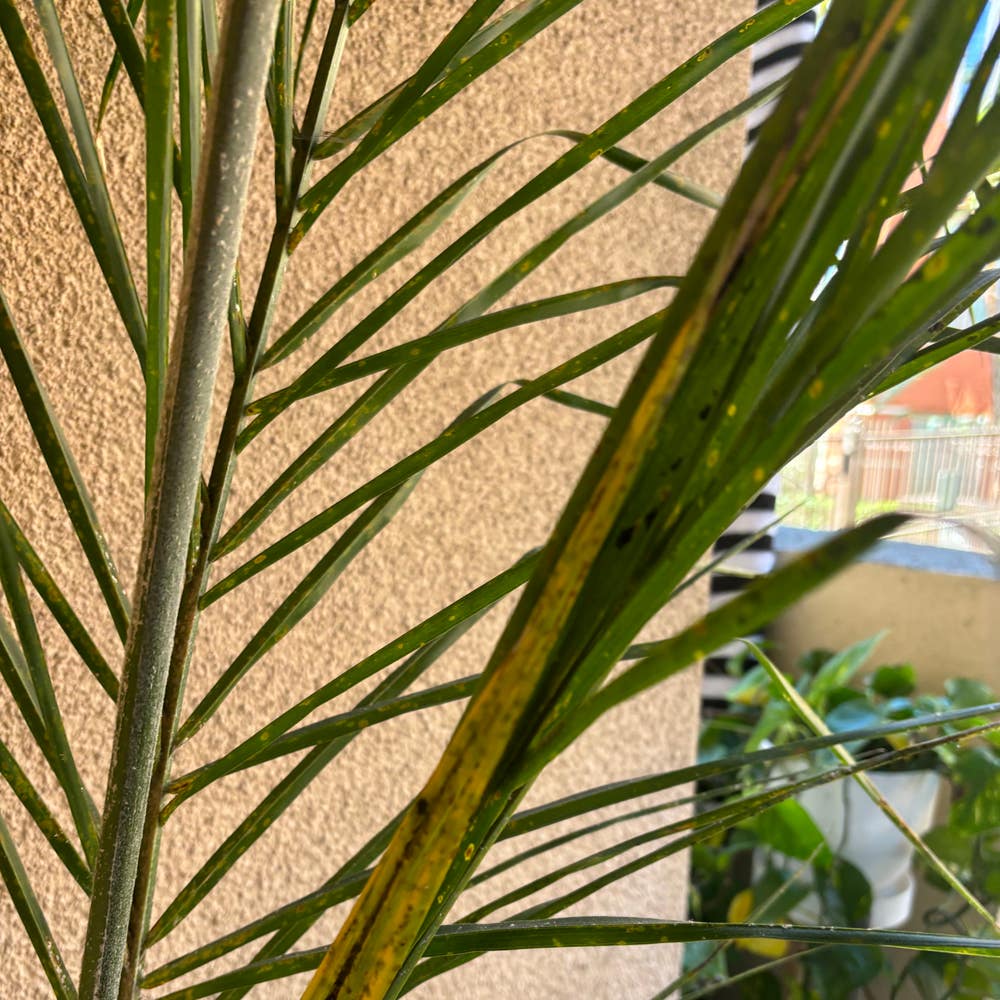
Over-fertilization can turn your Queen Palm's paradise into a wasteland. Leaf burn is your first clue; it's like the palm is waving a white flag. If you see yellowing or browning at the tips and margins of the leaves, it's time to rethink your fertilizing strategy. A crusty white layer of salt on the soil is another dead giveaway—your palm is practically begging for a break.
🛠 Damage Control: Bouncing Back from Over-Fertilization
If you've overdone it with the fertilizer, don't beat yourself up—act fast. First, stop fertilizing immediately. No "one last feed" or "just a little bit more"; it's an intervention time. Flush the soil with water to wash away excess nutrients. This isn't a one-and-done deal; you might need to do it a few times, like hitting the reset button. Prune the damaged leaves; they're not coming back, and it's better to focus energy on recovery. In severe cases, replace the top layer of soil or consider repotting. When your palm shows signs of life again, ease back into fertilizing with the caution of a tightrope walker.
⚠️ Safety First
This content is for general information and may contain errors, omissions, or outdated details. It is not medical, veterinary advice, or an endorsement of therapeutic claims.
Always consult a qualified healthcare professional before using any plant as food, medicine, or supplement.
Never eat any plant (or feed one to pets) without confirming its identity with at least two trusted sources.
If you suspect poisoning, call Poison Control (800) 222-1222, the Pet Poison Helpline (800) 213-6680, or your local emergency service immediately.
Spotted an error? Please report it here.
Avoid the royal pain of over-fertilization and ensure your Queen Palm thrives with seasonal reminders 🌴 from Greg, tailored to keep your greenery in regal health.