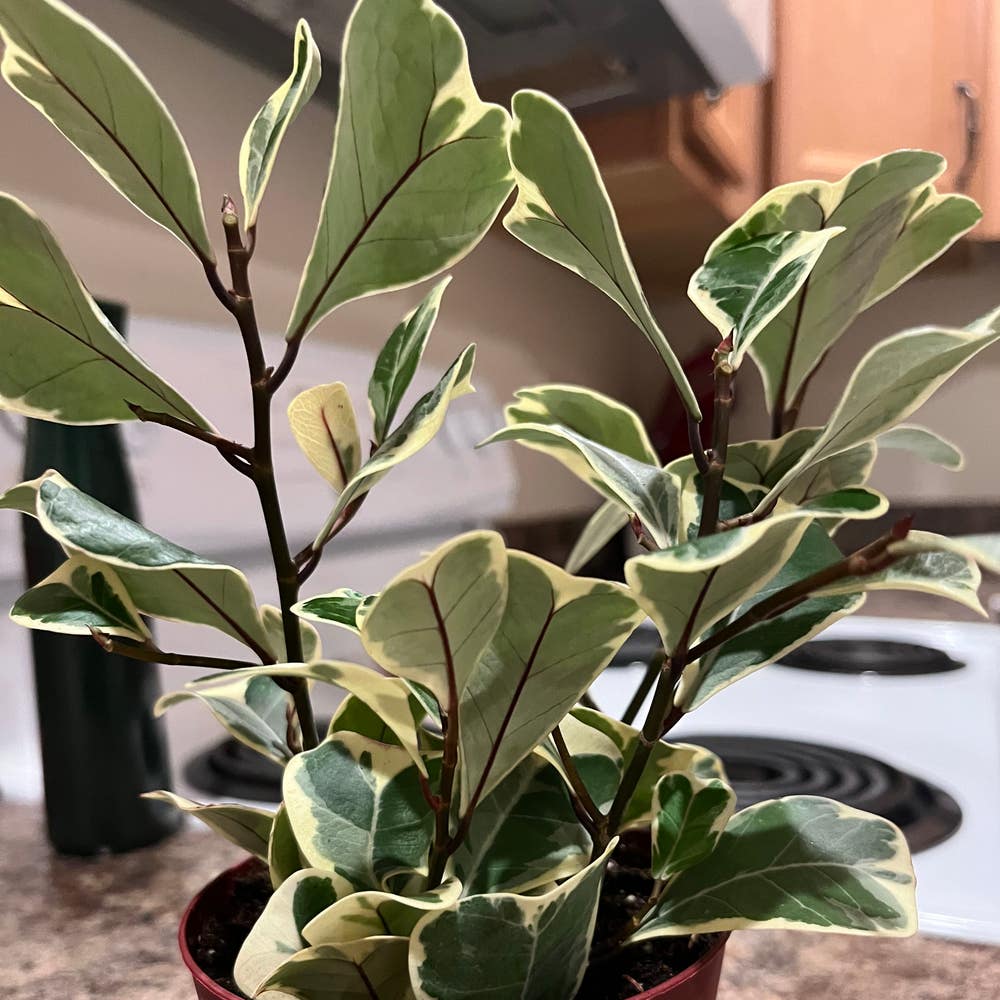
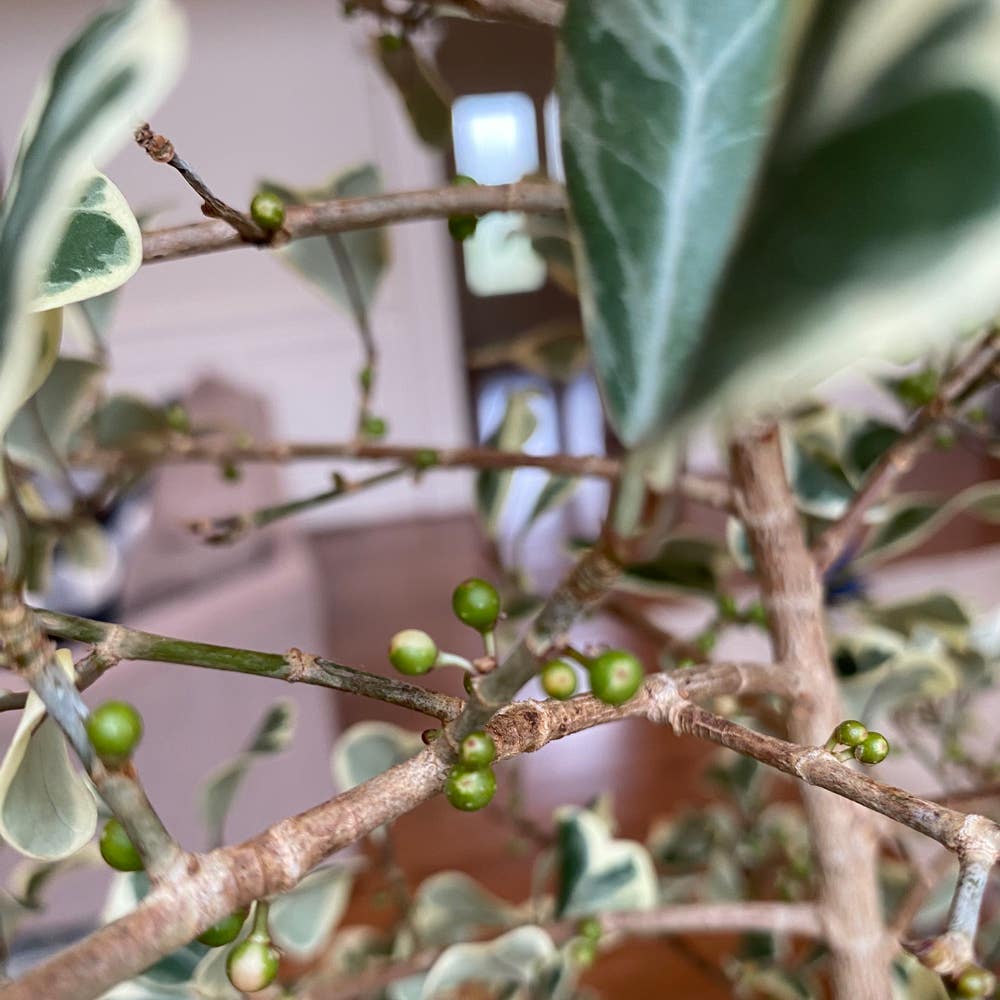
🔺 6 Essential Indoor Variegated Triangle Fig Care Routines
Ficus triangularis 'Variegata'
By the Greg Editorial Team
Sep 28, 2024•6 min read
This article was created with the help of AI so we can cover more plants for you. May contain errors. See one? Report it here.
Transform your variegated triangle fig into a stunning centerpiece with essential care tips for vibrant growth! 🌱
- 🌞 Variegated triangle figs need 6-8 hours of bright, indirect sunlight for optimal growth.
- 💧 Water only when the top 1-2 inches of soil are dry to prevent overwatering.
- 🌿 Maintain humidity between 50-70% to keep leaves healthy and variegation vibrant.
Light Requirements
Ideal Light Conditions for Growth 🌞
For your variegated triangle fig to thrive, it needs bright, indirect sunlight for about 6-8 hours daily. While it can adapt to lower light levels, this may compromise its stunning variegation and slow down growth.
Role of Grow Lights 💡
If natural light is lacking, grow lights become essential. They supplement sunlight, ensuring your plant gets the light it craves, especially during those gloomy months.
Types of Grow Lights 🔦
When choosing grow lights, you’ll typically encounter two main types: LED and fluorescent. LEDs are energy-efficient and long-lasting, while fluorescents are often more affordable upfront.
How to Choose the Best Grow Light 🛠️
Selecting the right grow light involves a few key factors.
Light Spectrum
Opt for full-spectrum lights that closely mimic natural sunlight. This ensures your plant receives the necessary wavelengths for photosynthesis.
Wattage and Coverage
Make sure the wattage is adequate based on your plant's size and the room dimensions. A higher wattage is often needed for larger plants or darker spaces.
Placement
Position your grow lights 12-24 inches above the plant. This distance maximizes effectiveness while preventing leaf burn.
By understanding these light requirements, you can create the perfect environment for your variegated triangle fig. Next, let’s dive into its watering needs to keep it hydrated and healthy.
Watering Needs
Frequency and Amount of Water 🌊
Watering your variegated triangle fig is crucial for its health. Allow the top 1-2 inches of soil to dry out between waterings to prevent over-saturation.
When you do water, ensure you soak the soil thoroughly until water drains from the bottom. This guarantees that the roots receive the moisture they need without sitting in water.
Signs of Overwatering and Underwatering 🚨
Recognizing the signs of overwatering is essential. Look for yellowing leaves, mushy stems, and root rot as clear indicators that your plant is getting too much water.
On the flip side, underwatering can also be detrimental. If you notice wilting leaves, dry soil, or leaf drop, it’s time to adjust your watering routine.
By keeping an eye on these signs, you can maintain a healthy watering schedule that supports your plant's growth.
Next, let’s explore the optimal humidity and temperature conditions for your triangle fig.
Humidity and Temperature
Optimal Humidity Levels 🌧️
Maintaining the right humidity is crucial for your variegated triangle fig. Aim for a humidity range of 50-70% to promote optimal growth.
Low humidity can lead to leaf browning and a loss of variegation, diminishing the plant's beauty. Keeping an eye on humidity levels can make a significant difference in your plant's health.
Temperature Preferences 🌡️
Your triangle fig thrives in a temperature range of 65°F to 80°F (18°C to 27°C). It's essential to protect it from cold drafts, so avoid placing it near windows or doors during winter.
Temperature fluctuations can stress the plant, leading to unwanted issues. A stable environment helps keep your fig vibrant and healthy.
Humidity Control Methods 💧
To maintain consistent humidity levels, consider using a humidifier. This can be especially helpful during dry seasons or in air-conditioned spaces.
Another effective method is using pebble trays. Simply place your pots on trays filled with water and pebbles to increase local humidity around the plants. This simple trick can create a mini oasis for your triangle fig.
By ensuring the right humidity and temperature, you set the stage for your plant to flourish. Next, let’s dive into the best soil and fertilization practices to keep your fig thriving.
Soil and Fertilization
🌱 Best Soil Types for Drainage
For your variegated triangle fig, a well-draining potting mix is essential. Combining standard potting soil with perlite or orchid bark enhances drainage, preventing root rot and promoting healthy growth.
📅 Fertilization Schedule and Types of Fertilizers
During the growing season, fertilize every 4-6 weeks to keep your plant thriving. A balanced liquid fertilizer, like NPK 20-20-20, diluted to half strength, provides the nutrients your fig needs without overwhelming it.
Maintaining the right soil and fertilization routine is crucial for your plant's health. With these practices, you'll set your variegated triangle fig up for success, ensuring vibrant growth and stunning variegation.
Next, let’s explore how to tackle common issues and maintain your plant’s appearance.
Common Issues, Solutions, and Placement
🐛 Pests and Diseases
Common Pests
Indoor variegated triangle figs can attract a few pesky pests. Spider mites are notorious for leaving webbing and stippled leaves, while mealybugs appear as cotton-like masses on stems and leaves.
Prevention and Treatment Methods
To keep these pests at bay, conduct regular inspections of your plants weekly. If you spot any unwelcome guests, consider using neem oil, insecticidal soap, or introducing beneficial insects to help manage the infestation.
✂️ Maintenance of Appearance
Pruning Techniques
Pruning is essential for maintaining a healthy appearance. Aim to prune in early spring to encourage bushier growth, trimming back any leggy growth and removing dead or yellowing leaves.
How to Maintain Variegation
Light plays a crucial role in maintaining vibrant variegation. Ensure your plant receives adequate light and keep a consistent care routine to avoid stress-induced leaf loss.
🏡 Best Locations in the Home
Finding the right spot for your triangle fig is key. Place it near east or west-facing windows for optimal light, but be cautious to avoid direct sunlight and cold drafts.
🌧️ Considerations for Light and Humidity in Placement
Before settling your plant in a new location, assess the room's light levels and humidity. Grouping your triangle fig with other humidity-loving plants can create a beneficial microclimate, enhancing its overall health.
With these tips, you can effectively manage common issues and ensure your indoor variegated triangle fig thrives in its environment. Next, let’s explore how to adjust care routines with the changing seasons.
Seasonal Care
Adjusting Care Routines with Seasonal Changes 🌱
As the seasons shift, so should your care routines for your variegated triangle fig. In spring and summer, increase your watering and fertilization; this is when your plant is actively growing and needs more nutrients.
Conversely, during fall and winter, dial back on watering and stop fertilization altogether. Your plant enters a dormant phase, requiring less moisture and nutrients to thrive.
Winter Care Tips for Indoor Plants ❄️
Winter can be tough on indoor plants, so take extra precautions. Move your triangle fig away from windows and doors to protect it from cold drafts that can stunt its growth.
To combat dry indoor air, consider using humidifiers or pebble trays. These methods help maintain the humidity levels your plant craves, ensuring it stays healthy throughout the colder months.
With these seasonal adjustments, your variegated triangle fig will flourish year-round. Next, let’s dive into the common issues you might face and how to tackle them effectively.
⚠️ Safety First
This content is for general information and may contain errors, omissions, or outdated details. It is not medical, veterinary advice, or an endorsement of therapeutic claims.
Always consult a qualified healthcare professional before using any plant as food, medicine, or supplement.
Never eat any plant (or feed one to pets) without confirming its identity with at least two trusted sources.
If you suspect poisoning, call Poison Control (800) 222-1222, the Pet Poison Helpline (800) 213-6680, or your local emergency service immediately.
Spotted an error? Please report it here.
Keep your variegated triangle fig thriving 🌿 with Greg's tailored reminders for watering and light, ensuring it gets the consistent care it craves!