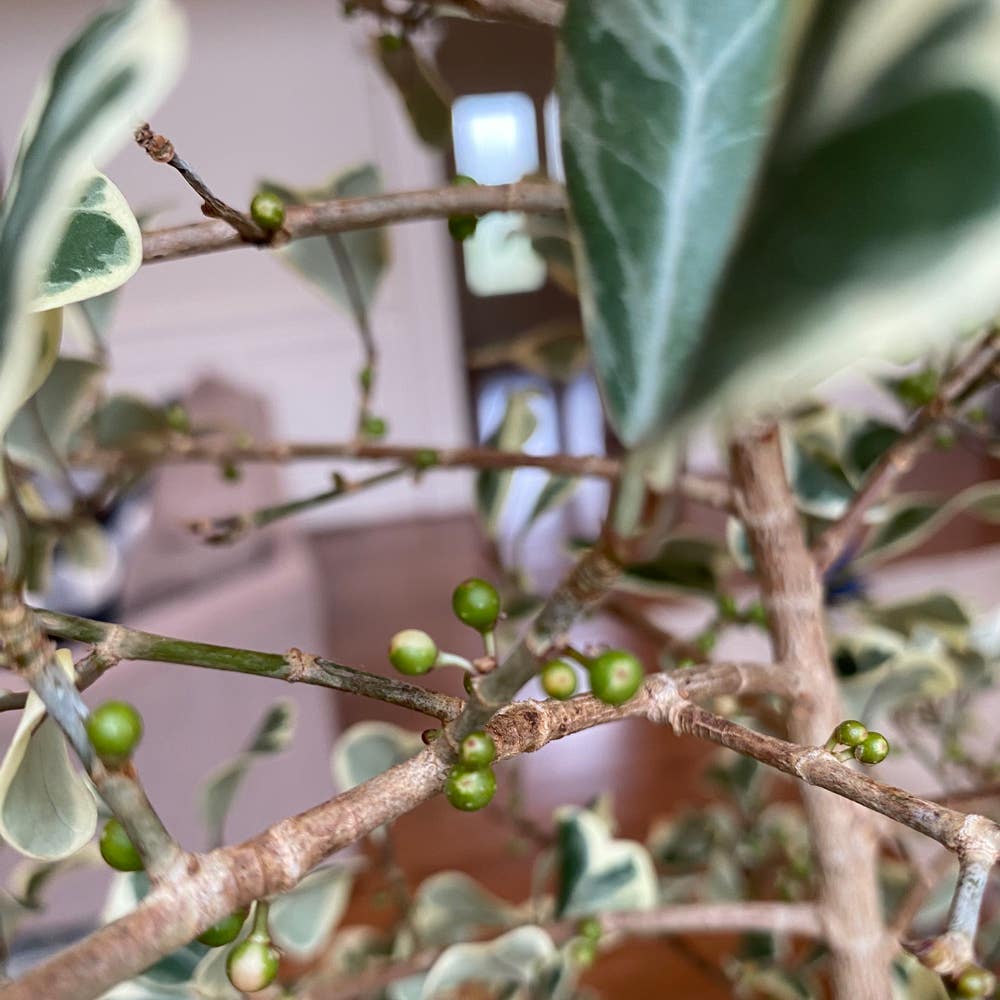
Choosing Fertilizer For My Ficus triangularis 'Variegata'
Ficus triangularis 'Variegata'
By the Greg Editorial Team
Jun 18, 2024•4 min read
This article was created with the help of AI so we can cover more plants for you. May contain errors. See one? Report it here.
Flourish your Ficus 'Variegata' 🌿 with the ultimate fertilizer guide for vibrant, healthy growth!
- N-P-K ratio of 3:1:2 is key for leafy growth and variegation.
- 🌱 Fertilize bi-weekly to monthly during growth, less in winter.
- Prevent over-fertilization: water first, dilute liquids, and watch for signs.
Picking the Perfect Fertilizer
💡 Nutrient Know-How
Nitrogen is the leafy growth champion your Ficus triangularis 'Variegata' craves. The N-P-K ratio—3:1:2—is your golden ticket, ensuring those triangular leaves stay lush. But don't overlook micronutrients; they're the unsung heroes behind that vibrant variegation.
🍽️ Organic vs. Synthetic: Making the Choice
Organic fertilizers are like slow food for your Ficus, releasing nutrients at a leisurely pace and fostering a healthy soil biome. Synthetic options, on the other hand, are the fast food of plant nutrition—quick and potent. Your choice influences not just growth, but also how your Ficus blooms. Go organic for steady, sustainable support or synthetic for a more immediate boost.

Timing is Everything: Fertilizing Schedule
🌱 Growing Season Guidelines
Spring and summer are your Ficus triangularis 'Variegata's prime time. This is when you should ramp up your fertilizing efforts, targeting every two to four weeks with a balanced fertilizer. The goal is robust growth, so don't hold back during these months.
Adjusting for the blooming phase, if your Ficus decides to show off with flowers, tweak the schedule. A bi-weekly feeding might be more appropriate, and watch for cues that your plant is ready to bloom.
❄️ Winter Wisdom
Come winter, it's time to dial back. Your Ficus is likely to enter a period of dormancy, so over-fertilizing is as unnecessary as sunglasses at night. Reduce fertilizing to once every month or two, depending on your plant's behavior.
Observe your Ficus closely. If it's still pushing out growth in cooler months, a little extra might be appreciated. But if it's taking a break, let it rest without the extra nutrients. Stay flexible and adjust as needed.

Fertilizer Application: Tips and Tricks
🌱 Method Matters
🥤 Liquid Love: Dilution Tips for Happy Leaves
Dilution is your Ficus' best friend. Mix liquid fertilizer to half-strength before application. This prevents nutrient shock, ensuring your plant's leaves stay vibrant, not vengeful. Apply directly to the soil, steering clear of the leaves to dodge potential burns.
🌿 Granular Goodness: How to Apply Without Overwhelming
Granular fertilizers are a slow-release option for the patient plant parent. Sprinkle them around the soil's surface, not directly at the plant's base. Think of it as a gentle, sustained hug for the roots, releasing nutrients gradually without suffocating them.
🍃 Avoiding Foliage Fiascos
To keep your Ficus' foliage from frying, never fertilize dry soil. Water your plant before feeding—it's like prepping the dinner table before serving a meal. This simple step can save you from the heartache of crispy, brown-tipped leaves.
Remember, your Ficus triangularis 'Variegata' doesn't have a "more is better" mentality. Stick to the recommended dosage and frequency to maintain a harmonious relationship with your leafy friend.

Recognizing and Rescuing from Over-Fertilization
🚩 Spotting the Signs
Your Ficus triangularis 'Variegata' might be screaming for a break if you notice yellowing or browning at the tips of its leaves. A crust of mineral salts on the soil's surface is like a red flag at a bullfight—it means stop. If the roots look like they've been through a chemical warzone, or the plant's dropping leaves like they're going out of fashion, you've likely overdone it with the fertilizer.
🗺 The Recovery Roadmap
Caught in the act of over-fertilizing? Cease all fertilization pronto to halt the damage. Gently remove any visible fertilizer from the soil to prevent further nutrient uptake. It's time to flush things out: drench the soil with water several times over a few days to leach out the excess. This is the plant equivalent of a detox. Snip away the damaged leaves to help your Ficus focus on bouncing back. If things look grim, consider a soil transplant—replace the top layer or go for a full repotting. Hold off on the nutrient boost until your Ficus shows signs of recovery—then reintroduce fertilizer with the caution of a bomb disposal expert.
⚠️ Safety First
This content is for general information and may contain errors, omissions, or outdated details. It is not medical, veterinary advice, or an endorsement of therapeutic claims.
Always consult a qualified healthcare professional before using any plant as food, medicine, or supplement.
Never eat any plant (or feed one to pets) without confirming its identity with at least two trusted sources.
If you suspect poisoning, call Poison Control (800) 222-1222, the Pet Poison Helpline (800) 213-6680, or your local emergency service immediately.
Spotted an error? Please report it here.
Nurture your Ficus triangularis 'Variegata' with the perfect N-P-K balance and let Greg keep track of the fertilizing schedule 📅 for lush, vibrant leaves.