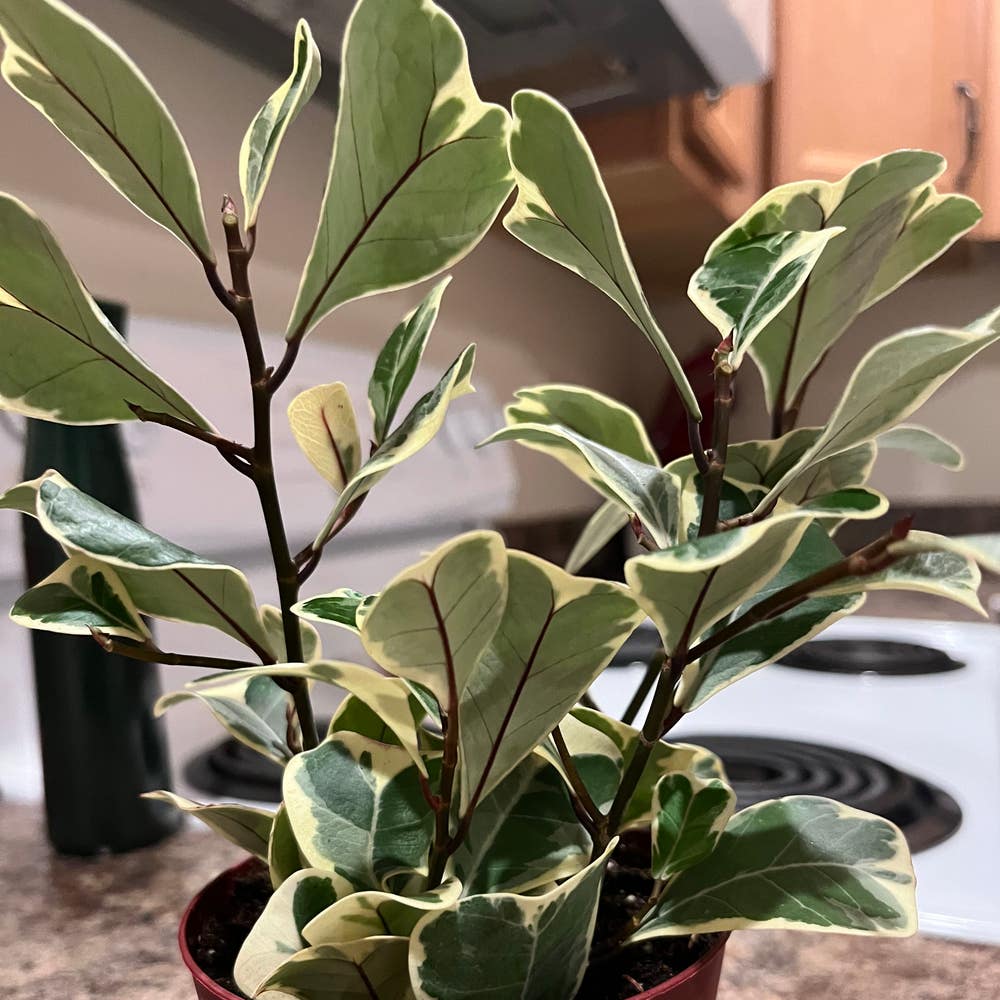
What Do I Do About Ficus Triangularis 'Variegata' Root Rot?
Ficus triangularis 'Variegata'
By the Greg Editorial Team
Jun 18, 2024•4 min read
This article was created with the help of AI so we can cover more plants for you. May contain errors. See one? Report it here.
Rescue your variegated Ficus from root rot doom with life-saving care tips! 🌿🚑
- Yellow leaves and wilting signal potential root rot in Ficus triangularis 'Variegata'.
- Prune and repot with well-draining soil and pot to aid recovery.
- Monitor watering and environment to prevent future root rot.
Spotting the Red Flags: Symptoms of Root Rot
🚩 Yellowing Leaves and Wilting
When your Ficus triangularis 'Variegata' starts sporting yellow leaves and wilting like it's had one too many, it's not just throwing a tantrum—it's likely crying out for help. These symptoms are the plant's equivalent of a distress signal, and savvy plant owners will recognize them as potential harbingers of root rot.
🕵️ Checking the Roots
To confirm your suspicions, you'll need to play root detective. Don your gloves and gently excavate your plant to inspect the roots. Healthy roots should look like they hit the gym regularly—firm and white. If they resemble overcooked pasta—mushy and brown—it's time to sound the alarm. A stench wafting from the soil is another telltale sign that root rot has crashed the party.

Emergency Response: Treating Root Rot
🌱 Pruning the Damage
When root rot rears its ugly head, it's time for some tough love. First, yank your Ficus triangularis 'Variegata' out of its pot like you're pulling a bad tooth. Rinse the roots under running water to get a clear view of the damage. Now, channel your inner surgeon and snip away all the brown, mushy roots; these are as good as dead. Remember, you're on a rescue mission—use sterilized shears and show no mercy to the rot. If the plant's looking particularly peaky, go ahead and trim back a third of the foliage too. Less leaves, less stress.
🌿 Repotting for Recovery
Next up, it's time for a fresh start. Toss the old soil like last year's fashion—don't look back. Scrub the pot with a bleach solution or, better yet, grab a new one with drainage holes that could put Swiss cheese to shame. Mix up a well-draining potting concoction and repot your plant with the tenderness of a gardener who's seen too many casualties. Hold off on the water and fertilizer; let the plant settle and focus on those fresh roots. It's not a spa day—it's rehab.

Water Wisely: Soil and Water Management Post-Treatment
💧 Perfecting Your Watering Technique
Watering your Ficus triangularis 'Variegata' is like checking your fridge's inventory—do it regularly. Before each watering session, test the soil's moisture. If the top two inches feel dry, it's time for a drink. Water thoroughly, allowing excess to drain, but don't let the roots sit in a puddle. Think of it as a hydration cycle—consistent but cautious.
The Right Pot and Soil Mix
Selecting the right soil mix is crucial for your plant's health. Opt for a well-draining mixture that retains moisture without becoming waterlogged. Ingredients like perlite, vermiculite, or coarse sand can improve drainage. It's like choosing a mattress—comfort matters, but nobody likes a soggy bed.
When it comes to pots, drainage holes are non-negotiable. A layer of pebbles at the bottom can further ensure good water flow. It's akin to having a reliable plumbing system—prevents floods, saves roots. Remember, your plant's pot is its castle; make sure it's fortified against excess moisture.

Keeping Root Rot at Bay: Prevention Strategies
💧 Monitoring and Adjusting Watering Habits
Watering isn't just about quantity; it's about timing and consistency. To prevent root rot, create a watering schedule that adapts to your Ficus triangularis 'Variegata's needs and the whims of the weather. During the winter months, ease up on the hydration—your plant isn't as thirsty. When summer hits, it's time to be more generous but not overzealous. The top inch of soil should be your guide; when it feels dry, it's time to water.
🏡 Creating the Ideal Home Environment
Your plant's environment is a stage, and you're the director. Aim for a setting that's not too hot, not too cold, and just the right amount of humid. Use a dehumidifier if you're living in a moisture-heavy area. Airflow is your silent ally, so keep those leaves rustling with a gentle breeze. Rotate your plant periodically for even growth and to avoid any one side becoming the botanical equivalent of a couch potato. Remember, cleanliness is next to godliness—keep your plant's area free of debris to discourage any unwanted fungal guests.
⚠️ Safety First
This content is for general information and may contain errors, omissions, or outdated details. It is not medical, veterinary advice, or an endorsement of therapeutic claims.
Always consult a qualified healthcare professional before using any plant as food, medicine, or supplement.
Never eat any plant (or feed one to pets) without confirming its identity with at least two trusted sources.
If you suspect poisoning, call Poison Control (800) 222-1222, the Pet Poison Helpline (800) 213-6680, or your local emergency service immediately.
Spotted an error? Please report it here.
Combat root rot and safeguard your Ficus triangularis 'Variegata' with Greg's 🌱 custom care plan, ensuring a thriving plant and peace of mind.