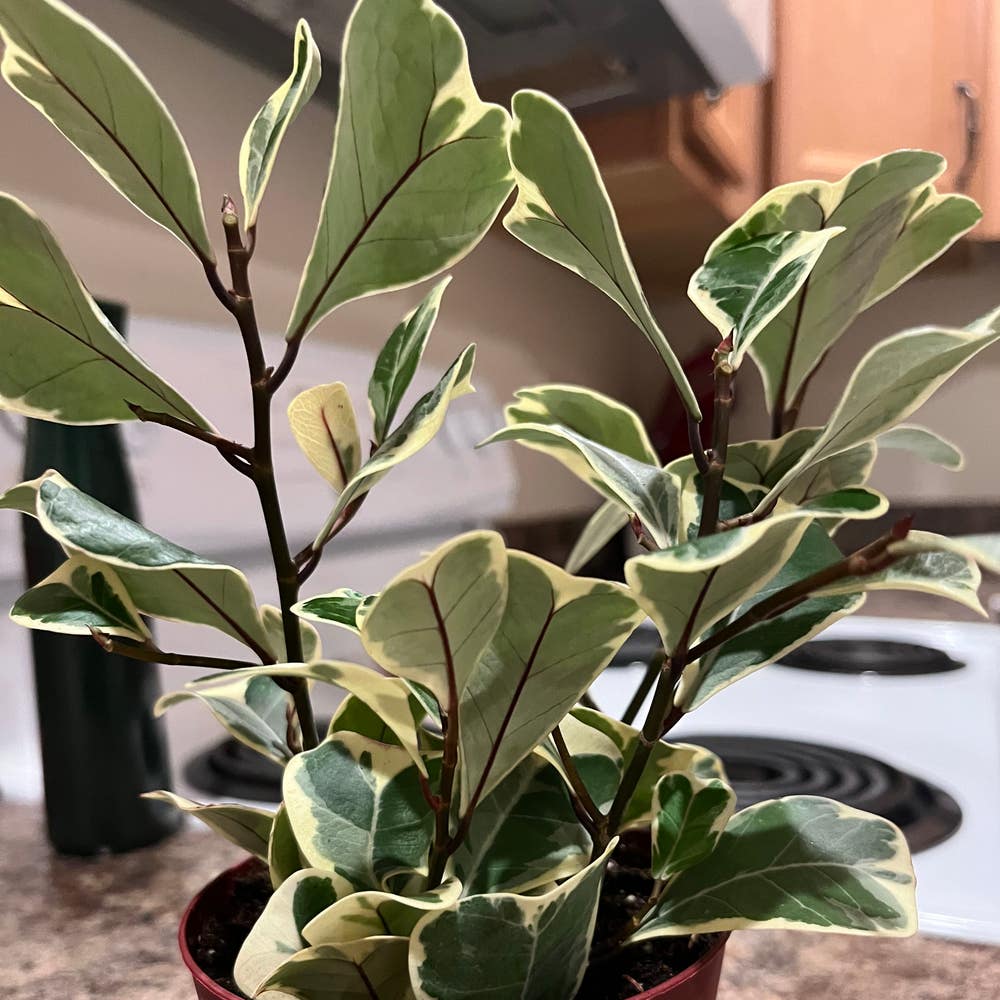
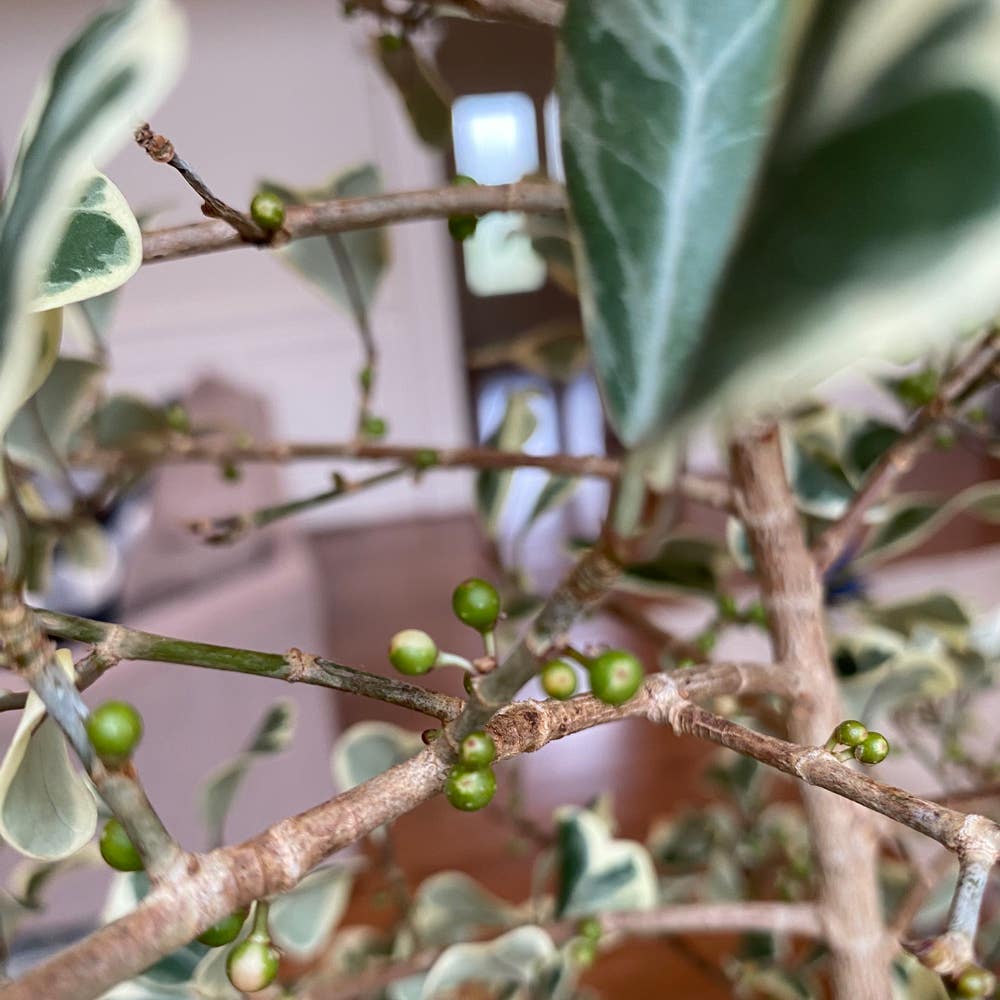
How to Know When to Repot a Ficus triangularis 'Variegata'?
Ficus triangularis 'Variegata'
By the Greg Editorial Team
Jun 18, 2024•5 min read
This article was created with the help of AI so we can cover more plants for you. May contain errors. See one? Report it here.
Boost your Ficus's vigor 🌿 by mastering the timely art of repotting—your plant's passport to thriving!
- Roots circling or escaping indicate it's time to repot your Ficus.
- 🌱 Choose the right pot and soil for a healthier Ficus post-repotting.
- Monitor for stress signals like drooping or yellowing leaves after repotting.
Spotting the Tell-Tale Signs It's Repotting Time
🌱 Root Tango: Unraveling the Root-Bound Mystery
Identifying a root-bound plant is like playing detective with dirt. Look for roots making a break for it out of the drainage holes or circling the topsoil like sharks. If your Ficus triangularis 'Variegata' has roots that are more tangled than a teenager's earbuds, it's time to repot.
The effects of tight living quarters on your Ficus? Think of it as a plant in a straightjacket. Growth slows, leaves may yellow, and your plant's overall vibe screams "Get me outta here!"
📜 The Soil Tells a Story
When the soil is as depleted as a marathon runner post-race, it's a sign. Compacted soil that repels water like a raincoat isn't doing your plant any favors. If watering your Ficus feels like pouring liquid through a sieve, the soil's crying for help.
Water behavior is a telltale clue. If your Ficus's soil is thirstier than a tourist in the desert, or if water sits on top like a puddle, consider these red flags for repotting. Give your plant some new earth to sink its roots into.

Choosing the Perfect Pot
🏺 Material Matters: Terracotta vs. Ceramic vs. Plastic
When selecting a pot for your Ficus triangularis 'Variegata', material is not just a style statement; it's a survival factor.
Terracotta pots are the gym shorts of the plant world—breathable and moisture-wicking. They're ideal for those who tend to overwater, thanks to their porous nature that prevents soggy soil. However, they're also the gym weights—heavy and can dry out faster, demanding more frequent watering.
Ceramic pots, especially glazed ones, are the raincoats. They hold in moisture, reducing watering frequency, but can leave roots waterlogged if you're not careful. They're also prone to cracking and can be as heavy as their terracotta cousins.
Plastic pots are the sneakers—lightweight, versatile, and often cheaper. They retain water well, which is great for the forgetful waterers, but can also lead to overwatering if you're not vigilant. Plus, they're not the most durable, tending to degrade over time.
📏 Size and Space: Finding the Right Fit
The mantra here is simple: root size rules. A pot should be a snug fit, not a mansion. Upsizing too much can lead to excess soil moisture, which is bad news for roots.
A good rule of thumb is to choose a pot that's about 1-2 inches larger in diameter than the current one. This gives enough room for growth without leaving too much empty space. Remember, a tight fit encourages your Ficus to flourish, while too much room can lead to waterlogging and root rot.
In the end, it's a balancing act—match the pot to your plant's needs, your watering habits, and the aesthetics that make you smile.

The Repotting Rundown
🌱 Prep Work: Setting the Stage for a Smooth Transition
Before diving into the repotting process, water your Ficus triangularis 'Variegata' a couple of days in advance. This primes the roots, making them more pliable and less prone to breakage during the move. Don your gardening gloves and let's get to work.
🌿 The Main Event: Repotting Step-by-Step
- Gather your supplies: You'll need a new pot, fresh potting soil, a pair of sharp scissors, and a dash of courage.
- Ease the plant out: Gently coax your Ficus out of its current pot, being mindful not to tug too hard on the stems.
- Root inspection: Trim away any circled or dead roots to encourage healthy growth. It's like giving your plant a much-needed haircut.
- Pot preparation: Fill the new pot with a layer of soil, setting the stage for your plant's new throne.
- Plant positioning: Place your Ficus in the center, spreading the roots like a natural masterpiece. Then, add soil around the roots, firming it down to eliminate any air pockets.
- Watering: Give the plant a good soak with room temperature water, ensuring the soil is evenly moistened.
- Final touches: Add a sprinkle of slow-release fertilizer to celebrate the new beginning.
🌱 Soil Selection: Laying the Foundation for Growth
Select a well-draining soil mix that mimics the Ficus triangularis 'Variegata's' natural habitat. A combination of peat, pine bark, and perlite should do the trick. This trio offers the perfect balance of drainage and moisture retention, ensuring your Ficus doesn't get waterlogged or thirsty.

Aftercare: Helping Your Ficus Settle In
💦 The First Few Days: Watering and Light
After repotting your Ficus triangularis 'Variegata', water it thoroughly to help settle the soil around the roots. For the first few days, keep the plant in bright, indirect light to avoid stressing it with too much sun. Resist the urge to douse it again until the top inch of soil feels dry to the touch.
👀 Stress Signals: Keeping an Eye Out for Trouble
Stay vigilant for warning signs like drooping or yellowing leaves, which could indicate your plant is in distress. If your Ficus starts looking more like a weeping willow, it's time to reassess its conditions. Adjust watering first, and ensure it's not basking in too much light or sulking in the dark. Remember, your plant isn't being dramatic; it's just had a major change in its living situation.
⚠️ Safety First
This content is for general information and may contain errors, omissions, or outdated details. It is not medical, veterinary advice, or an endorsement of therapeutic claims.
Always consult a qualified healthcare professional before using any plant as food, medicine, or supplement.
Never eat any plant (or feed one to pets) without confirming its identity with at least two trusted sources.
If you suspect poisoning, call Poison Control (800) 222-1222, the Pet Poison Helpline (800) 213-6680, or your local emergency service immediately.
Spotted an error? Please report it here.
Ensure your Ficus triangularis 'Variegata' thrives in its perfect pot size by tracking 📅 repotting times with Greg's personalized reminders based on your plant's growth and health signals.