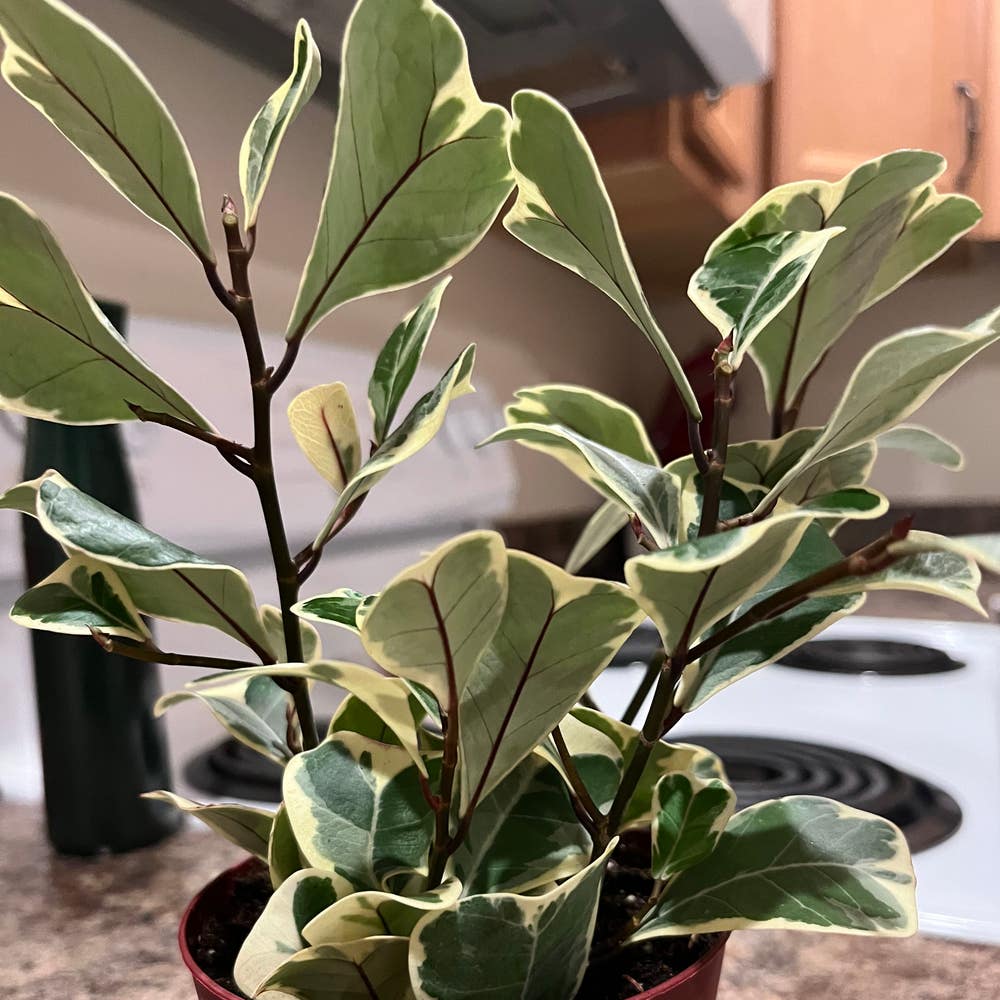
✂️ How Do I Propagate My Ficus triangularis 'Variegata'?
Ficus triangularis 'Variegata'
By the Greg Editorial Team
Jun 18, 2024•6 min read
This article was created with the help of AI so we can cover more plants for you. May contain errors. See one? Report it here.
Discover the joy of multiplying your Ficus 'Variegata' 🌿 with foolproof tips for stem cuttings and air layering!
- Stem cuttings or air layering - two effective propagation methods.
- 🌡️💧 Bright light, warmth, and humidity are crucial for rooting success.
- Transition after two months to a pot with well-draining soil.
Choosing Your Propagation Adventure
🌱 Stem Cuttings
Selecting and Preparing Stems
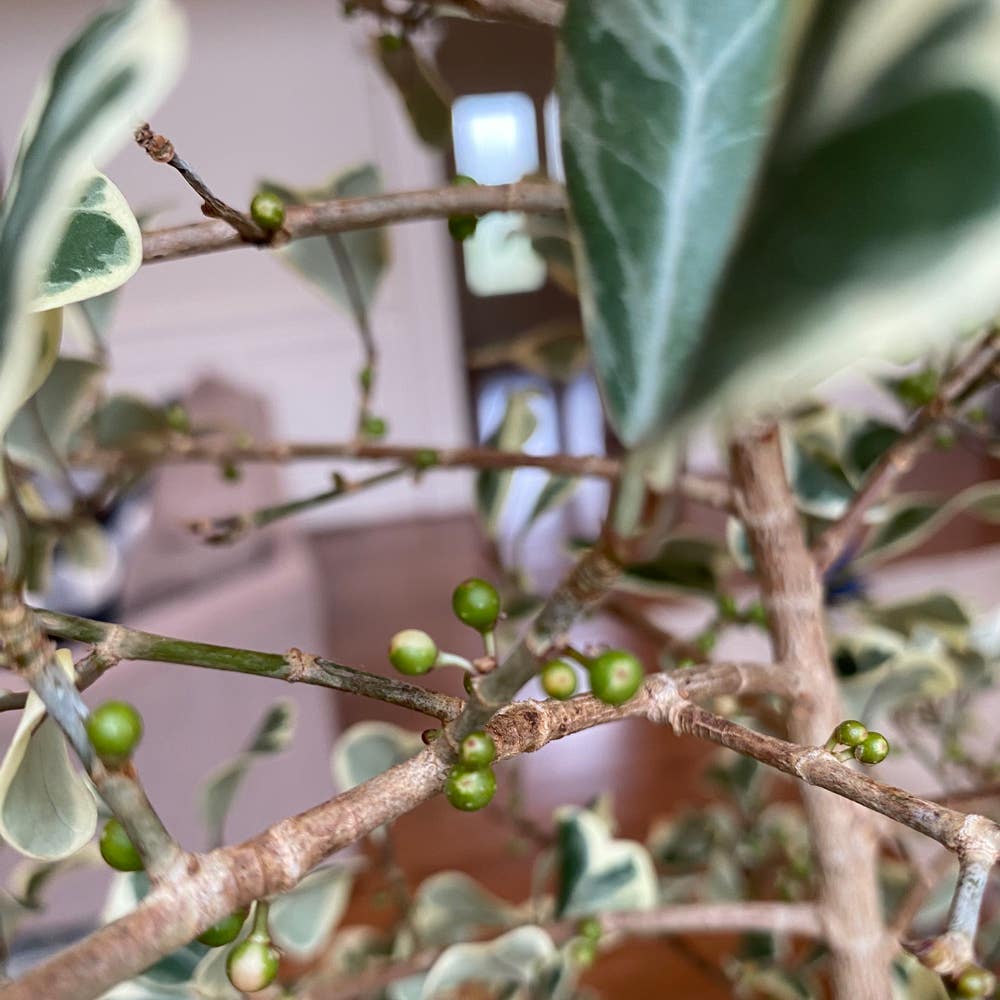
To kick off your propagation journey, choose healthy stems with a few leaves and visible leaf nodes—these are the hotspots for root growth. Snip a 4-6 inch length, and strip the lower leaves to prevent rot. You're aiming for a lean, mean, photosynthesizing machine.
Rooting: Water vs. Soil
Water rooting is like a science fair in a jar—watch roots develop in real-time. Use room temp, chlorine-free H2O for best results. Soil rooting is more of a set-it-and-forget-it vibe, but keep the soil moist, not swampy. Both methods demand patience and a spot with plenty of indirect light.
✂️ Air Layering
The Air Layering Process
Air layering is like giving your plant a trust fund—it gets a head start with roots before striking out on its own. Select a robust branch, make a 1/3 deep cut, and apply rooting hormone. Wrap the cut with moist sphagnum moss, then plastic wrap, and secure it. This plant burrito is your ticket to propagation town.
Independence Day
When roots start throwing a party in the moss, it's time to cut the cord. Snip below the new roots, pot your fledgling Ficus, and watch it thrive. It's a bit like sending a kid to college—bittersweet, but oh so rewarding.

Setting the Stage for Success
🌱 The Perfect Propagation Spot
Finding the ideal spot for propagation is a bit like setting up a backstage for a rockstar—everything needs to be just right. Light is the headliner, providing energy without burning the cuttings with too much direct exposure. Aim for a spot that offers bright, indirect sunlight; think of it as the plant equivalent of a cozy reading nook.
Temperature and humidity are the supporting acts. Keep the propagation area warm, between 75° and 80°F, to give your cuttings that tropical vibe they adore. As for humidity, you're aiming for a sweet spot around 85%, which might call for a pebble tray or humidifier to prevent your cuttings from drying out like last year's gossip.
🌿 Keeping Your Cuttings Cozy
Moisture is a stage manager in this production—it needs to be on point. Keep the soil moist but not waterlogged; it's a delicate balance that keeps root rot from crashing the party. A humidity dome can be a game-changer, but don't just set it and forget it. Monitor your cuttings like they owe you money, adjusting conditions as needed to keep them thriving.
Avoid the rookie mistake of a soggy setup. If your cuttings are swimming, you've gone too far. Consistency is key—think of the soil as a perfectly wrung-out sponge. And remember, this isn't a sprint; it's a marathon where patience and attention to detail will see you crossing the finish line with a new plant in hand.

From Roots to Re-potting
🌱 The Transition Phase
After pampering your Ficus triangularis 'Variegata' cuttings in water or soil, eager roots will start to show. This is the cutting's way of saying, "I'm ready for the big leagues." When roots are robust, usually after about two months, it's time to transition to a pot. Look for a root system that's a few inches long—think spunky, not sparse.
Choosing the Right Soil and Pot
The right soil and pot are like a tailored suit; they need to fit just right. Well-draining soil is your best friend here, as Ficus triangularis 'Variegata' doesn't appreciate wet feet. A mix of peat, pine bark, and perlite should do the trick. As for the pot, start with something modest in size. Your plant's roots should have room to grow, but not so much that they throw a house party. A pot that's just a size up from the root ball encourages cozy, healthy growth. Remember, you can always size up later as your Ficus flexes its roots.

Overcoming Propagation Hurdles
🛠️ Quick Fixes for Common Problems
Propagation can feel like a high-stakes game of patience, but when problems arise, quick action is key. Here’s how to troubleshoot the most common issues without breaking a sweat.
🦠 Root Rot: The Silent Killer
If you discover your cutting's roots turning into a mushy mess, you've hit the dreaded root rot. Drainage is your best friend here. Make sure your pot has a drainage hole to prevent water from pooling. If rot has set in, trim the affected roots and let the healthy parts dry before replanting in fresh, well-draining soil.
🌡️ Temperature Tantrums
Wilting cuttings? They might just be throwing a temperature tantrum. Too cold, and they droop like a disappointed parent. Move them to a warmer spot pronto. Remember, the Goldilocks zone isn't just a fairy tale—it's where your cuttings thrive.
🐜 Pests: Uninvited Guests
Spider mites and mealybugs are like those party guests who never got an invite but show up anyway. Inspect your parent plant before you start snipping. Spot freeloaders? Show them the door with insecticidal soap or neem oil. Keep your propagation station clean to avoid a bug bonanza.
💧 Moisture Mayhem
When it comes to watering, think of your cuttings as low-maintenance guests—they need attention, but not too much. Water the soil, not the leaves, and remember that less can be more. Overwatering invites root rot to the party, and nobody wants that.
🕰 The Waiting Game
Patience might be a virtue, but vigilance is a necessity. Keep an eye on your propagations. If they're looking sadder than a washed-up comedian, reassess moisture and light levels. Adjust as needed, and give your plants time to acclimate to their new digs.
🧼 Tool Hygiene
Dirty tools spread disease faster than gossip in a small town. Always clean your propagation equipment with a bleach solution to keep things as sterile as a surgeon's instruments.
🌱 Stagnant Growth
If your cuttings are as stagnant as a pond with no inlet or outlet, it's time to reassess. Sometimes, all it takes is a small tweak in your care routine to kickstart growth. Remember, propagation is a marathon, not a sprint, and your patience will be tested.
Embrace these challenges as part of the propagation journey. Each mishap is a lesson in disguise, so keep these tips handy, and you'll be on your way to a thriving Ficus triangularis 'Variegata' family.
⚠️ Safety First
This content is for general information and may contain errors, omissions, or outdated details. It is not medical, veterinary advice, or an endorsement of therapeutic claims.
Always consult a qualified healthcare professional before using any plant as food, medicine, or supplement.
Never eat any plant (or feed one to pets) without confirming its identity with at least two trusted sources.
If you suspect poisoning, call Poison Control (800) 222-1222, the Pet Poison Helpline (800) 213-6680, or your local emergency service immediately.
Spotted an error? Please report it here.
Turn every propagation challenge into a victory 🏆 with Greg's custom reminders for moisture management and community troubleshooting, ensuring your Ficus triangularis 'Variegata' cuttings flourish!