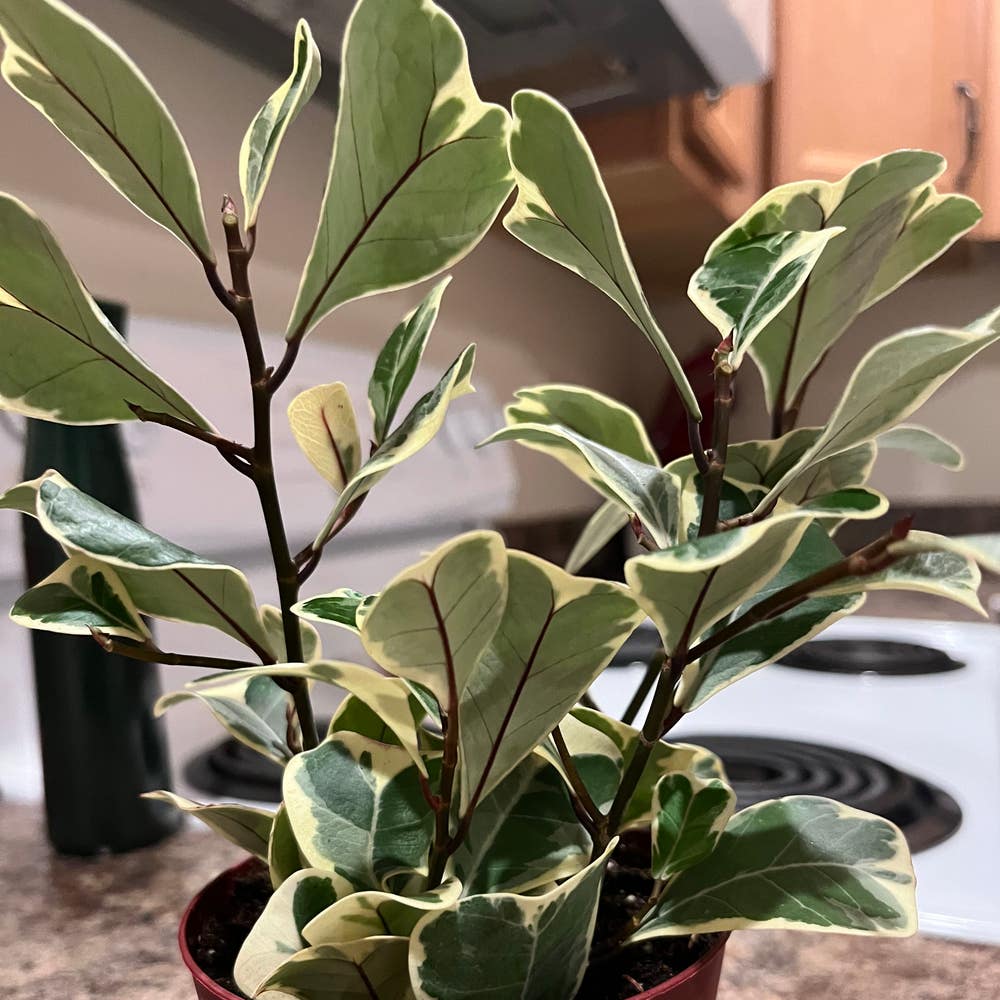
🌞 Does My Ficus triangularis 'Variegata' Need Direct Sunlight?
Ficus triangularis 'Variegata'
By the Greg Editorial Team
Jun 18, 2024•5 min read
This article was created with the help of AI so we can cover more plants for you. May contain errors. See one? Report it here.
Learn why your Ficus triangularis 'Variegata' prefers the soft glow of indirect light to flourish 🌿✨.
- Indirect light preferred for Ficus Triangularis 'Variegata' to thrive.
- Window direction matters—south for robust rays, north for subtler light.
- Seasonal adjustments needed to prevent sunlight stress and damage.
Sunlight and Your Ficus Triangularis 'Variegata'
🌞 Direct vs. Indirect Sunlight: A Kid-Friendly Explanation
Direct sunlight is the superhero of light, beaming down full strength. But for your Ficus Triangularis 'Variegata', it's more kryptonite than superpower. This plant thrives in the gentle embrace of indirect light, where it gets all the benefits without the burn.
🌳 The Plant's Native Whisper: Understanding Its Sunlight Preference
Hailing from the understory of tropical forests, your variegated friend is used to playing hide and seek with the sun. It's a game of dappled light, not direct sunbathing sessions. Variegation in leaves is a flashy signal that screams, "I love light, but let's not get too intense."

Positioning Your Plant: The Window Direction Dilemma
🌞 North, South, East, or West: Where to Best?
Navigating the sunlight needs of your Ficus Triangularis 'Variegata' is like setting sail without a compass if you don't know your window directions. But fear not, plant enthusiasts, for the solution is as simple as a peek at a compass or a quick check on Google Maps.
- South-facing windows are the solar kings, dishing out the most robust rays for your leafy companion.
- East-facing windows offer a gentle morning caress of sunlight, perfect for a soft start to the day.
- West-facing windows come in strong with the afternoon blaze, which can be a bit of a scorcher if left unchecked.
- North-facing windows are the underdogs, providing a more subdued light that might leave your Ficus yearning for more.
🌍 Hemisphere Highlights: How Your Location on the Globe Tweaks the Rules
Your spot on the map isn't just for bragging rights; it's a critical factor in your plant's happiness. In the Northern Hemisphere, south-facing windows are the VIP lounge for plants craving sunlight. Flip the script if you're down under in the Southern Hemisphere, where north-facing windows are the hot ticket.
- Remember, seasons change the game. The sun's lower winter angle means even south-facing windows might need a helping hand with some additional light.
- If you're closer to the poles, your plant might need a quarterly dance—a gentle rotation to ensure all sides get their moment in the sun.
- And for those in more temperate zones, even a north-facing window can sometimes suffice, especially if you're generous with care in other departments.
Keep your Ficus Triangularis 'Variegata' in the loop of the sun's travels, and you'll have a thriving, photogenic buddy that's always ready for its close-up.

Seasonal Sunlight Strategies for Ficus Triangularis 'Variegata'
🌞 Summer vs. Winter Sun: Adapting to the Seasons
Seasonal shifts are pivotal for your Ficus Triangularis 'Variegata'. As the earth tilts and twirls, your plant's needs twist and turn with it.
🌅 Adjusting Your Plant's Spot with the Changing Sun
In the summer, the sun is like that overzealous friend who doesn't know when to leave the party. It's intense, and your Ficus might start to feel the burn. Shield it by placing it in a bright spot where the sun's rays are filtered, avoiding the midday solar smackdown.
Come winter, the sun plays hard to get. It's time to cozy up your plant closer to the window to soak up those precious, softer rays. But remember, like a good spy, avoid direct exposure; indirect light is still the name of the game.
🌍 Climate Quirks: Regional Tips for Year-Round Radiance
Your location on this spinning marble affects your Ficus care routine. If you're basking in a milder winter, your plant might continue its slow dance of growth. But if you're in a locale where winter bites hard, expect your Ficus to hit the snooze button and enter a more pronounced dormancy.
Rotate your plant a quarter turn weekly to ensure even growth and prevent it from leaning into a botanical Tower of Pisa. And if you're dealing with a light shortage, consider a grow light to fake a sunnier disposition—just don't forget to switch it off at night to mimic the natural day-night cycle.
Remember, your Ficus doesn't want to ride a rollercoaster of light conditions. Keep its exposure consistent like your favorite coffee blend, and you'll both be happier for it.

Recognizing and Responding to Sunlight Stress
🌞 Telltale Signs Your Ficus is Getting Too Much Sun
Your Ficus triangularis 'Variegata' might be screaming for shade if you notice scorched tips, yellowing, or brown patches on its leaves. These are the plant's version of an SOS signal, indicating that it's on the receiving end of too much sun.
Leaf scorch is the plant's not-so-subtle way of saying it's had enough. If the foliage starts looking like it's been in a tanning bed too long, with crispy brown edges or spots, it's time to rethink your plant's sunbathing habits.
🚑 Quick Fixes: What to Do When Your Plant Has Had Too Much Sun
First, move your plant out of the direct sunlight. This is like applying aloe to a sunburn—it's the immediate relief your plant craves.
Next, consider the hydration needs. Just like sunburnt skin, sunburnt leaves can benefit from a bit of extra water to help the plant recover—though be careful not to overdo it.
If your plant has developed a few unsightly, sun-damaged leaves, it's okay to trim them off. This won't just improve the appearance of your Ficus but also encourage the growth of new, healthy foliage.
Lastly, think about relocation. If your plant is consistently getting too much light, find a spot that offers bright, indirect sunlight instead. This might mean a few feet away from the window or in a room with sheer curtains to diffuse the light.
Remember, your Ficus isn't trying to get a tan—it's just trying to photosynthesize without getting fried. Keep it cool, keep it shaded, and your Ficus will thank you by thriving.
⚠️ Safety First
This content is for general information and may contain errors, omissions, or outdated details. It is not medical, veterinary advice, or an endorsement of therapeutic claims.
Always consult a qualified healthcare professional before using any plant as food, medicine, or supplement.
Never eat any plant (or feed one to pets) without confirming its identity with at least two trusted sources.
If you suspect poisoning, call Poison Control (800) 222-1222, the Pet Poison Helpline (800) 213-6680, or your local emergency service immediately.
Spotted an error? Please report it here.
Ensure your Ficus Triangularis 'Variegata' flourishes in the ideal spot by using Greg's PlantVision ☀️ to measure light levels and get reminders for seasonal placement adjustments.