Light Requirements For Your Ficus triangularis 'Variegata'
Ficus triangularis 'Variegata'
By the Greg Editorial Team
Jun 18, 2024•4 min read
This article was created with the help of AI so we can cover more plants for you. May contain errors. See one? Report it here.
Maximize your Ficus 'Variegata's' beauty and bloom potential with these essential light tips. 🌿💡
- 🌿 Bright, indirect light outdoors; avoid midday sun to prevent leaf damage.
- 🏡 East or north-facing windows best for indoor Ficus; adjust with seasons.
- 💡 Supplement with grow lights for 12-14 hours; rotate for even distribution.
Soaking Up the Sun Outdoors
🌞 Finding the Sweet Spot
Bright, indirect light is the gold standard for Ficus triangularis 'Variegata' when it's basking outdoors. The morning sun, with its gentle rays, or the soft glow of the evening are ideal times for your Ficus to soak up the sun. Midday sun? Not so much. It's the botanical equivalent of a harsh glare on your smartphone screen—too intense and definitely unwelcome.
Signs that your Ficus is getting too much of a good thing include leaves that look sun-kissed in the worst way—yellowing or blistering. If the leaves start dropping like flies, you've got a sunburnt Ficus on your hands. Time to dial back on the solar love.
🏜️ Shady Business
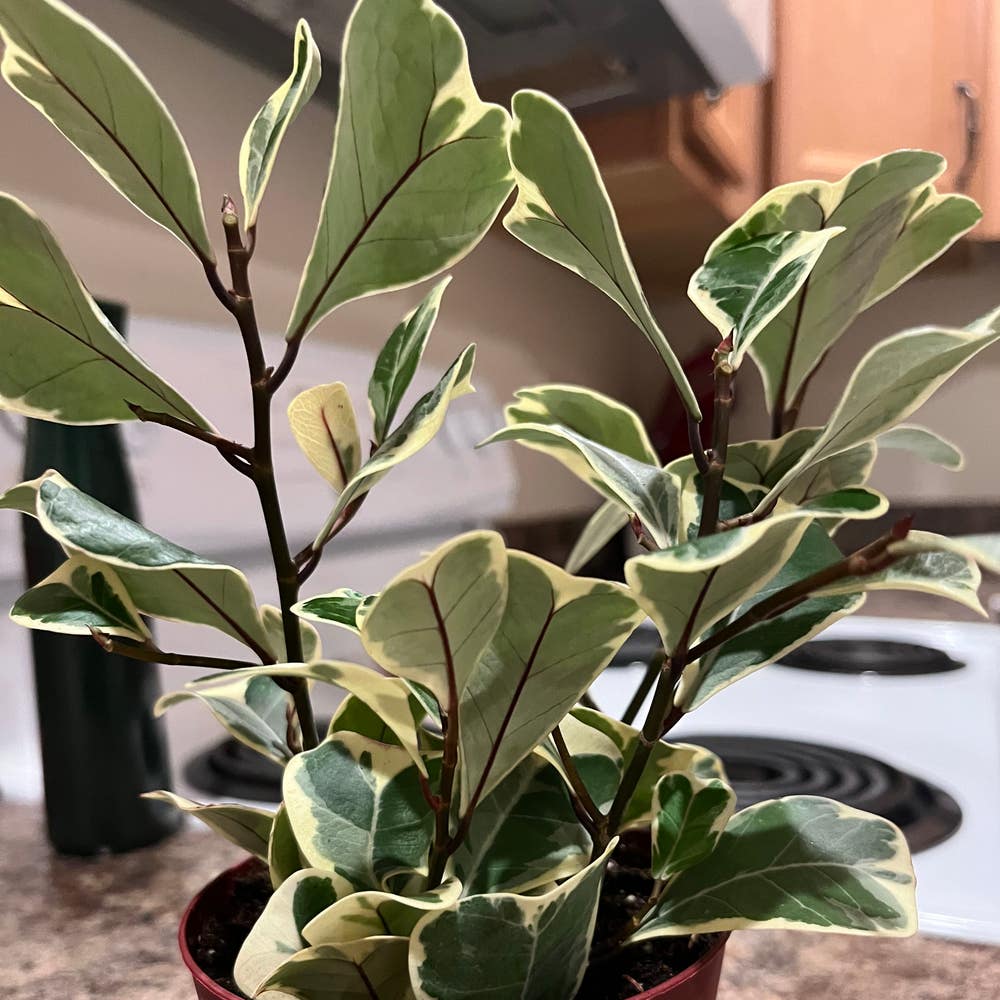
Partial shade offers a sanctuary for your Ficus, protecting it from the midday solar smackdown. It's like slipping on a pair of sunglasses—a relief from the glare. To create these conditions, think about positioning your plant under the dappled light of a larger tree or behind a sheer curtain that diffuses the harsh rays.
Dappled sunlight is the sweet spot outdoors, mimicking the Ficus's natural habitat. It's the plant equivalent of a lazy Sunday in the shade. If you can't find a natural filter, consider a shade cloth or strategically placed umbrella. Your Ficus will thank you by flaunting its variegated leaves without the crispy edges.

Setting the Indoor Stage
🌅 Window Wisdom
Best window exposures for your Ficus triangularis 'Variegata' are east or north-facing, offering a gentle buffet of morning light without the harsh midday sun. However, if you're stuck with a south or west window, pulling the plant back or using a light-filtering decal can prevent leaf scorch.
Seasonal adjustments are crucial for consistent light. As the earth tilts and turns, your plant's tan lines might start to fade. Move it closer to the window in winter or consider a sheer curtain in summer to diffuse the intense light.
💡 Artificial Sunbeams
When your Ficus starts to resemble a goth—pale and withdrawn—it might be time for supplemental lighting. Grow lights are the indoor gardener's sun substitute, offering a full spectrum of light to keep your plant from becoming a drama queen.
Types of grow lights that work wonders include LEDs and fluorescents. They're like a personal trainer for your plant, ensuring it gets its daily dose of light exercise. Remember, cleanliness is next to godliness; keep those tubes sparkling for the best performance.

Grow Lights: A Ray of Hope for Indoor Ficus
💡 Making the Switch
Deciding if your Ficus needs a grow light is like playing detective with your plant's health. Look for clues: is your Ficus leaning like a sunbather chasing the rays, or has its growth slowed to a snail's pace? These are telltale signs that your green buddy is craving more light. Transitioning from natural to artificial light doesn't have to be a leap into the unknown. Start by introducing the grow light for a few hours each day, gradually increasing the exposure as you would when easing into a hot bath.
💡 Light Recipes
When it comes to how long to keep the lights on, think of it as a recipe for success. Typically, 12-14 hours should suffice, mimicking the generous daylight of summer. But remember, plants need their beauty sleep too, so don't leave the lights on all night. Positioning your plant for even light distribution is key—rotate it like a rotisserie chicken to ensure all sides get their fair share of the glow.

Light and Flowering: A Brief Note
💐 The Flowering Enigma of Ficus triangularis 'Variegata'
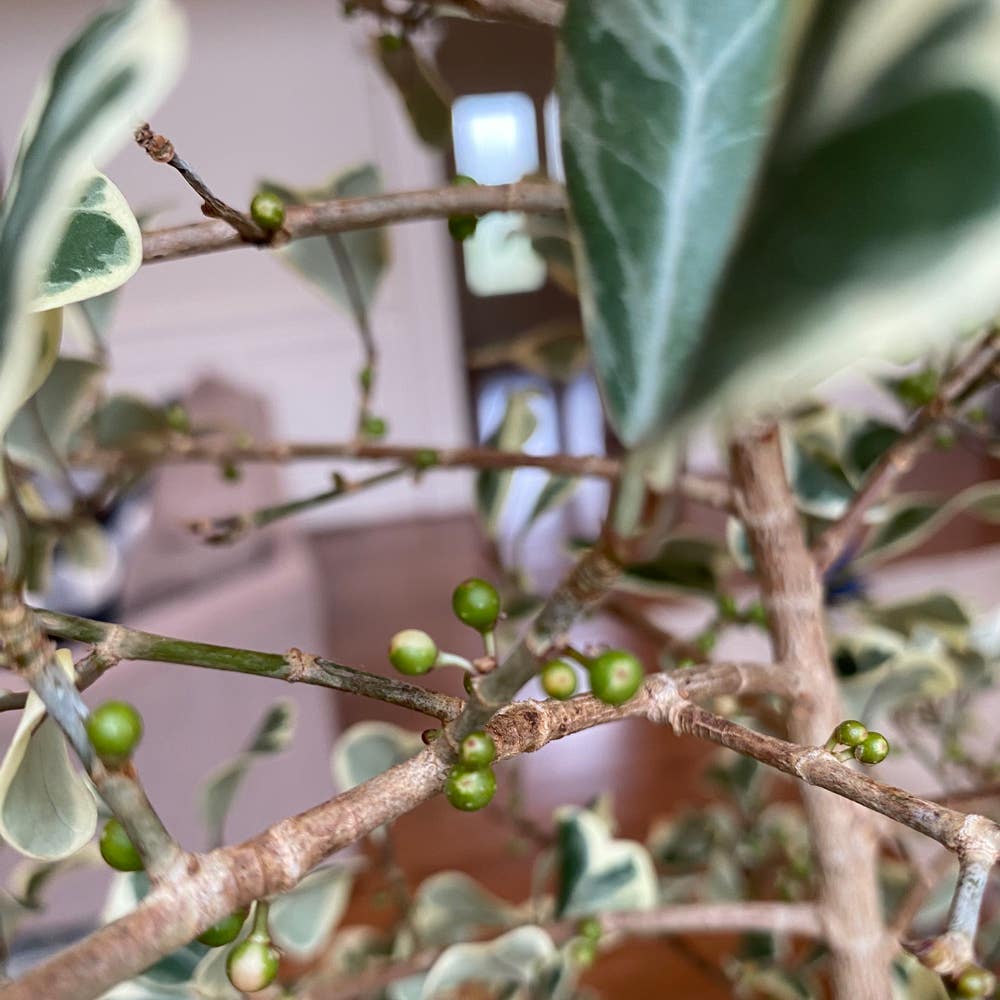
Flowering in Ficus triangularis 'Variegata' is about as common as a snowstorm in the Sahara. But when it does happen, it's a botanical jackpot. These plants are known more for their attractive foliage than for their flowers, which are small and often overlooked.
⭐️ Light: The Bloom Booster
Let's cut to the chase: light can be the secret sauce to getting your Ficus to flower. It's like a plant's version of a gym membership – without it, don't expect much in terms of gains, or in this case, blooms. Bright, indirect light is your best bet. It encourages the plant to produce more energy, which can sometimes lead to flowers. However, remember that even with perfect light, this plant's blooms are a rare spectacle.
🌞 A Balancing Act
Too much direct sunlight, and you're looking at a crispy plant. Too little, and it's like watching paint dry. So, aim for that sweet spot of bright, indirect light to keep your Ficus happy and, just maybe, blooming.
⚠️ Safety First
This content is for general information and may contain errors, omissions, or outdated details. It is not medical, veterinary advice, or an endorsement of therapeutic claims.
Always consult a qualified healthcare professional before using any plant as food, medicine, or supplement.
Never eat any plant (or feed one to pets) without confirming its identity with at least two trusted sources.
If you suspect poisoning, call Poison Control (800) 222-1222, the Pet Poison Helpline (800) 213-6680, or your local emergency service immediately.
Spotted an error? Please report it here.
Ensure your Ficus triangularis 'Variegata' thrives in the perfect light by using Greg to measure 📏 the ideal spot and create a personalized care plan.