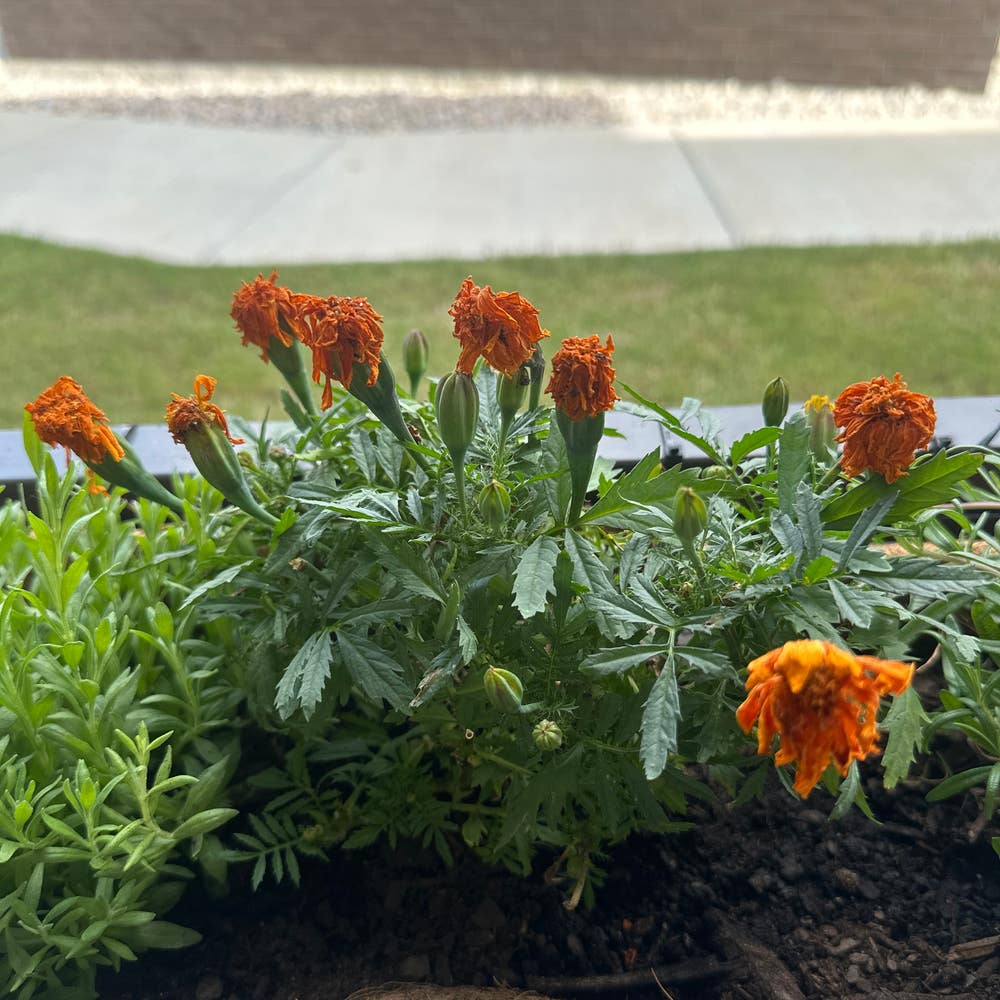
🌞 Managing Yellow Leaves on Your Marigold
Tagetes lemmonii
By the Greg Editorial Team
Oct 16, 2024•6 min read
This article was created with the help of AI so we can cover more plants for you. May contain errors. See one? Report it here.
Revive your marigolds from yellowing to vibrant blooms 🌼 with these essential care tips for thriving plants!
- 🌱 Yellow leaves indicate nutrient deficiencies, especially nitrogen and iron—address promptly!
- 💧 Overwatering and poor drainage cause yellowing; ensure well-draining soil and pots.
- 🐛 Pests like aphids and spider mites can yellow leaves; early detection is crucial!
Causes of Yellow Leaves
🌱 Nutrient Deficiencies
Nitrogen Deficiency
Yellowing of older leaves and stunted growth are clear signs of nitrogen deficiency in your marigolds. Nitrogen is vital for leaf development and overall plant vigor, making it essential for a thriving garden.
Iron Deficiency
If you notice yellowing between leaf veins while the veins themselves remain green, your marigolds may be suffering from iron deficiency. Iron plays a crucial role in chlorophyll production and photosynthesis, impacting the plant's ability to thrive.
🚰 Overwatering and Poor Drainage
Wilting, yellowing leaves, and root rot are common signs of overwatering. Proper soil drainage is crucial; well-drained soil prevents waterlogging, which can lead to yellow leaves.
Recommended soil types include sandy loam or a potting mix designed for good drainage. These options help maintain the right moisture levels for your marigolds.
🐛 Pest Infestations
Aphids
Curling leaves, sticky residue, and the presence of ants indicate an aphid infestation. These pests weaken plants and contribute to yellowing, making early detection essential.
Spider Mites
Look for fine webbing and stippled leaves as signs of spider mites. These tiny pests reduce photosynthesis and overall plant health, leading to further yellowing.
🍄 Fungal Diseases
Root Rot
Symptoms of root rot include wilting, yellowing leaves, and mushy roots. This condition often arises from overwatering and poorly drained soil, making it crucial to monitor your watering habits.
Powdery Mildew
If you see white powdery spots on leaves, your marigolds may have powdery mildew. This fungal disease thrives in high humidity and poor air circulation, leading to yellowing leaves and overall decline in plant health.
Understanding these causes is the first step in managing yellow leaves on your perennial marigold. By identifying the underlying issues, you can take effective action to restore your plants to their vibrant best.
Diagnosing Yellow Leaves
👀 Visual Symptoms to Look For
When diagnosing yellow leaves on your perennial marigold, start by observing the leaf color. Gradual yellowing often indicates nutrient deficiencies, while sudden yellowing can signal more immediate issues.
Next, examine the leaf texture. Look for signs of wilting, curling, or crisping, which can provide clues about the plant's health.
🌱 Soil and Water Testing
Soil moisture is crucial for marigold health. Use a moisture meter or simply perform a finger test to check if the soil is too dry or overly saturated.
Additionally, pH testing is essential. Marigolds thrive in soil with a pH between 6.0 and 7.0, so ensure your soil falls within this range for optimal growth.
🐛 Identifying Pests and Diseases
Regular inspections are key to maintaining healthy marigolds. Check the undersides of leaves for pests, as they often hide there, causing damage unnoticed.
Don't overlook fungal signs either. Look for discoloration or unusual growths, which can indicate issues like root rot or powdery mildew. Catching these early can save your plants from further decline.
With these diagnostic steps, you can effectively identify the underlying causes of yellow leaves and take action to restore your marigold's vibrancy. Next, let’s explore treatment options to address these issues head-on.
Treatment Options
Adjusting Watering Practices 🌧️
Assess Current Watering Schedule: Take a moment to evaluate how often and how much you’re watering your marigolds. This is the first step in addressing yellow leaves.
Implement a New Schedule: Water your plants only when the top inch of soil feels dry. This helps prevent overwatering, a common culprit of yellowing leaves.
Use Well-Draining Pots: Opt for pots that allow excess water to escape. Proper drainage is crucial to avoid waterlogging, which can lead to root issues.
Fertilization Techniques 🌱
Choose a Balanced Fertilizer: Look for fertilizers with NPK ratios that suit marigolds. A balanced mix will support healthy growth and vibrant foliage.
Application Timing: Fertilize during the growing season every 4-6 weeks. This regular feeding helps your plants thrive.
Monitor Plant Response: Keep an eye on how your marigolds react to fertilization. Adjust your approach based on their growth and leaf color.
Pest Control Methods 🐛
Organic Options
Neem Oil: This natural solution can be applied every 7-14 days to manage pests effectively. It’s gentle on your plants while being tough on unwanted visitors.
Insecticidal Soap: Safe for marigolds, this option works wonders against aphids. Regular applications can keep your plants healthy and pest-free.
Chemical Options
Systemic Insecticides: If pests persist, consider using systemic insecticides. Always follow the label instructions for safe application.
Timing: Apply these treatments during the early stages of an infestation for the best results. Early intervention is key to protecting your marigolds.
Fungal Treatment Solutions 🍄
Fungicides: Use fungicides as directed to combat root rot and powdery mildew. These treatments can help restore your plants to health.
Cultural Practices: Improve air circulation around your marigolds and reduce humidity. Simple changes in care can make a significant difference in preventing fungal issues.
By implementing these treatment options, you can effectively manage yellow leaves on your perennial marigolds. With the right care, your plants will flourish, leading to vibrant blooms and lush foliage. Next, let’s explore preventive measures to keep your marigolds healthy year-round.
Preventive Measures
Best Practices for Soil Preparation 🌱
To set your perennial marigolds up for success, start with soil amendments. Incorporating compost not only enriches the soil but also balances nutrients essential for vibrant growth.
Another key factor is drainage. Using gravel or perlite can significantly enhance soil drainage, preventing waterlogging that leads to yellow leaves.
Seasonal Care Tips 🌼
Mulching is a game-changer for marigolds. It helps retain moisture and regulates soil temperature, creating a stable environment for your plants.
Don't forget about seasonal pruning. Regularly removing dead or yellowing leaves encourages new growth and keeps your marigolds looking their best.
Choosing Resistant Varieties 🌿
Opt for resilient varieties like French Marigold and African Marigold. These types are known for their hardiness and can better withstand common issues that lead to yellow leaves.
Regular Monitoring and Maintenance 🔍
Make weekly inspections a habit. Check for pests, diseases, and soil moisture to catch any issues early.
Adjust your care practices based on seasonal changes and the overall health of your plants. Staying proactive will keep your marigolds thriving and vibrant.
By implementing these preventive measures, you can enjoy a flourishing garden of marigolds, free from the worry of yellow leaves. Next, let’s explore effective treatment options to address any existing issues.
⚠️ Safety First
This content is for general information and may contain errors, omissions, or outdated details. It is not medical, veterinary advice, or an endorsement of therapeutic claims.
Always consult a qualified healthcare professional before using any plant as food, medicine, or supplement.
Never eat any plant (or feed one to pets) without confirming its identity with at least two trusted sources.
If you suspect poisoning, call Poison Control (800) 222-1222, the Pet Poison Helpline (800) 213-6680, or your local emergency service immediately.
Spotted an error? Please report it here.
Transform your marigolds from yellow to vibrant 🌼 with Greg's tailored care tips and reminders that ensure your plants thrive all season long!