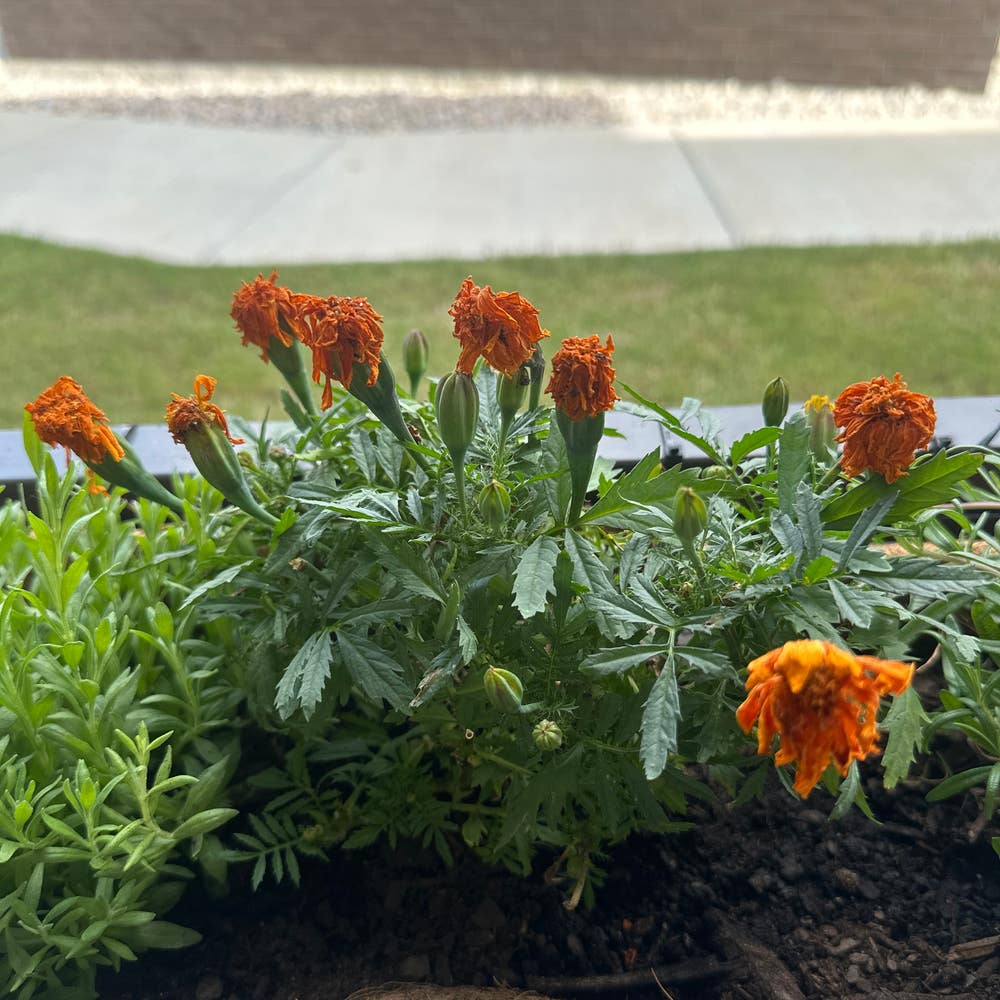
Understanding Brown Spots on Your Perennial Marigold Leaves ☀️
Tagetes lemmonii
By the Greg Editorial Team
Oct 16, 2024•5 min read
This article was created with the help of AI so we can cover more plants for you. May contain errors. See one? Report it here.
Revive your marigolds from brown spots 🌼 with simple diagnosis and treatment tips for vibrant blooms!
- 🌱 Brown spots on marigolds stem from fungal, bacterial, or nutrient issues.
- 🔍 Regular inspections help catch problems early, ensuring vibrant marigold health.
- 🌞 Proper sunlight and drainage are crucial for preventing brown spots on leaves.
Causes of Brown Spots
🦠 Fungal Infections
Fungal diseases are a primary culprit behind brown spots on marigold leaves. Two common offenders are Alternaria leaf spot and powdery mildew.
Symptoms typically include dark brown to black spots surrounded by yellow halos. In severe cases, these infections can lead to leaf drop, leaving your marigolds looking sparse.
🦠 Bacterial Infections
Bacterial infections can also cause distress in marigolds, with bacterial leaf spot being the most prevalent.
You’ll notice water-soaked spots that eventually turn brown, along with leaf curling and distortion. These signs indicate that your plants need immediate attention.
🥦 Nutrient Deficiencies
Nutrient deficiencies can manifest as brown spots, particularly when key nutrients are lacking.
Nitrogen deficiency often results in yellowing leaves with brown spots, while magnesium deficiency leads to interveinal chlorosis, causing browning. Overall, you may observe general leaf discoloration and poor growth.
🌧️ Environmental Stress
Environmental factors play a significant role in the health of your marigolds.
Overwatering can cause wilting and browning due to root rot, while underwatering results in crispy, brown leaf edges. Additionally, excessive sunlight can lead to etiolated growth and leaf burn, making it crucial to monitor your plants’ conditions.
Understanding these causes is essential for effective treatment and prevention. Next, we’ll explore how to diagnose the specific issues affecting your marigolds.
Diagnosing the Problem
🌱 Step-by-Step Diagnosis Process
1. Observing Leaf Color and Texture
Start by examining your marigold leaves closely. Look for color variations and texture changes, noting whether the brown spots are raised or flat.
2. Checking for Pests
Next, inspect for visible pests like aphids and spider mites. Keep an eye out for webbing or sticky residue, which can indicate an infestation.
3. Soil Testing for Nutrient Levels
Using a soil test kit, assess the pH and nutrient levels in your garden. This will help you identify any deficiencies or imbalances that could be affecting your plants.
🐞 Common Pests Affecting Marigolds
Aphids
Aphids are small but mighty pests that can wreak havoc on your marigolds. Look for clusters on new growth and the sticky honeydew residue they leave behind.
Spider Mites
Spider mites are another common foe. They create fine webbing on leaves and cause yellowing and stippling of leaf surfaces, making them easy to spot if you know what to look for.
By following these diagnostic steps, you can pinpoint the issues affecting your marigolds and take action to restore their health. Next, let’s explore effective treatment options to combat these problems.
Treatment Options
🌱 Organic Treatments
Neem Oil Application
Neem oil is a fantastic organic solution for treating brown spots on your marigold leaves. To apply, mix 2 tablespoons of neem oil with 1 gallon of water and spray it on the affected leaves every 7-14 days.
Baking Soda Solution
Another effective organic remedy is a baking soda solution. Simply mix 1 tablespoon of baking soda with 1 gallon of water and apply it as a foliar spray to combat fungal infections.
⚗️ Chemical Treatments
Fungicides and Their Application
For more severe cases, chemical treatments may be necessary. Common types of fungicides include copper-based and systemic fungicides.
When using fungicides, always follow the label instructions for dosage and frequency. This ensures you’re applying the right amount for effective treatment without harming your plants.
By understanding these treatment options, you can take proactive steps to restore your marigolds' health. Next, let’s explore preventive measures to keep your plants thriving year-round.
Preventive Measures
🌼 Best Practices for Marigold Care
Soil Preparation and Drainage
To ensure your marigolds thrive, start with well-draining loamy soil enriched with organic matter. This combination promotes healthy root development and prevents waterlogging.
Consider using raised beds or amending your soil to enhance drainage. Good drainage is crucial for preventing root rot and other moisture-related issues.
Sunlight and Spacing Requirements
Marigolds flourish in full sun, requiring 6-8 hours of sunlight daily. This exposure not only boosts growth but also enhances flower production.
When planting, space your marigolds 12-18 inches apart. This spacing allows for adequate air circulation, reducing the risk of fungal infections.
☀️ Seasonal Care Tips
Preparing for Winter
As winter approaches, apply a layer of mulch around your marigolds. This simple step protects the roots from frost and helps retain soil moisture.
Don’t forget to trim back any dead foliage. This practice not only tidies up your garden but also prevents the spread of diseases.
🌱 Spring Care to Prevent Issues
With the arrival of spring, conduct an early inspection of your marigolds. Look for any signs of pests or diseases as new growth begins to emerge.
Additionally, apply a slow-release fertilizer at the start of the growing season. This will provide essential nutrients and set your marigolds up for a vibrant, healthy season.
By following these preventive measures, you can keep your marigolds healthy and vibrant, ready to face any challenges that come their way. Next, let’s explore how to monitor and maintain your marigolds effectively.
Monitoring and Maintenance
Regular Inspection of Leaves 🌿
Inspecting your marigolds weekly is crucial for catching problems early. Look for changes in leaf color, texture, and any signs of pests.
Record-Keeping for Plant Health 📊
Keeping a record of your plants' health can make a significant difference. Track treatment dates, symptoms observed, and environmental conditions to gauge what works best.
Adjusting Care Based on Seasonal Changes 🍂
As seasons shift, so should your care routine. Modify watering and fertilization based on temperature and rainfall to keep your marigolds thriving.
Observing how your plants respond to these seasonal changes will help you fine-tune your approach. This proactive care can prevent issues before they arise, ensuring your marigolds remain vibrant and healthy.
With regular monitoring and adjustments, you'll be well-equipped to maintain the health of your marigolds. Next, let’s explore effective treatment options for any issues you might encounter.
⚠️ Safety First
This content is for general information and may contain errors, omissions, or outdated details. It is not medical, veterinary advice, or an endorsement of therapeutic claims.
Always consult a qualified healthcare professional before using any plant as food, medicine, or supplement.
Never eat any plant (or feed one to pets) without confirming its identity with at least two trusted sources.
If you suspect poisoning, call Poison Control (800) 222-1222, the Pet Poison Helpline (800) 213-6680, or your local emergency service immediately.
Spotted an error? Please report it here.
Combat those pesky brown spots on your marigolds with Greg's tailored care tips 🌱, ensuring vibrant blooms and healthy leaves all season long!