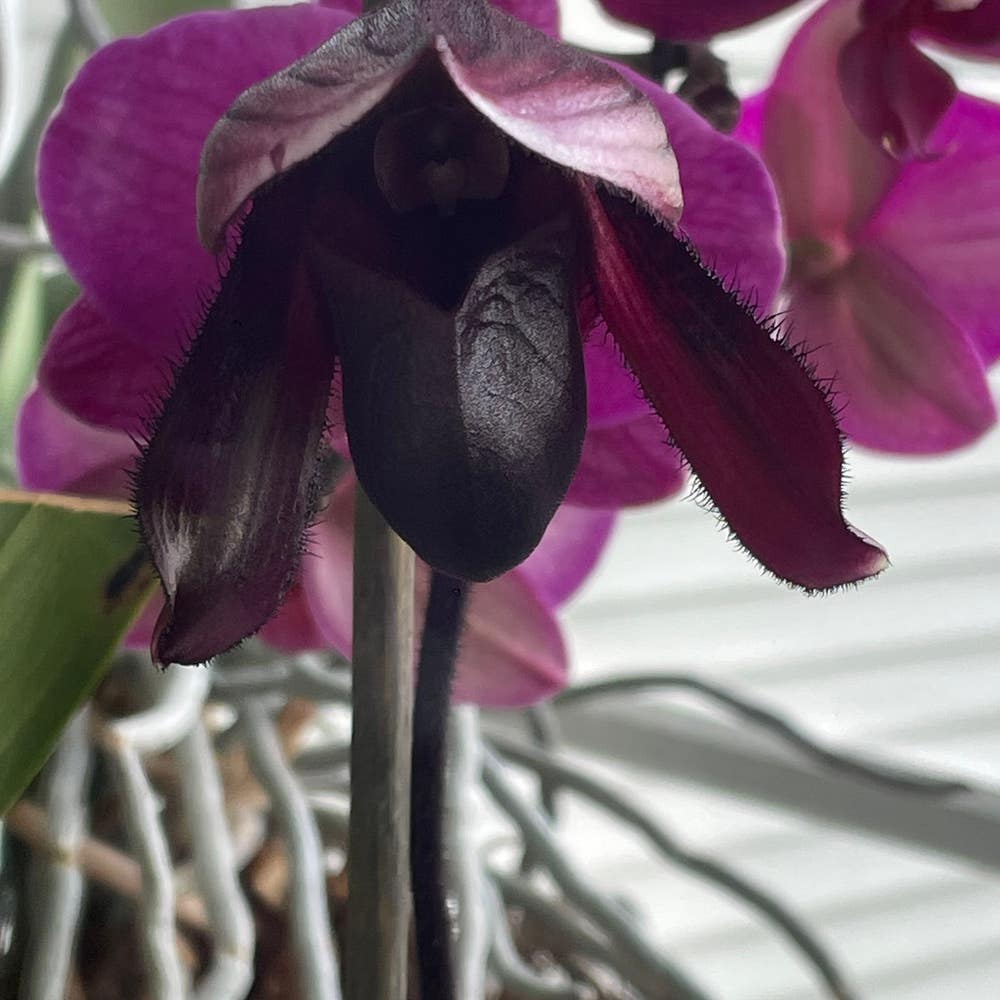
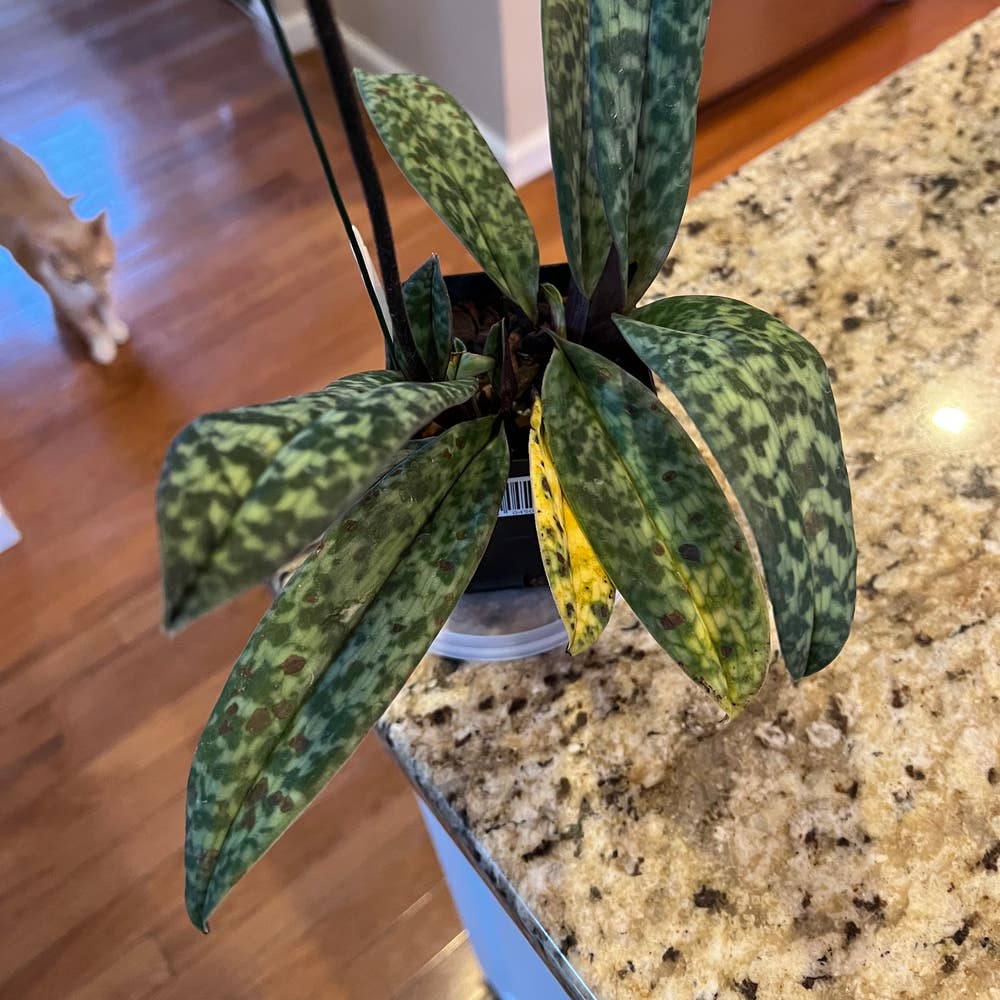
Paphiopedilum 'Hawaiian Fancy' Yellow Leaves
Paphiopedilum 'Hawaiian Fancy'
By the Greg Editorial Team
Apr 06, 2024•4 min read
This article was created with the help of AI so we can cover more plants for you. May contain errors. See one? Report it here.
Turn your orchid's frown upside down 🌞—banish yellow leaves with our fail-proof revival tips! 🌿
- 💧 Over/underwatering and light stress cause yellow leaves; balance is key.
- 🌱 Nutrient balance and pest control are essential for healthy leaves.
- 🌞 Seasonal light adjustments and proper watering revive yellowing orchids.
Pinpointing the Culprits Behind Yellow Leaves
💧 Overwatering and Underwatering
Yellow leaves on your Paphiopedilum 'Hawaiian Fancy' might be crying out for water or begging you to stop the deluge. Overwatering makes leaves a soggy yellow, with a soil feel akin to a wet sponge. Underwatering turns them dry and crispy, with soil as parched as a desert. The goal? Moist soil that whispers, not screams, hydration.
☀️ Light Levels: Finding the Sweet Spot
Your orchid's leaves can turn a sickly yellow when light levels are more off than a bad karaoke performance. Too much light scorches, while too little leaves them pale and unenthused. Find a spot with bright, indirect light where your orchid can bask without getting burnt.
🌱 Nutrient Needs and Deficiencies
Yellow leaves can also signal a nutrient deficiency—a silent drama of the plant world. A balanced, orchid-specific fertilizer is your best bet. Stick to the recommended schedule, and watch for overzealous feeding that can do more harm than good. Soil pH is the director here, influencing nutrient uptake like a maestro. Test and adjust to ensure your orchid isn't starving in the midst of plenty.
Battling Diseases and Pests
🐛 Common Invaders that Cause Yellowing
Orchids can be drama queens when it comes to their leaves, and yellowing is their way of telling you something's up. Let's dive into the gritty details of what's bugging your Paphiopedilum 'Hawaiian Fancy'.
🕵️ Recognizing Disease and Pest Symptoms
First off, inspect your orchid like a hawk. Pests are sneaky little critters, often hiding under leaves or within crevices. Aphids, spider mites, and scale insects are the usual suspects. They leave behind a trail of evidence: sticky residue, webbing, or the insects themselves. Diseases, on the other hand, are more like silent assassins, often presenting as discolored spots or moldy growths.
💉 Effective Treatments to Save Your Orchid's Leaves
Caught red-handed, pests can be ousted with insecticidal soap or neem oil—orchid's own personal bouncers. For diseases, it's a bit more like playing doctor. Fungal infections? Think anti-fungal treatments. Bacterial villains? Bactericides are your go-to. But remember, it's not just about the cure; it's about prevention. Ensure good airflow and avoid wetting the leaves to keep fungal parties at bay. And always quarantine new plants because nobody likes a gatecrasher.
Reviving Your 'Hawaiian Fancy'
💧 Water Wisdom: Quenching Thirst the Right Way
🚰 Correcting Watering Practices to Reverse Damage
To revive your 'Hawaiian Fancy', start by recalibrating your watering routine. Overwatering can drown roots, while underwatering leaves them gasping. Ensure the top inch of soil is dry before watering again. This isn't a guessing game—be precise, like a barista with their espresso shots.
The Soak and Dry Method
Embrace the soak and dry method. Let the water run through the pot, then wait for the soil to dry out before the next round. It's like a plant spa day followed by a rest period—balance is everything.
💡 Let There Be (The Right Amount of) Light
🌞 Modifying Light Conditions to Encourage Recovery
Your 'Hawaiian Fancy' craves bright, indirect light, not a sunbathing contest. If leaves are yellowing, they might be shouting for a shade. Relocate your orchid to a spot where it can bask in gentle light, like a cat finding that sunny spot on the floor.
Seasonal Light Adjustments
Remember, light intensity changes with the seasons. Adjust your plant's position as the sun's angle shifts, ensuring it gets consistent light year-round. It's about being attentive, like updating your wardrobe for the weather.
🍽️ Feeding Finesse: Nutrients for Vibrant Leaves
🌱 Adjusting Feeding Schedules and Compositions
Nutrients are your orchid's lifeline, but too much or too little can cause a scene. Use a balanced fertilizer, but go easy—think of it as a vitamin, not a meal. During the growing season, a light feeding every other week should suffice.
Monitoring for Nutrient Overload
Watch for signs of nutrient overload, such as salt buildup or leaf burn. If you spot trouble, flush the soil with water to give your plant a clean slate. It's like hitting the reset button on your diet after those holiday feasts.
⚠️ Safety First
This content is for general information and may contain errors, omissions, or outdated details. It is not medical, veterinary advice, or an endorsement of therapeutic claims.
Always consult a qualified healthcare professional before using any plant as food, medicine, or supplement.
Never eat any plant (or feed one to pets) without confirming its identity with at least two trusted sources.
If you suspect poisoning, call Poison Control (800) 222-1222, the Pet Poison Helpline (800) 213-6680, or your local emergency service immediately.
Spotted an error? Please report it here.
Revive your orchid's vibrancy 🌸 with Greg's custom care, from pinpointing the perfect light to defeating pests, ensuring your Paphiopedilum 'Hawaiian Fancy' stays as lush as the tropics.