Black Spots on My Paphiopedilum 'Hawaiian Fancy' Leaves
Paphiopedilum 'Hawaiian Fancy'
By the Greg Editorial Team
Apr 06, 2024•4 min read
This article was created with the help of AI so we can cover more plants for you. May contain errors. See one? Report it here.
Eradicate black spots and restore your orchid's splendor with this essential care guide. 🌺🔍
- Fungal, bacterial, or pests cause black spots; each has distinct visual clues.
- Treat with fungicides, bactericides, or pest control, and adjust care routines.
- Prevent spots with proper humidity, air flow, and regular plant health checks.
Spotting the Culprit: Identifying Causes of Black Spots
🕵️ Visual Clues and What They Suggest
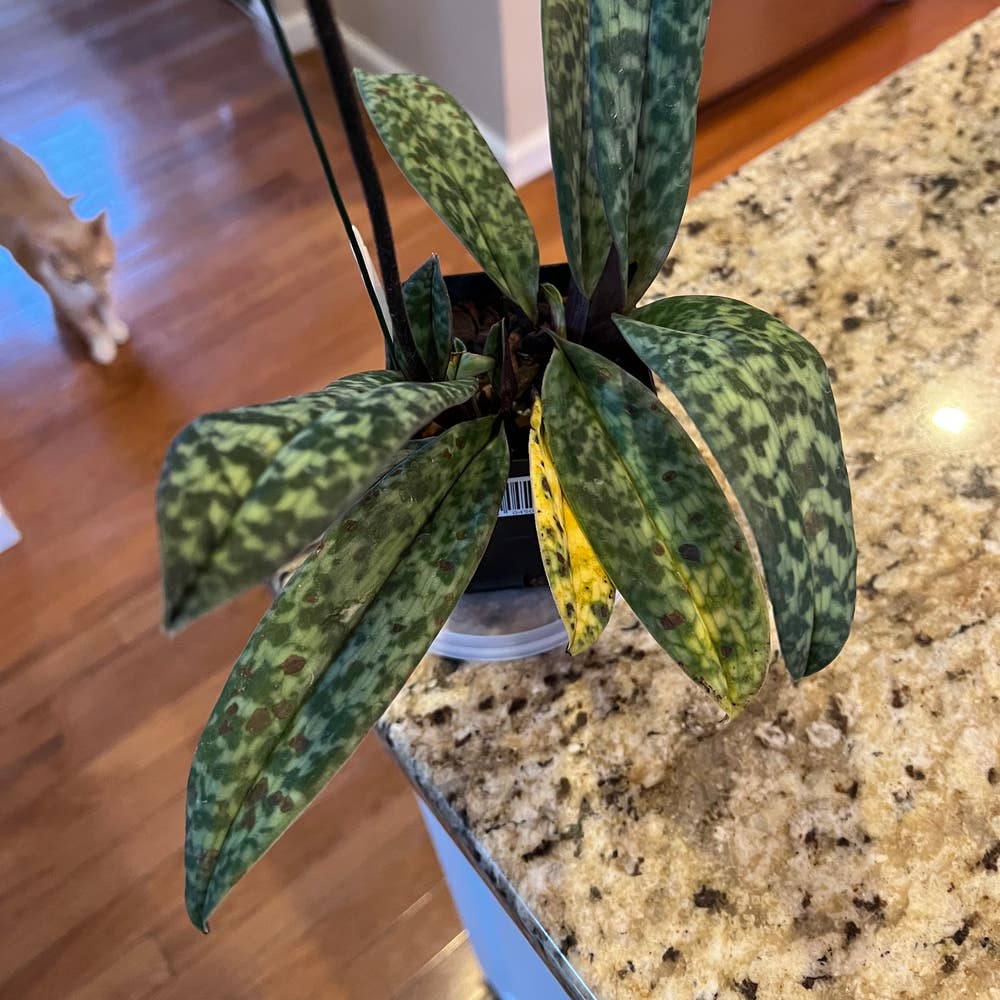
Black spots on Paphiopedilum 'Hawaiian Fancy' leaves are like red flags waving at a bullfight—they demand attention. Shape and texture are your first hints. Fungal spots often come with a powdery or bull's-eye appearance, while bacterial spots might look slimy or water-soaked. Pest damage, on the other hand, is more of a hit-and-run, leaving behind discolored patches without the fanfare.
🦠 Common Fungal and Bacterial Villains
Fungi are the usual suspects, with Cercospora and Anthracnose crashing the party. These uninvited guests leave circular lesions, sometimes with a yellowish halo. Bacteria are sneakier, causing water-soaked lesions that can turn slimy. It's like your plant is sending an SOS, and you're the only one who can decode it.
🐜 When Pests Leave Their Mark
Pests are the vandals of the plant world, leaving behind discolored patches as they suck the life out of your orchid. Aphids, spider mites, and their tiny terrorizing friends can turn a healthy leaf into a spotty mess. It's less of a signature and more of a calling card saying, "I was here, and I had a feast."
First Aid for Your Orchid: Treating Black Spots
🍄 Battling Fungal Foes
Fungal infections are the uninvited guests at your orchid's leafy soiree. Systemic fungicides work from the inside out and are best for advanced cases. If you've caught the party crashers early, protectant fungicides are your bouncers, keeping the fungus at bay. Apply thoroughly, making sure to hit both sides of the leaves. Consistency is your ally; keep up the treatment as directed until the fungus waves the white flag.
🦠 Busting Bacterial Baddies
When bacteria decide to go rogue on your orchid, reach for copper compounds or targeted bactericides. But remember, it's not just about the chemicals; it's about the culture. Adjust your watering habits to avoid leaf wetness and sterilize your tools with the precision of a surgeon. This dual approach helps tackle the current outbreak and prevents future bacterial block parties.
🩹 Patching Up Physical Damage
Physical damage on leaves can open the door to infections. Time to play plant doctor—sterilize your pruning tools and remove damaged foliage with precision. After the operation, reassess your orchid's living conditions. Sometimes, a simple tweak in the watering schedule or a shift in the lighting can strengthen your orchid's defenses for the future.
🐜 Evicting Unwanted Pests
If pests are the culprits behind those black spots, it's eviction time. Quarantine the affected plant like it's patient zero. For mealybugs, alcohol is your weapon of choice. A water blast can send aphids packing. Remember, the best offense is a good defense—preventative measures will save you from playing exterminator down the line.
Keeping the Spots at Bay: Prevention Tactics
🌿 Crafting the Ideal Environment
Humidity is the frenemy of your Paphiopedilum 'Hawaiian Fancy'. Keep it low-key with a dehumidifier or by choosing a chill spot in your home that doesn't feel like a tropical rainforest. Air circulation is your orchid's BFF; give it room to breathe and avoid the plant equivalent of a crowded elevator.
🩺 Regular Health Check-Ups
Think of yourself as your orchid's personal trainer. Regular check-ups are a must—spot anything funky, and it's time to switch up the routine. Keep a log; it's not just a diary, it's the history of your plant's health under your watchful eye.
🌸 Best Practices for Orchid Care
Lighting should be like a cozy reading nook—bright but not blinding. If your place is more cave than conservatory, consider a grow light. Watering is an art—aim for the roots and let the leaves stay dry, like avoiding puddles on a rainy day. Sanitize your tools; it's basic hygiene for plant care. And remember, consistency in care is like the steady beat of your favorite song—absolutely essential.
⚠️ Safety First
This content is for general information and may contain errors, omissions, or outdated details. It is not medical, veterinary advice, or an endorsement of therapeutic claims.
Always consult a qualified healthcare professional before using any plant as food, medicine, or supplement.
Never eat any plant (or feed one to pets) without confirming its identity with at least two trusted sources.
If you suspect poisoning, call Poison Control (800) 222-1222, the Pet Poison Helpline (800) 213-6680, or your local emergency service immediately.
Spotted an error? Please report it here.
Banish black spots on your orchid leaves by following customized 🌸 care plans from Greg, ensuring your 'Hawaiian Fancy' stays as pristine as paradise.