🌺 Why Are My Paphiopedilum 'Hawaiian Fancy' Leaves Curling?
Paphiopedilum 'Hawaiian Fancy'
By the Greg Editorial Team
Apr 06, 2024•4 min read
This article was created with the help of AI so we can cover more plants for you. May contain errors. See one? Report it here.
Unravel the mystery behind your orchid's curling leaves 🍃 and learn to safeguard its tropical allure.
- 🌡️ Consistent temperature and humidity prevent leaf curling.
- 💧 Balance watering with moisture meters and hygrometers.
- ☀️🌱 Bright, indirect light and proper nutrients keep leaves flat.
Spotting the Signs: When Your Orchid's Leaves Start to Curl
🌿 Identifying Leaf Curl
In the early stages of trouble, Paphiopedilum 'Hawaiian Fancy' leaves may begin to fold upwards or inwards gently. This subtle change is your first clue that your orchid isn't in its happy place. When leaves start to resemble tight coils or tubes, it's a full-blown red flag waving at you to take action.
🚨 Common Symptoms
Visual cues like discoloration or a brittle texture accompany the leaf curl. If the leaves lose their characteristic flatness, consider it an SOS from your plant. Keep an eye out for any signs that deviate from the norm; these aren't just cosmetic issues but potential cries for help.
The Usual Suspects: Pinpointing the Causes of Leaf Curling
🌡️ Temperature Tantrums
Temperature can be a fickle friend to Paphiopedilum 'Hawaiian Fancy'. These orchids prefer stability, and fluctuations can cause leaves to curl as if they're trying to escape the discomfort. Too hot, and they might curl up, attempting to reduce exposure and conserve water. Too cold, and the leaves can curl down, almost huddling for warmth. The key is to maintain a consistent temperature, avoiding the drama of sudden changes.
💦 Humidity and Airflow Issues
Humidity is another piece of the puzzle. These orchids need a moist atmosphere, akin to their natural tropical habitats. When the air is too dry, leaves curl tighter than a well-rolled yoga mat. It's about striking a balance, ensuring the air is moist without overdoing it. Airflow is also crucial; stagnant air is as unwelcome as a stale joke. A gentle circulation of air keeps the environment fresh, preventing the leaves from feeling claustrophobic and curling up.
H2O Help: Watering Practices to Prevent and Fix Curling Leaves
💧 The Goldilocks Principle
Finding the right balance between overwatering and underwatering is key to preventing leaf curl in Paphiopedilum 'Hawaiian Fancy'. Overzealous watering can drown your orchid's roots, while too little leaves it gasping for moisture. Aim for soil that's moist, but not a swamp.
🌡️ Moisture Monitoring Techniques
Moisture meters and hygrometers are not just for the data-driven gardener; they're essential for hitting that sweet spot of soil humidity. Use these tools to take the guesswork out of watering and maintain the perfect level of moisture for your orchid.
The Touch Test: Before watering, stick your finger into the soil up to the first knuckle. Dry? Time to water. Damp? Hold off and check later.
Consistency is Key: Establish a watering routine that keeps the soil evenly moist, adapting to seasonal changes in temperature and light.
Direct Watering: Use a long-spout watering can to target the roots and avoid turning the leaves into a breeding ground for fungi.
Soil Moisture Balance: Think of the soil as a wrung-out sponge. It should feel moist to the touch without water pooling at the pot's bottom.
Remember, your Paphiopedilum 'Hawaiian Fancy' isn't training for a swim meet; it doesn't need constant laps in water. Keep the soil consistently moist, and those leaves will stay flat and fabulous.
Let There Be Light (But Not Too Much)
🌞 Finding the Sweet Spot
Paphiopedilum 'Hawaiian Fancy' orchids thrive in bright, indirect light. The goal is to emulate the dappled sunlight of their natural environment. An east or west-facing window is typically the ideal location, providing the orchid with the gentle morning or afternoon sun. Avoid the harsh midday rays that can lead to leaf burn.
🛡️ Shielding from the Sun
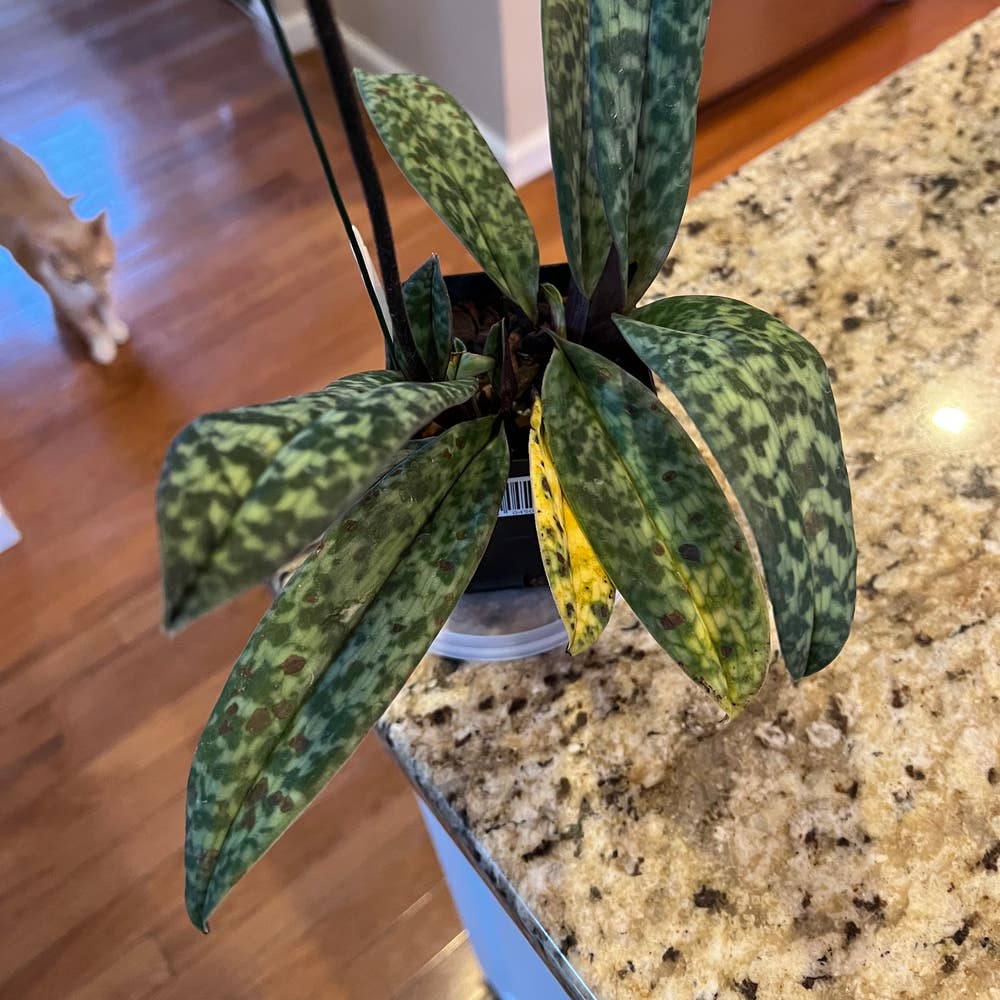
Direct sunlight is a no-no for these delicate beauties. Think of sheer curtains as your orchid's personal sunglasses, diffusing the intense rays. If natural light is lacking, don't shy away from artificial grow lights, but keep them at a respectful distance to prevent scorching. Monitor your orchid's response to its lighting conditions and adjust accordingly; a medium-green leaf color indicates a happy plant. Too pale or yellowish, and you've got a sunbathing enthusiast on your hands that needs to be reined in.
Feeding Your Fancy: Nutrient Needs and Solutions
💡 Spotting Nutrient Shortfalls
Recognizing nutrient deficiencies is crucial in preventing the dreaded leaf curl in your Paphiopedilum 'Hawaiian Fancy'. Yellowing leaves may indicate a lack of nitrogen, while weak, spindly growth suggests a potassium deficiency. A pale, lackluster appearance often cries out for magnesium. Don't guess; soil testing is your best bet for an accurate diagnosis.
💡 Fertilizer Fixes
Once you've pinpointed what's missing, it's time to fertilize. Think of it as seasoning food—just enough to enhance. A balanced, water-soluble fertilizer is your go-to, but moderation is key. Overfeeding can lead to nutrient lockout, much like how cramming cake into a full stomach leads to discomfort. For a quick fix, foliar feeding can give your orchid a direct nutrient boost. Remember, consistency is crucial—mark your calendar for regular feeding to maintain that perfect balance.
⚠️ Safety First
This content is for general information and may contain errors, omissions, or outdated details. It is not medical, veterinary advice, or an endorsement of therapeutic claims.
Always consult a qualified healthcare professional before using any plant as food, medicine, or supplement.
Never eat any plant (or feed one to pets) without confirming its identity with at least two trusted sources.
If you suspect poisoning, call Poison Control (800) 222-1222, the Pet Poison Helpline (800) 213-6680, or your local emergency service immediately.
Spotted an error? Please report it here.
Prevent your Paphiopedilum 'Hawaiian Fancy' leaves from curling by balancing humidity and light with Greg's tailored care plan 🌡, ensuring your orchid flourishes.