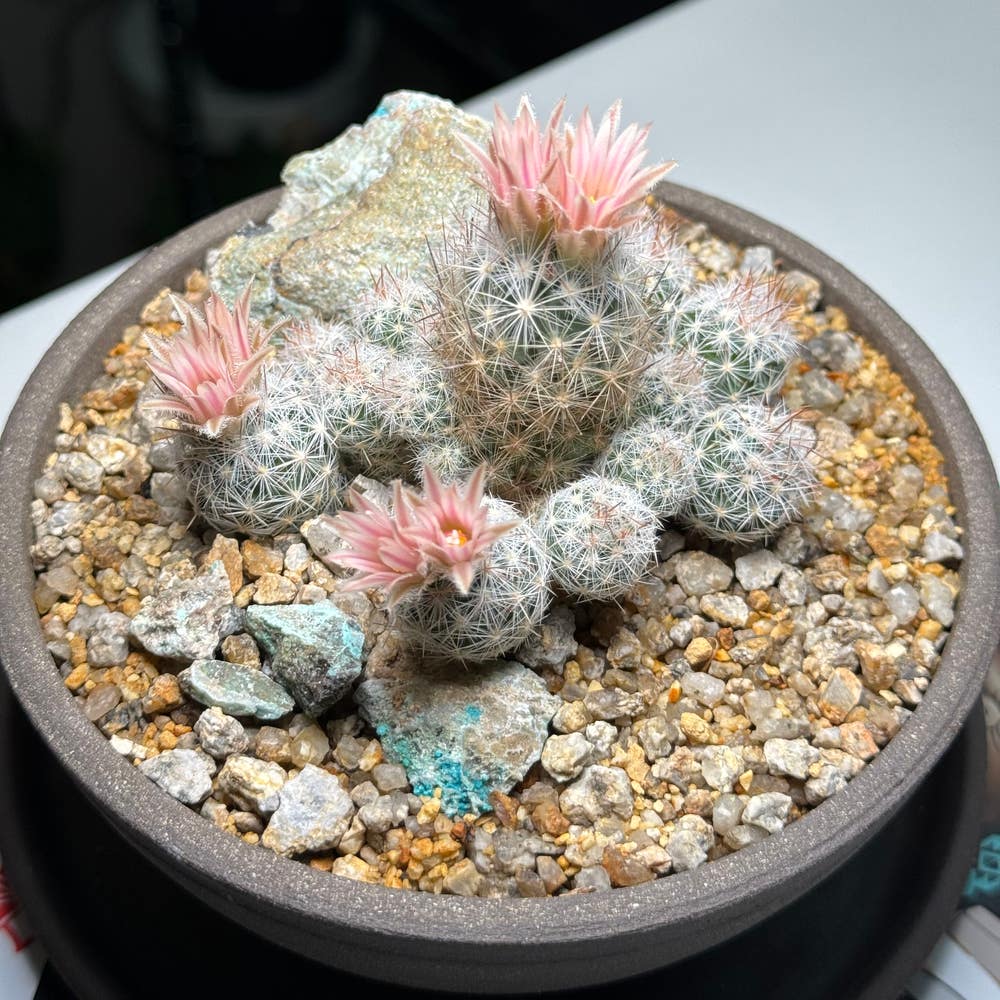
🌡 What Temperature Does My Missouri Foxtail Cactus Need?
Escobaria missouriensis
By the Greg Editorial Team
Jun 15, 2024•2 min read
This article was created with the help of AI so we can cover more plants for you. May contain errors. See one? Report it here.
Discover the secret to a flourishing Missouri Foxtail Cactus 🌵—perfect temperature control is key!
- 70-100°F day, 50-70°F night for healthy Missouri Foxtail Cactus.
- 🌡️ Watch for discoloration and texture changes to spot temperature stress.
- Consistent environment prevents stress; adjust location and monitor regularly.
Optimal Temperature Range for Missouri Foxtail Cactus
The Missouri Foxtail Cactus thrives when the mercury hits the sweet spot. During the day, aim for a balmy 70-100°F (21-38°C), which is just right for photosynthesis without turning your cactus into a baked good. Come nightfall, a cooler 50-70°F (10-21°C) is ideal, echoing the natural desert drop in temperature and giving your cactus a well-deserved rest.
🌡️ Temperature variations are more than just numbers on a thermostat; they're the silent puppeteers of growth. A cactus basking in the perfect thermal range will reward you with vigorous growth, while one that's shivering or sweating will likely sulk. Keep a close eye on the thermometer, because stability in temperature is as crucial for your cactus as a steady hand is for a surgeon.

Recognizing and Addressing Temperature Stress
🌡️ Signs of Temperature Stress
Discoloration and texture changes in your Missouri Foxtail Cactus are the equivalent of a distress flare. If you notice the cactus's vibrant greens turning to yellows or browns, it's time to reassess its environment. Leaves may become soft and mushy or overly dry and crispy to the touch, signaling that your cactus is not in its happy place.
🌡️ Common Causes of Temperature Stress
Direct drafts and sudden temperature fluctuations are the usual suspects when it comes to temperature stress. Placing your cactus near a heat source or in the path of an air conditioner can trigger a stress response. Consistency in the cactus's environment is crucial to avoid these issues.
🌡️ Immediate Steps for Recovery
If you spot signs of temperature stress, act swiftly. Adjust the cactus's location, steering clear of drafty windows and heat sources. For cold stress, consider insulating your plant with bubble wrap or a cloche as a short-term solution. Pruning damaged areas can prevent further decay, and maintaining a balanced watering schedule is key, especially when the plant is vulnerable.
🌡️ Ongoing Vigilance
Keep a close eye on your cactus. Regular temperature monitoring can help you avoid a repeat of the stress. Remember, your Missouri Foxtail Cactus doesn't have the luxury of moving to a more comfortable spot—it relies on you to create a stable and suitable microclimate.


⚠️ Safety First
This content is for general information and may contain errors, omissions, or outdated details. It is not medical, veterinary advice, or an endorsement of therapeutic claims.
Always consult a qualified healthcare professional before using any plant as food, medicine, or supplement.
Never eat any plant (or feed one to pets) without confirming its identity with at least two trusted sources.
If you suspect poisoning, call Poison Control (800) 222-1222, the Pet Poison Helpline (800) 213-6680, or your local emergency service immediately.
Spotted an error? Please report it here.
Prevent temperature stress and keep your Missouri Foxtail Cactus flourishing with Greg's proactive care alerts 🌡 that tailor to your home's unique climate.