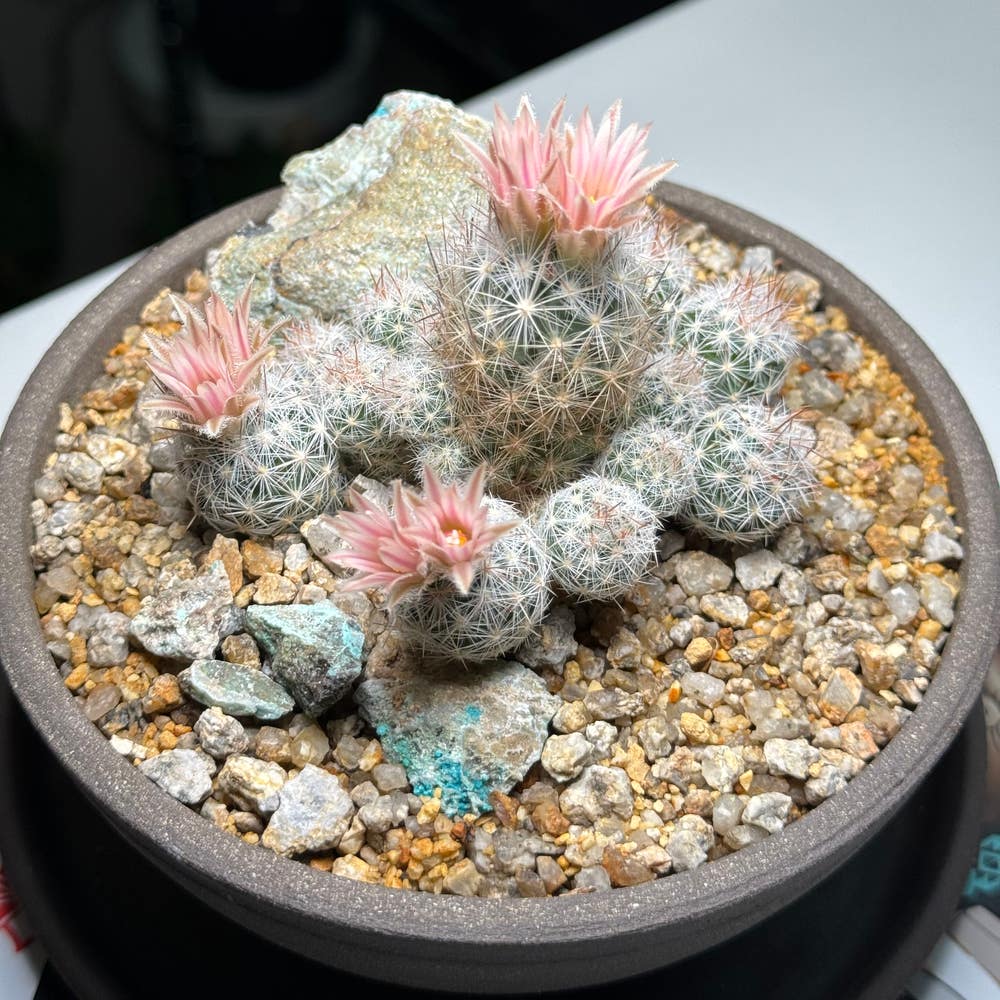
🌵 What Does It Mean When Missouri Foxtail Cactus Blooms?
Escobaria missouriensis
By the Greg Editorial Team
Jun 15, 2024•10 min read
This article was created with the help of AI so we can cover more plants for you. May contain errors. See one? Report it here.
Witness the Missouri Foxtail Cactus bloom 🌵—a symbol of resilience and natural artistry.
- 🌵 Optimal blooming requires 4-6 hours of sunlight and cooler temperatures.
- Adjust watering and soil for strong roots and vibrant blooms.
- Pruning and deadheading promote health and longer blooming periods.
Optimal Light for Missouri Foxtail Cactus Flowering
Light is the conductor of the blooming symphony for the Missouri Foxtail Cactus. It's not just about cranking up the brightness; it's about the subtle cues of light duration and intensity that whisper to the cactus, "Hey, it's showtime."
🌟 Light Intensity and Duration
Missouri Foxtail Cactus demands a bright spotlight—4 to 6 hours of direct sunlight daily. Less, and it's like the cactus is stuck backstage; more, and you're risking a sunburnt diva.
🌸 Seasonal Light Changes
As the seasons change, so does the light, and your cactus is paying attention. Shorter days in winter are a natural signal to get those blooms ready. But throw in too much artificial light, and you might as well be shouting false alarms.
💡 Indoor Lighting Tips
Indoors, your cactus still craves the sun. Place it by a south-facing window for its daily sunbath. If you're going artificial, LED lights are the new hotness—energy-efficient and enduring. Fluorescent lights? They're the reliable old-timers. Either way, aim for 5,000+ foot-candles to avoid a lackluster cactus.
🌞 Outdoor Considerations
For the outdoor cacti, the sun's natural rhythm should do the trick. But keep an eye on the heat—too much and your cactus might opt out of blooming to focus on survival.
Remember, patience is a virtue. Your cactus won't steal the show overnight. Give it the right light, and those blooms will be worth the wait.

Temperature and Humidity's Role in Blooming
Temperature and humidity are critical players in the blooming of the Missouri Foxtail Cactus. These factors work in tandem to create the ideal conditions for flower production.
🌡️ Ideal Temperature Ranges
For the Missouri Foxtail Cactus to bloom, cooler temperatures are essential, especially during the fall. This mimics their natural desert conditions, where cooler nights signal the plant to begin the flowering process. Aim for temperatures that hover between 50° to 75°F (10° to 24°C) to encourage blooming.
💧 Humidity's Influence
While cacti are known for their love of arid climates, a certain level of humidity is beneficial for flower health and longevity. Moderate humidity levels, around 40-50%, can prevent buds from drying out and provide the necessary moisture for optimal bloom development. Avoid environments that are too dry or too humid, as both can lead to flower and bud issues.
🏜️ Environmental Cues
Replicating the natural environmental cues of a desert can stimulate the Missouri Foxtail Cactus to flower. This includes not only managing temperature and humidity but also ensuring that the plant experiences longer nights and a distinct difference between day and night temperatures.
Monitoring and Adjusting
Keep an eye on your indoor climate, as household heating and cooling can significantly alter the temperature and humidity levels. Use tools like thermometers and hygrometers to monitor conditions and make adjustments as necessary. Grouping plants together or using a humidifier can help maintain the right moisture levels without creating conditions for mold or rot.
Remember, the Missouri Foxtail Cactus's blooming is a response to its environment. By carefully managing temperature and humidity, you can create a microclimate that encourages your cactus to put on a spectacular floral display.

Soil and Watering Specifics for Flowering
💧 Watering Schedules
Adjusting your watering schedule is crucial for the Missouri Foxtail Cactus, especially when you're aiming for those spectacular blooms. Overwatering is a no-go; it's like giving your cactus a drink when it's not thirsty—pointless and harmful. Instead, let the soil dry out completely before you water again. Think of it as a desert downpour—infrequent but thorough.
🏜️ Soil Amendments
When it comes to soil, think fast drainage. This isn't your average houseplant; it's a cactus with standards. Mix in some sand or perlite to your potting mix, and you're on your way to creating a five-star resort for your cactus's roots. Remember, a happy root system equals a blooming cactus.
🚰 Watering Depth
Here's the skinny: deep watering is your friend. It encourages roots to grow deep and strong, which is exactly what your Missouri Foxtail Cactus needs to support those blooms. So when you water, make sure you're not just wetting the surface—go deep.
🍂 Seasonal Adjustments
Seasons change, and so should your watering habits. As the seasons shift, keep an eye on the moisture level of your soil. Less is more when it comes to winter watering; think of it as your cactus's time to chill before the big bloom show.
💡 Pro Tip
Use a water calculator or an app like Greg to get personalized watering recommendations. It's like having a cactus concierge at your fingertips. Just input your environment details, and voilà, you'll know just how much to water your prickly friend.

Fertilization for Robust Missouri Foxtail Cactus Blooms
💡 Key Nutrients for Vibrant Blooms
Phosphorus (P) and potassium (K) are your Missouri Foxtail Cactus's best friends when it comes to blooming. These nutrients are like the plant's personal trainers, pushing it to show off its best self. Phosphorus gets the root system in top shape, while potassium is all about those blooms and overall plant stamina.
🕰 Timing and Methods of Fertilizer Application
Timing is everything. Start fertilizing in spring, as the cactus shakes off its winter chill and gears up for growing season. Think of it as a breakfast buffet for your cactus after a long night. Continue through summer, but once fall hits, it's time to wind down. This is when your cactus starts getting ready for its beauty sleep over winter.
🌱 Fertilizer Types and Ratios
A balanced fertilizer with an NPK ratio of 5-10-5 or similar will do the trick. This isn't a one-size-fits-all; it's more like finding the right pair of jeans that fits just right. If you're going organic, look for natural fertilizers that are higher in phosphorus. They're like the slow-release energy bars of the plant world.
🌿 Application Techniques
Less is more. You don't want to overdo it and end up with the plant equivalent of a sugar rush. Follow the package instructions for dilution and frequency. If you're feeling fancy, you can use a foliar feed, which is like giving your cactus a nutrient-packed facial.
🚨 Pro Tips
- Avoid high nitrogen levels; it's like feeding your cactus junk food and can lead to soft, weak growth.
- Magnesium sulphate can be a game-changer if you notice a deficiency. It's like giving your cactus a vitamin boost.
- Keep an eye on the soil's salt levels. Too much and you'll dehydrate your cactus's roots, like eating too many salty snacks.
Remember, fertilizing is about supporting your cactus's health and bloom potential. It's not about pumping it full of plant steroids. Keep it balanced, keep it timely, and you'll be rewarded with some show-stopping Missouri Foxtail Cactus blooms.
Pruning for Bloom Optimization
🌱 Pruning Techniques to Encourage Blooming
Pruning your Missouri Foxtail Cactus isn't just about aesthetics; it's a strategic move to direct the plant's energy towards blooming. Timing is crucial; prune after the blooming cycle to avoid cutting off future flower buds. Selective pruning should be your go-to method, removing just enough to stimulate growth without causing stress.
💐 The Importance of Deadheading
Deadheading, or the removal of spent flowers, is essential for the Missouri Foxtail Cactus. It prevents the plant from wasting resources on seed production and instead redirects energy to new blooms. This practice can lead to a longer flowering period, ensuring your cactus remains a showstopper for as long as possible.
🌿 Pruning for Plant Health
Snipping away dead or damaged parts of the cactus is like giving it a health check-up. It's not just about looks; it's about preventing disease and promoting a robust blooming phase. Plus, pruning can improve airflow around the plant, helping to keep rot at bay.
📏 Understanding Growth Patterns
To prune effectively, know your cactus's growth habits. The Missouri Foxtail Cactus grows from the tip, so make your cuts in a way that encourages healthy new growth without turning your plant into a botanical pancake. It's about guiding, not reshaping.
🌵 Pruning and Environmental Cues
Sometimes, a bit of stress from pruning can mimic natural environmental cues, inducing the cactus to bloom. It's a delicate balance, though; too much stress can backfire. Use pruning as a tool to replicate the subtle signals that nature provides, coaxing your cactus into showing off its flowers.
Stress Factors and Environmental Cues for Blooming
Environmental stressors can be unexpected allies in the quest for Missouri Foxtail Cactus blooms. Here's how to use them to your advantage.
🌵 Understanding Environmental Stress
Stress isn't always a bad thing, at least for cacti. In their natural habitats, Missouri Foxtail Cacti face challenges that signal it's time to reproduce. Drought, temperature swings, and nutrient scarcity can all trigger blooming.
🌼 Replicating Natural Cues
To encourage your cactus to flower, mimic these conditions. Gradually reduce watering as fall approaches, simulating a dry spell. Ensure the plant experiences cooler nights, which can prompt it to enter a blooming phase.
🌞 Light and Temperature Tweaks
Adjust light exposure to reflect seasonal changes. As days shorten, reduce artificial light to let your cactus experience longer nights. Keep it away from heat sources that might disrupt its natural blooming cues.
🕰️ Patience is Key
Remember, inducing stress should be done carefully and gradually. Overdoing it can harm the plant. With patience and attention to detail, you can coax out those coveted blooms.
Recognizing Signs of Blooming in Missouri Foxtail Cactus
🌵 Indicators of an Upcoming Bloom
Missouri Foxtail Cactus, with its spiky allure, signals its readiness to bloom in subtle yet observable ways. As daylight hours increase in spring, watch for the emergence of buds at the cactus's areoles, the spots where spines emerge. These buds, initially small and inconspicuous, will swell and take on a colorful hue as they mature, hinting at the vibrant display to come.
🌸 Pre-Flowering Changes
In preparation for the grand floral show, the Missouri Foxtail Cactus may exhibit a change in growth. The plant's energy redirects towards supporting the budding flowers, which may slow down the growth of spines and stems. Expect a lusher appearance around the budding area, as the cactus primes itself for reproduction. Keep an eye out for these changes; they're your cue to adjust care routines, ensuring the cactus has all it needs for a successful bloom.
The Ecological and Aesthetic Importance of Blooming
🌵 The Ecological Role of Blooms
Missouri Foxtail Cactus (Escobaria missouriensis) isn't just a pretty face in the desert landscape. Its blooms are ecological powerhouses, playing a crucial role in local ecosystems. During the blooming period from April to June, these cacti become a hub of activity, offering nectar and pollen to specialized pollinators like bees and bats. This interaction is vital for the plant's reproduction and the survival of these pollinators, which in turn support the broader health of the ecosystem.
🎨 Aesthetic and Emotional Impact
The blooming of the Missouri Foxtail Cactus is a visual spectacle. The pale greenish-yellow to yellow-green flowers, with their striking midstripes, add a splash of color to the arid regions they inhabit. For the human observer, these blooms offer a moment of awe in the stark desert environment. They serve as a reminder of nature's resilience and beauty, often evoking a sense of wonder and an emotional connection to the landscape.
💪 Blooms as a Symbol of Adaptation
In a broader sense, the flowering of this cactus symbolizes adaptation and survival in harsh conditions. The ability of the Missouri Foxtail Cactus to not only survive but also to produce such beautiful blooms in challenging environments is a testament to the tenacity of life. It's a subtle nod to the fact that even in the most unforgiving climates, there is a place for beauty and growth.
🎨 The Personal Touch of Nature's Art
For many, the blooming of the Missouri Foxtail Cactus is akin to witnessing a live art exhibit. Each bloom is a unique masterpiece, a fleeting moment captured by the attentive gardener or passerby. The emotional impact of these blooms can be profound, offering a personal connection to the cycles of nature and a reminder of the ever-present beauty in our world.
⚠️ Safety First
This content is for general information and may contain errors, omissions, or outdated details. It is not medical, veterinary advice, or an endorsement of therapeutic claims.
Always consult a qualified healthcare professional before using any plant as food, medicine, or supplement.
Never eat any plant (or feed one to pets) without confirming its identity with at least two trusted sources.
If you suspect poisoning, call Poison Control (800) 222-1222, the Pet Poison Helpline (800) 213-6680, or your local emergency service immediately.
Spotted an error? Please report it here.
Experience the awe of a blooming 🌵 Missouri Foxtail Cactus by letting Greg tailor your plant's care to the perfect light, temperature, and watering schedule for show-stopping flowers!