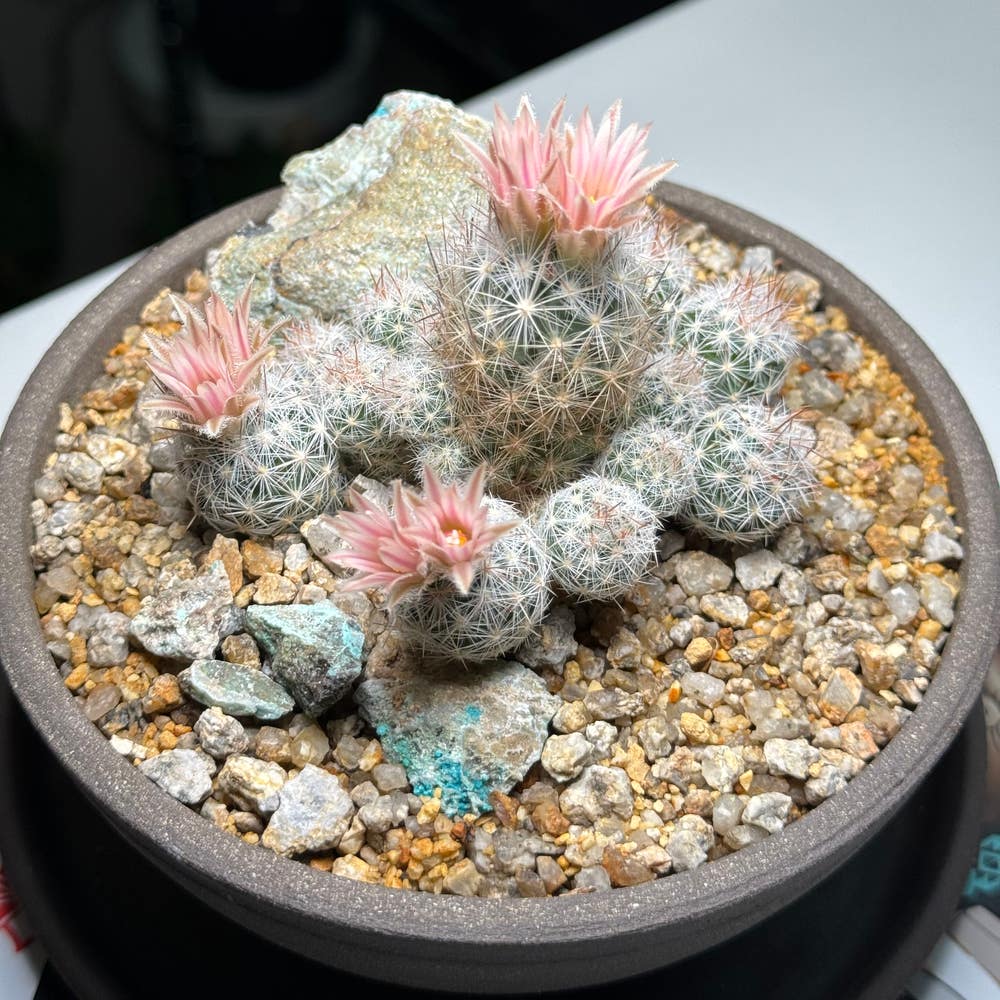
🪴 How to Know When to Repot a Missouri Foxtail Cactus?
Escobaria missouriensis
By the Greg Editorial Team
Jun 15, 2024•5 min read
This article was created with the help of AI so we can cover more plants for you. May contain errors. See one? Report it here.
Discover the secret to a flourishing Missouri Foxtail Cactus 🌵—know when to repot for unstoppable growth!
- Root crowding signals repotting time for Missouri Foxtail Cactus health.
- 🌵 Choose a 1-2 inch larger pot with drainage holes, ideally terracotta.
- Post-repotting care is crucial: wait a week before watering, monitor for stress.
Identifying the Need for Repotting
Recognizing when your Missouri Foxtail Cactus is cramped in its current pot is crucial for its health and vigor.
🌱 Root Crowding and Slowed Growth
Roots peeking out of drainage holes or forming a dense web at the pot's bottom are clear distress signals. If your cactus's growth has hit a plateau, it's likely begging for a new home.
🕰 Optimal Timing for Repotting
Spring is the prime time for this task, as the cactus awakens from its winter rest and is ready to expand. However, don't wait for spring if your plant is severely root-bound—your cactus's comfort trumps the calendar.

Choosing the Right Pot
Selecting the correct pot size for a Missouri Foxtail Cactus is not just about aesthetics; it's a survival thing.
🌱 Pot Size
Go for a pot that's 1-2 inches larger in diameter than the current one. This gives the roots room to breathe without drowning them in soil, which can retain too much water and lead to root rot.
🏺 Pot Material
Terracotta or unglazed ceramic are the MVPs here. They're breathable, which helps prevent overwatering by wicking away excess moisture. Plastic may be tempting for its durability and lightness, but it's like wrapping your cactus in a raincoat – too much moisture retention.
🚰 Drainage: Non-Negotiable
Make sure your pot has drainage holes. It's not up for debate. Without them, you're setting up a swimming pool for root rot, and no cactus wants to go for a swim.
Remember, the right pot is like the right pair of shoes – it should fit well, be comfortable, and have good drainage. Because nobody likes sweaty feet, especially not your cactus.

Preparing for Repotting
Before you dive into the repotting process, gearing up is crucial. You're dealing with a spiky customer, so protective gloves or a folded newspaper for handling the Missouri Foxtail Cactus are non-negotiable. Grab some tongs for extra safety—think kitchen tongs, not the barbecue variety.
🛠️ Tools and Gear
- Thick gloves or layers of newspaper
- Tongs for a hands-off approach
- Potting mix specifically for cacti and succulents
- A new pot with drainage holes
- A sharp knife or scissors for trimming roots, if necessary
Soil Mix Preparation
Now, let's talk dirt. Your cactus craves a well-draining soil mix that mimics its natural, arid habitat. Mix equal parts of potting soil, coarse sand (or bird gravel), and a pinch of perlite or pumice for that perfect drainage. A sprinkle of leaf mold can add some organic goodness.
🌱 Soil Ingredients
- Potting soil for structure
- Coarse sand or bird gravel for drainage
- Perlite or pumice to prevent waterlogging
- Leaf mold for a touch of organic matter
Remember, your cactus is a tough cookie, but its roots are the Achilles' heel. A soil mix that holds too much moisture is like kryptonite, so keep it light and airy. When you've got your gear and the soil mix ready, you're all set to give your prickly friend a new home.

Executing the Repotting
🌵 Step-by-Step Instructions
- Dry soil is your cue. Wait until the Missouri Foxtail Cactus's soil is bone-dry before you even think about starting.
- Protect your hands with gloves; those spines don’t mess around.
- Gently eject the cactus from its current pot. If it’s playing hard to get, coax it out with a towel for extra grip.
- Inspect the roots like a hawk. Trim any dead or damaged parts with sterilized scissors.
- Prep the new pot by covering drainage holes with gauze to keep soil from escaping. Add a layer of your well-draining cactus mix.
- Position the cactus in the new pot’s center. It should sit at the same depth it was in the old pot – no deeper.
- Fill ‘er up with soil around the cactus. Use a chopstick to gently poke around and eliminate any air pockets.
- Top-dress with gravel or volcanic rock to keep the base dry and fancy-looking.
🌵 Best Practices to Avoid Mistakes
- Never repot during dormancy. Spring or early summer is your golden window.
- Avoid water for the first week to let the roots heal without the risk of rot.
- Stabilize top-heavy cacti with a stake if they act like they’ve had one too many.
- Sunlight is good, but don’t give it the full blast immediately after repotting. Ease it into its tan.
Remember, repotting is like a cactus spa day. It might not look pretty at first, but your plant will thank you with growth spurts and that "just repotted" glow.
Immediate Aftercare
After the repotting dance, it's time to let the Missouri Foxtail Cactus catch its breath. Here's how to not mess it up.
💧 First Watering
Hold off on the H2O celebration. Wait a week before watering to let any root injuries heal. Trust me, your cactus is tough, but it's not invincible.
☀️ Light Exposure
Keep it bright, but not too bright. Post-repotting, indirect sunlight is your cactus's best friend. Think of it as a spa retreat for your spiky pal.
🚨 Stress Signs
Your cactus might throw a fit. Look for discoloration or wilting as signs of distress. If it's throwing a tantrum, reassess your care game.
👀 Monitoring
Keep a watchful eye. New growth is like a thumbs-up from your cactus. No growth or yellowing? Time to troubleshoot.
🌡️ Temperature and Environment
Keep things cool and stable. Avoid the temptation to move your cactus around like a nomad. Find a spot and stick to it.
🐜 Pests and Diseases
Be on the lookout for uninvited guests. If you spot pests or funky fungus, it's time for some neem oil action.
🕰 Patience is a Virtue
Remember, cacti are not speed demons. Give your prickly friend 2-4 weeks to settle into its new digs. Rushing it is a recipe for sadness.
⚠️ Safety First
This content is for general information and may contain errors, omissions, or outdated details. It is not medical, veterinary advice, or an endorsement of therapeutic claims.
Always consult a qualified healthcare professional before using any plant as food, medicine, or supplement.
Never eat any plant (or feed one to pets) without confirming its identity with at least two trusted sources.
If you suspect poisoning, call Poison Control (800) 222-1222, the Pet Poison Helpline (800) 213-6680, or your local emergency service immediately.
Spotted an error? Please report it here.
Revitalize your Missouri Foxtail Cactus by spotting the squeeze and repotting smartly; Greg's custom reminders 🌵 will guide you through the healing and acclimatization period for a seamless transition.