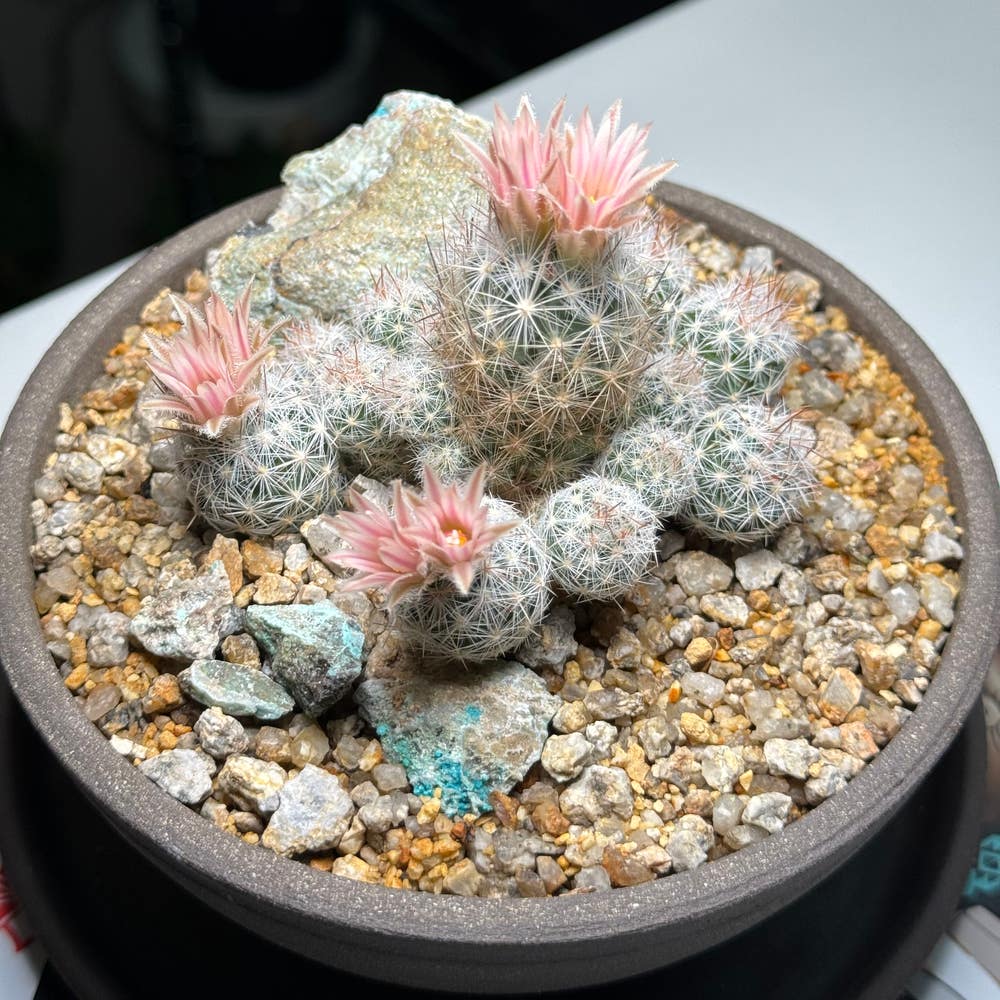
🌞 Is Direct Sunlight Good for My Missouri Foxtail Cactus?
Escobaria missouriensis
By the Greg Editorial Team
Jun 15, 2024•8 min read
This article was created with the help of AI so we can cover more plants for you. May contain errors. See one? Report it here.
Ensure your Missouri Foxtail Cactus flourishes with the right dose of sunshine, avoiding sunburn and shade pitfalls 🌵⚖️!
- 🌵 Direct sunlight is crucial but limit to 4-6 hours to prevent sunburn.
- Seasonal adjustments needed to match sunlight intensity changes.
- South-facing windows best for consistent, intense light indoors.
Direct vs. Indirect Sunlight for Missouri Foxtail Cactus
Direct sunlight is the unfiltered, full-strength solar serving, while indirect light is the soft glow that fills a room without harsh shadows. For the Missouri Foxtail Cactus, direct sunlight is akin to a front-row seat at a concert—it's where the action is. These cacti crave that intense light, but not all day; 4 to 6 hours should do the trick. Too much, and you're in sunburn territory; too little, and you might as well be growing a mushroom.
💡 Understanding the Balance
Indoors, a south-facing window is the VIP lounge for your cactus, offering the most consistent light show. But remember, light intensity drops faster than a bad habit once you move away from the window. Keep your Missouri Foxtail Cactus close to that glass for its daily sunbath.
🌞 The Indoor Light Tango
Seasons change and so should your cactus's spot. Winter's weak rays might be an invite to flower, while summer's intense beams could mean pulling back to avoid a sunburn. It's a dance of adjustment and observation—no two-step is the same. Keep an eye out for stretching or discoloration, the tell-tale signs of too little or too much light.
🛋 Pro Tip
If you're moving your cactus to a sunnier spot, think of it as acclimating to a hot bath—ease it in. A sudden change is more shock than treat. And if you're worried about too much sun, think sheer curtains. They're like sunscreen for your spiky friend, filtering out the harshest rays while letting in the good stuff.

Sunlight Needs of Missouri Foxtail Cactus
Direct sunlight is non-negotiable for the Missouri Foxtail Cactus. It's a sun worshipper, thriving on 4 to 6 hours of unfiltered rays. Less, and it languishes; more, and you risk a crispy plant.
🪟 Optimal Indoor Placement
For indoor cacti, south-facing windows are the VIP lounges. They offer premium light all day, which is what these desert natives crave. Keep your cactus close to the window; even a few feet away can drastically reduce the light's intensity.
🛡️ Tolerance and Adaptation
Missouri Foxtail Cacti are tough, but they're not invincible. They can handle a bit of a scorch, but sunburn is a real threat. It's a fine line between basking and baking, so watch for signs of distress like discoloration or shrinkage.
🌬️ Winter Light Considerations
Come winter, the shorter days are your cactus's cue to prep for flowering. It's a delicate dance with light during these months. Too much artificial light can throw off its natural rhythm, so let it rest in the dimmer natural light.
🏞️ Indoor vs. Outdoor Light
If you're taking your cactus outside, aim for that golden 5-6 hours of sunlight. It's a different beast in the open air, where light is more intense. Monitor closely to prevent a sunburnt cactus, which is as sad as it sounds.

Impact of Window Orientation on Missouri Foxtail Cactus
Navigating the sunlight maze for your Missouri Foxtail Cactus? It's all about window direction.
🌞 South-Facing Windows: The Sun's VIP Lounge
South-facing windows are the crème de la crème for these cacti, offering a full-day pass to the sun's rays. It's like the front row at a rock concert, but for your cactus.
🌅 East-Facing Windows: The Gentle Morning Embrace
East-facing windows provide a softer touch of morning sun, ideal for a Missouri Foxtail Cactus that doesn't want to overdo its tan.
🌇 West-Facing Windows: The Afternoon Power Hour
West-facing windows bring the heat in the afternoon, which can be intense. Think of it as the midday gym session for your cactus – great in moderation.
🌃 North-Facing Windows: The Shade Zone
North-facing windows? They're the chill-out zone. The light here is too mellow for your cactus's taste, like a dimly lit jazz bar when it's craving a dance club.
🚧 Obstructions: The Unseen Light Thieves
Got trees or buildings playing hide and seek with the sun? They're the obstructions that could be robbing your cactus of its much-needed light.
The Takeaway
Choose your window wisely. It's not just about quantity of light, but the quality and direction too. Your Missouri Foxtail Cactus's performance depends on it.

Hemisphere Effects on Sunlight Exposure
🌍 Understanding the Sun's Influence
The hemisphere you're in flips the script on your Missouri Foxtail Cactus's sunbathing routine. In the northern realms, south-facing windows are the VIP lounges for maximum sunlight. Conversely, if you're hanging out in the southern hemisphere, north-facing windows are where the party's at.
🌞 Seasonal Sunlight Shuffle
As the Earth struts its seasonal runway, the angle of sunlight changes the game. Winter sun is like that cool, distant cousin—present but not overbearing, while summer sun is the life of the party, sometimes too intense for your green amigo.
💡 Indoor Sunlight Mimicry
Indoors, your goal is to recreate the cactus's natural habitat. This means parking it near a window that gets the most action—south-facing in the north, and vice versa. Just remember, light intensity takes a nosedive the further you move from the window.
👩🌾 Adapting to the Cactus's Needs
Your Missouri Foxtail Cactus isn't just a pretty face; it's a sun worshipper with needs. In the summer, it might appreciate a little afternoon shade to avoid a sunburn. Come winter, let it soak up those weaker rays a bit longer to make up for the sun's low energy vibes.
Seasonal Sunlight Adjustments for Missouri Foxtail Cactus
Navigating the seasonal shifts in sunlight is crucial for the well-being of your Missouri Foxtail Cactus.
🌬️ Winter Sun Worship
During winter, your cactus is like a sunbather desperate for a tan—it needs those rays. Position it to catch the limited sunlight, and consider supplementing with artificial light, but don't overdo it. Overexposure to artificial light can mess with its flowering mojo.
🏖️ Summer Shade Shuffle
Come summer, the sun doesn't play nice—it's relentless. Your cactus will appreciate some afternoon shade to avoid a sunburn. Think of it as its little umbrella drink moment.
🍂 Spring and Autumn Balancing Act
Spring and fall are the Goldilocks seasons—not too hot, not too cold. Your cactus will likely thrive with the steady sunlight these months offer. Still, keep an eye out for any signs of distress.
💃 Indoor Light Tango
Indoors, the sunlight dance gets trickier. Keep your cactus near a south-facing window, but be ready to shift its position as the sun's angle changes with the seasons. If it starts stretching like it's reaching for something, it's time to move it closer to the light.
🚦 Signs of Sunlight Stress
Yellowing or fading are your cactus's way of saying, "I've had too much." If you see these signs, it's time to rethink your sunlight strategy. Adjust its spot to find that perfect balance of light.
Remember, your Missouri Foxtail Cactus isn't just another pretty plant—it's a living barometer for the sun's whims. Keep it happy season to season, and it'll reward you with growth and maybe even a flower or two.
Mitigating Sunlight Risks for Missouri Foxtail Cactus
🌞 Practical Sunlight Management
Direct sunlight is the Missouri Foxtail Cactus's best friend, but like all friendships, boundaries are key. Five to six hours of sun is the sweet spot; more can lead to the plant equivalent of a nasty sunburn. To prevent this, position your cactus near a south-facing window, the plant's VIP lounge for optimal light. But remember, it's not just about location; timing is crucial. As the seasons change, so should your cactus's spot to ensure it gets the right amount of sun without overdoing it.
🚫 Avoiding Common Mistakes
Beware the post-pruning sun exposure. Your cactus is vulnerable then, so don't toss it into the sun's embrace without a gradual reintroduction. Think of it as easing into a hot bath, not diving into a boiling pot. And while we're at it, let's talk pests. They love a stressed cactus, so maintaining the right light levels is like setting up a good security system against these tiny invaders.
🌿 Advanced Care Tips
If you're looking for a more tailored approach, consider using a plant care app like Greg for detailed instructions. These digital green thumbs can help you adjust water and light to keep your cactus thriving. And if you're a fan of precision, a water calculator can become your new best friend, ensuring your cactus gets just the right amount of hydration to complement its sunbathing routine.
🌱 Seasonal Adjustments
Winter's shorter days can be a cue for your cactus to start flowering. But don't get trigger-happy with artificial light; it can throw off the plant's natural rhythms. Instead, let the cactus enjoy the seasonal change. It's like giving it a taste of its desert home, where the sun's a fickle friend, not a constant companion.
☀️ Sunburn and Disease Prevention
Keep a vigilant eye for signs of sunscald or disease. If your cactus starts looking like it's spent too long at the beach, it's time to dial back the sun. And remember, a sunburned cactus is more susceptible to fungal infections. So, moderation is the name of the game – think of it as sunscreen for your spiky friend.
⚠️ Safety First
This content is for general information and may contain errors, omissions, or outdated details. It is not medical, veterinary advice, or an endorsement of therapeutic claims.
Always consult a qualified healthcare professional before using any plant as food, medicine, or supplement.
Never eat any plant (or feed one to pets) without confirming its identity with at least two trusted sources.
If you suspect poisoning, call Poison Control (800) 222-1222, the Pet Poison Helpline (800) 213-6680, or your local emergency service immediately.
Spotted an error? Please report it here.
Keep your Missouri Foxtail Cactus basking in the perfect amount of sunshine ☀️ by letting Greg's PlantVision measure the light and remind you when to adjust its spot for optimal growth.