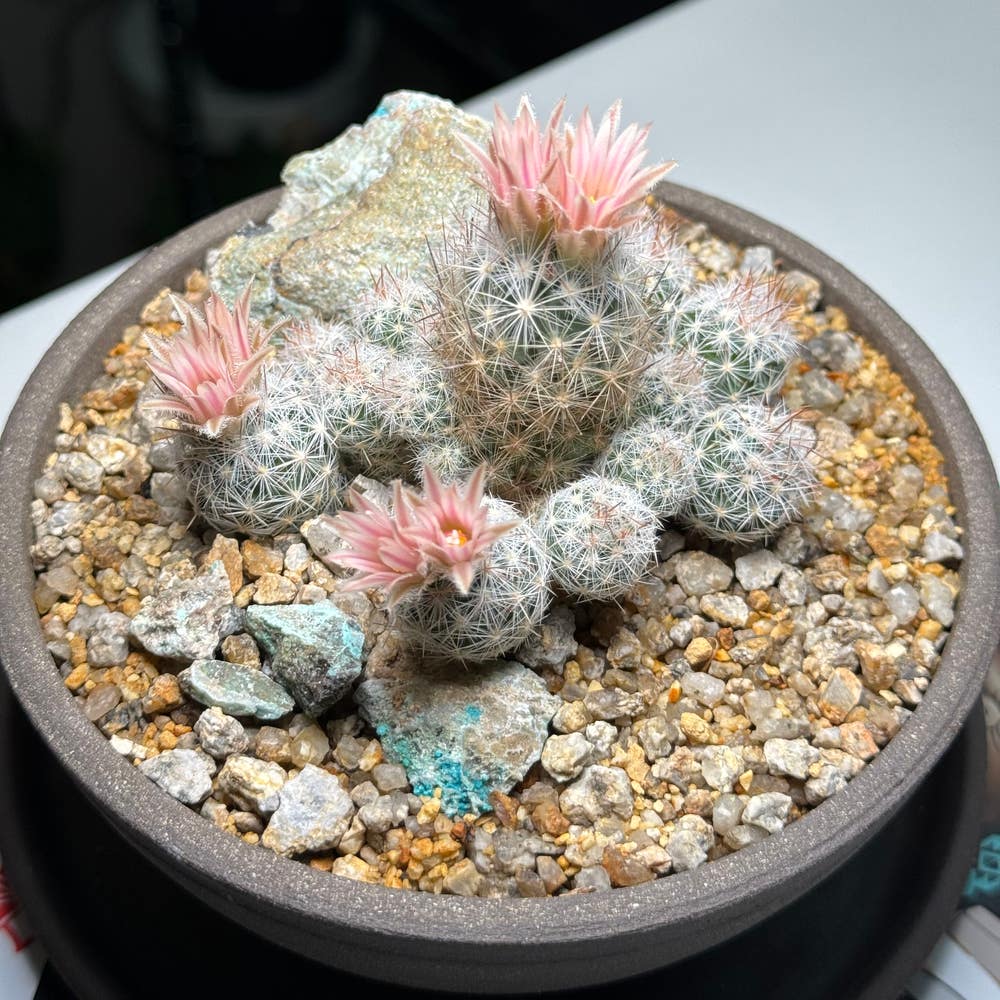
Why Are My Missouri Foxtail Cactus Leaves Curling?
Escobaria missouriensis
By the Greg Editorial Team
Jun 15, 2024•5 min read
This article was created with the help of AI so we can cover more plants for you. May contain errors. See one? Report it here.
Unravel the mystery behind your Missouri Foxtail Cactus's curling leaves and restore its vigor! 🌵🌀
- Curling leaves signal stress in Missouri Foxtail Cactus due to environment.
- Adjust watering and sunlight to prevent and treat leaf curling.
- Protect from temperature extremes and prune damaged leaves for recovery.
Identifying Leaf Curling in Missouri Foxtail Cactus
Recognizing the signs of leaf curling is crucial for the health of your Missouri Foxtail Cactus.
🍃 Spotting the Symptoms
Look for leaves that roll inward or upward, a departure from their typical robust stance. This may be paired with yellowing, brown tips, or a generally unhappy demeanor in your cactus.
🌱 Unnatural Plant Behavior
Normal Missouri Foxtail Cactus leaves are sturdy and upright. Curling leaves are a cry for help, signaling stress or environmental discomfort.
🌿 Visual Clues
Curling can range from subtle waves to full-on spirals. It's like your cactus is trying to say, "Hey, I'm not feeling too hot here!"
👩🌾 Observant Care
Stay vigilant. Regular checks for changes in leaf texture and color can catch issues early. Quick action is key to getting those leaves back to their perky selves.

Common Causes of Leaf Curling in Missouri Foxtail Cactus
💧 Watering Habits: A Balancing Act
Watering is like walking a tightrope with your Missouri Foxtail Cactus. Too much, and you'll drown it in kindness; too little, and you're leaving it high and dry. Underwatering makes the cactus conserve water, causing leaves to curl upwards. On the flip side, overwatering can lead to root rot, with leaves curling downwards as a distress signal.
🌞 Sunlight and Temperature: The Goldilocks Zone
Sunlight needs are specific—too much and leaves curl away from the harsh rays, too little and they reach out, curling for more. It's about finding that sweet spot. Temperature also plays a role; think of your cactus as a bit of a diva that dislikes extremes. Too hot or too cold, and the leaves will curl faster than a bad hair day in humidity.
Navigating Seasonal Shifts
Remember, as seasons change, so does your cactus's lighting needs. Winter's shorter days might signal it to flower, but too much artificial light can throw off its game. Keep an eye on the light, and adjust your cactus's position as needed to prevent those leaves from throwing a curling tantrum.

Addressing Underwatering and Overwatering
Watering your Missouri Foxtail Cactus correctly is like hitting the bullseye in a game of darts—it requires precision and practice. Underwatering and overwatering can both lead to leaf curling, but with a few adjustments, you can keep your cactus happy.
💧 Adjusting Watering Practices
To prevent the dreaded curl, water only when the top inch of soil is dry. This isn't a suggestion—it's a rule. A moisture meter can be your sidekick in this quest, giving you a no-drama check on soil wetness.
Signs of Water-Related Stress
Underwatered cacti will have leaves that seem to be reaching inward, as if trying to hug themselves for comfort. They may feel brittle and look lighter in color. On the flip side, overwatered cacti will sport leaves that droop downwards, with a general vibe of despair. If your cactus is sitting in soggy soil, it's crying out for an intervention.
Recognizing Dehydration
- Leaves curling inwards
- Brittle texture
- Light green or yellow coloration
Spotting Overhydration
- Leaves curling downwards
- Soggy soil
- Yellowing leaves
Remember, your cactus isn't a camel, nor is it a fish. Find that Goldilocks zone of moisture—not too much, not too little. And if you've been watering your cactus like it's a contestant in a drinking contest, it's time to dial it back.

Mitigating Temperature and Sunlight Stress
🌡️ Protecting from Extreme Temperatures
Indoor warmth is key when the mercury dips. If your Missouri Foxtail Cactus is shivering outdoors, bring it inside to avert a cold snap catastrophe. Avoid placing it near drafty areas or icy windows that could spell a frosty doom for your spiky friend.
Heat sources are a double-edged sword. They're great for chasing away the chills but can turn your cactus into wilted greens if too close. Keep a safe distance from radiators and heaters to maintain a cozy, not roasty, environment.
🌞 Balancing Sunlight Exposure
Morning light is the cactus's best friend, gentle yet cheerful. Position it to catch the early rays without the harsh midday glare. Think of it as the plant's caffeine kick-start.
Afternoon shade is crucial when the sun is in full tantrum mode. Use strategic placement, like behind taller plants, or employ shade cloth to dial down the intensity. It's like putting sunglasses on your cactus, and who wouldn't want to see that?
Indoor adjustments are all about location, location, location. A south-facing window is the VIP lounge for your cactus, but watch for signs of sunburn. If it's stretching or fading, shuffle it around to find that sweet spot where it can soak up the sun without overindulging.
Remember, your Missouri Foxtail Cactus doesn't need a tan; it needs a balanced diet of light and shade to stay perky and uncurled.
Specific Remedies for Curled Leaves
🌞 Treatment for Sunburnt or Temperature-Damaged Leaves
Immediate relocation is key for sunburnt Missouri Foxtail Cactus. Move it to a shadier spot or use a sheer curtain to diffuse direct sunlight. For temperature-related damage, ensure the plant is in an environment with stable temperatures, away from drafts or heat sources. Misting can help cool down leaves, but don't overdo it—nobody likes a soggy cactus.
🌿 Pruning Curled Leaves
When it's pruning time, be precise. Use clean, sharp tools to snip off the damaged leaves. This isn't just a makeover; it's a redirection of the plant's energy towards healthier growth. And remember, less is more—don't go turning your cactus into a pincushion.
💧 Recovery Encouragement
After treatment, give your cactus some TLC. Adjust watering to ensure it's just right—not too much, not too little. Keep an eye on the humidity; these cacti aren't fans of the desert dryness. And if you've had to prune, don't expect overnight miracles. Patience is a virtue, especially in plant recovery.
⚠️ Safety First
This content is for general information and may contain errors, omissions, or outdated details. It is not medical, veterinary advice, or an endorsement of therapeutic claims.
Always consult a qualified healthcare professional before using any plant as food, medicine, or supplement.
Never eat any plant (or feed one to pets) without confirming its identity with at least two trusted sources.
If you suspect poisoning, call Poison Control (800) 222-1222, the Pet Poison Helpline (800) 213-6680, or your local emergency service immediately.
Spotted an error? Please report it here.
Revive your Missouri Foxtail Cactus from leaf curling woes with Greg's custom care plan 🌵, ensuring the right balance of water, light, and love for your spiky friend.