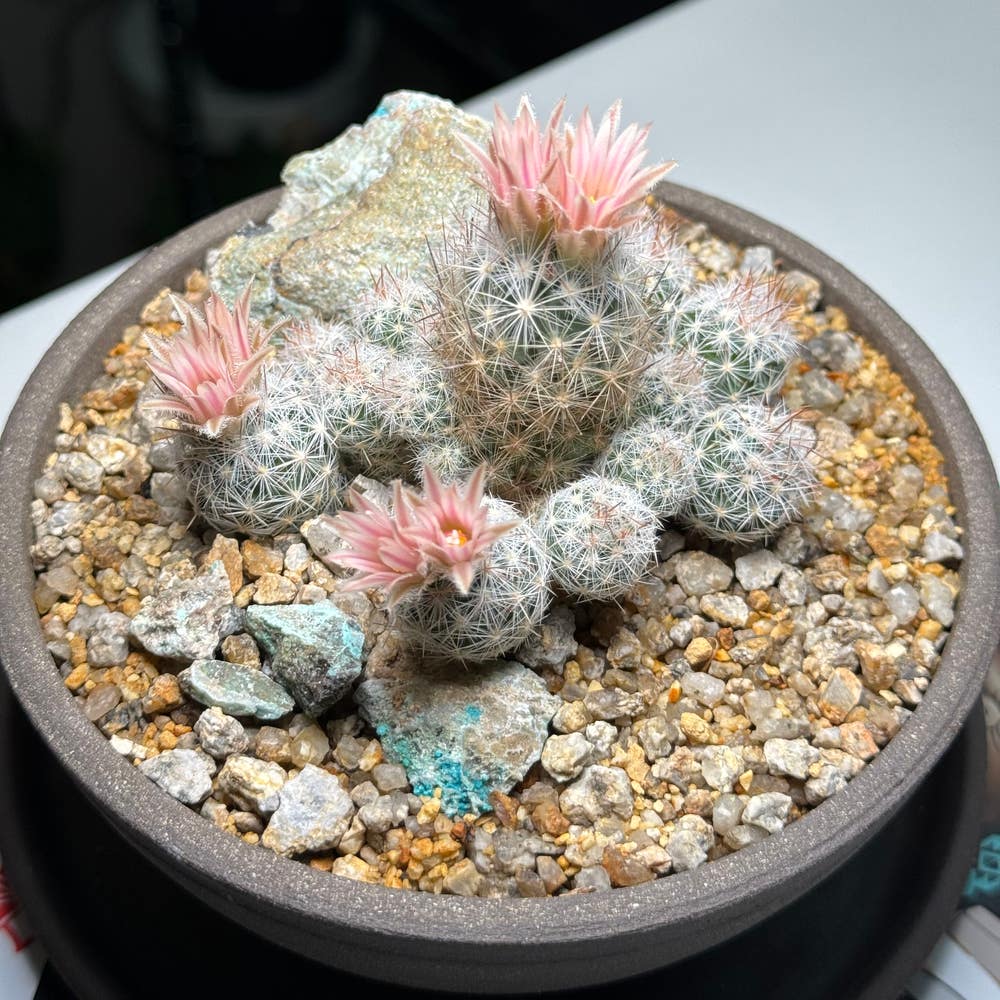
Black Spots on My Missouri Foxtail Cactus Leaves
Escobaria missouriensis
By the Greg Editorial Team
Jun 15, 2024•3 min read
This article was created with the help of AI so we can cover more plants for you. May contain errors. See one? Report it here.
Prevent distress signals 🚨 on your Missouri Foxtail Cactus by tackling black spots with our proven tips! 🌵
- Black spots signal distress in Missouri Foxtail Cactus, needing prompt attention.
- Fungal, sunburn, or damage - identify the cause to treat effectively.
- Prevent with proper care: right environment, watering, and gentle handling.
Identifying Black Spots on Missouri Foxtail Cactus
When your Missouri Foxtail Cactus starts looking like it's been in a goth phase with black spots dotting its leaves, it's time to play plant detective. These spots can range from tiny speckles to larger blotches and often signal that your cactus needs some TLC.
🎨 Characteristics of Black Spots
Circular or irregular in shape, these spots can be a sign of distress. They may appear as dry and scaly or slightly mushy to the touch, depending on the cause.
🍄 Disease-Induced Spots
Fungal foes like Phyllosticta concava or Mycosphaerella may throw a spotty party on your cactus. These spots are typically circular and can expand over time, leading to more significant damage if left untreated.
🌞 Sunburn Spots
Too much sun can leave your cactus with the equivalent of a nasty sunburn. These spots are often found on the most sun-exposed parts of the plant and can look like black patches.
🩹 Physical Damage Marks
Bumps, scrapes, and accidental pokes can leave your cactus with black spots that are essentially scabs. These are usually isolated to the injury site and don't spread like those caused by fungal infections.
Differentiating the Culprits
Context is everything. Spots that emerge after a scorching hot day are likely sunburn. If they pop up in a humid environment with poor air circulation, think fungus. And if you've recently reenacted a cactus version of 'The Lion King' and dropped it, physical damage is your prime suspect.
Remember, consulting experts or cross-referencing with reliable online resources can help you pinpoint the issue more accurately. Don't just guess; get to the root of the problem.

Causes and Treatment of Black Spots
🍄 Fungal Infections
Fungal infections on Missouri Foxtail Cactus manifest as black spots that can spread rapidly. To combat this, antifungal treatments are necessary. Start by removing affected areas with sterilized tools. Then, apply a fungicide specifically designed for cacti, following the manufacturer's instructions to the letter.
☀️ Sunburn
Sunburn is another culprit for black spots, characterized by a bleached or crispy appearance. Immediate action is required to prevent further damage. Relocate the cactus to a shadier spot and gradually reintroduce it to sunlight over time. Sadly, sunburnt areas won't recover, but the plant can still thrive with proper care.
🩹 Physical Damage
Physical injuries can lead to black spots as the cactus tries to heal. Preventive care is crucial here. Handle your cactus with care and provide ample space to avoid accidental bumps. If damage occurs, keep the area clean and dry to allow for natural healing, avoiding any moisture that could invite fungal growth.

Preventative Measures for Black Spots
💧 Watering Practices
Early morning watering is your secret weapon against black spots. It's like giving your cactus a head start before the sun's marathon. Make sure the soil is like a wrung-out sponge—moist, not drenched. Overwatering is the fast track to Fungusville, and nobody wants to live there.
🌡️ Environmental Conditions
Your Missouri Foxtail Cactus craves the Goldilocks zone—not too hot, not too cold. Aim for temperatures that don't swing more wildly than a pendulum in a clock shop. Humidity should be steady, think 40-60%, to keep those black spots from thinking they've found paradise. And air circulation? Keep it flowing like a gentle stream, not a stagnant pond.
🛡️ Protective Measures
Shade is your ally when the sun's in full gladiator mode. But don't overdo it; your cactus still needs its sun-kissed glow. Physical damage? Handle your cactus like it's a priceless vase from the Ming Dynasty. A little care goes a long way in preventing those unsightly black blemishes.

⚠️ Safety First
This content is for general information and may contain errors, omissions, or outdated details. It is not medical, veterinary advice, or an endorsement of therapeutic claims.
Always consult a qualified healthcare professional before using any plant as food, medicine, or supplement.
Never eat any plant (or feed one to pets) without confirming its identity with at least two trusted sources.
If you suspect poisoning, call Poison Control (800) 222-1222, the Pet Poison Helpline (800) 213-6680, or your local emergency service immediately.
Spotted an error? Please report it here.
Eradicate black spots 🕵️♂️ on your Missouri Foxtail Cactus with Greg's environmental alerts and care reminders, ensuring your spiky friend stays in peak condition.