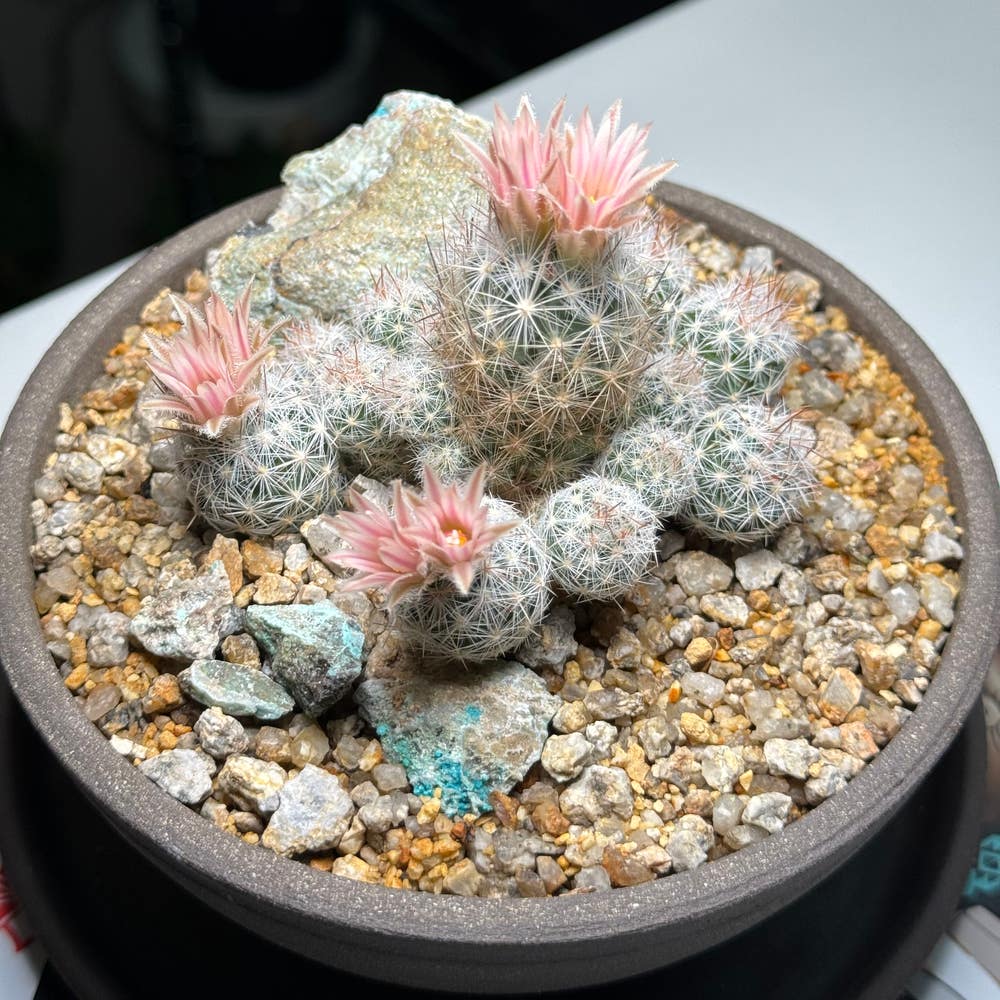
Why Is My Missouri Foxtail Cactus Not Doing Well?
Escobaria missouriensis
By the Greg Editorial Team
Jun 15, 2024•8 min read
This article was created with the help of AI so we can cover more plants for you. May contain errors. See one? Report it here.
Save your struggling Missouri Foxtail Cactus 🌵 by tackling these key care challenges head-on!
- Discoloration and texture change signal Missouri Foxtail Cactus distress.
- Balance water, light, and temperature to mimic natural habitat and prevent issues.
- Combat pests and rot with proper care, isolation, and treatment strategies.
Signs of an Unhealthy Missouri Foxtail Cactus
When your Missouri Foxtail Cactus starts to look like it's been through a desert storm, it's time to pay attention. Discoloration and changes in stem texture are your cactus waving a white flag.
🟡 Discoloration: The Telltale Signs
Yellow, swollen, or translucent patches on your cactus are not a new fashion trend; they're signs of overwatering. If the cactus starts to brown or blacken, it's an SOS that you need to ease up on the H2O. On the flip side, a cactus that looks more raisin than robust is crying out for water. Wrinkled, dried-up skin and a parched soil bed are clear indicators of underwatering.
🌱 Stem Texture: Reading the Signs
A healthy Missouri Foxtail Cactus should feel like the life of the party—plump and firm. If it's starting to feel mushy or looks like it's wearing a moldy coat, it's time to intervene. These are signs of rot or fungal issues, and they're as welcome as ants at a picnic.
🌵 Spine and Growth Issues: Subtle Yet Serious
Don't ignore wilting spines or a cactus that's stopped growing like it's on a diet. These are subtle hints that your plant is not getting the right amount of light or nutrients. And if your cactus is stretching out like it's trying to do yoga, it's actually reaching for more light—give it what it wants before it snaps like a brittle twig.
Remember, the Missouri Foxtail Cactus is not just another pretty face in your plant collection; it's a living organism that needs your attention. So, keep your eyes peeled for these signs, and your cactus will thank you by not turning into a spiky brown mess.

Resolving Inconsistent Watering
🚱 Identifying Symptoms of Over and Under-Watering
Over-watering can turn your cactus into a mushy mess. Look for yellowing leaves or a soil scent that's just not right. Under-watering, on the other hand, leaves your plant wilting with browning tips. It's a sad sight.
🚰 Steps to Achieve a Balanced Watering Routine
- Check the soil before you water—only when dry to the touch should you give it a drink.
- Drainage is key; ensure your pot doesn't hold water hostage.
- Seasons change, and so should your watering habits. Adjust accordingly.
- Observe and adapt; your cactus's thirst isn't on a schedule.
- Avoid waterlogging; let the soil dry out a bit between waterings.
- Mistakes happen; if over-watered, move to shade, repot if needed, and hold the fertilizer.
- Patience is a virtue; improvements may take a week, but keep a watchful eye.
Remember, your Missouri Foxtail Cactus isn't just another pretty face; it has needs. Get the watering right, and it'll thrive.

Correcting Light and Temperature Issues
In the life of a Missouri Foxtail Cactus, light and temperature are make-or-break factors. Here's how to spot and fix issues that could leave your cactus feeling under the weather.
💡 Recognizing Signs of Improper Light and Temperature Exposure
Scorched skin isn't just a human summer bummer; it's a sign your cactus is getting too much direct sunlight. If your plant's sporting a tan, it's time to rethink its sunbathing routine. On the flip side, a cactus turning pale or stretching out is likely starved for sunlight—think of it reaching out for a sunbeam it can't quite feel.
Adjusting Environmental Conditions
To mimic the cactus's natural habitat, start by playing Goldilocks with the light—not too much, not too little. Bright, indirect sunlight will keep your cactus happy without the risk of sunburn. If you're using artificial light, make sure it's the right intensity and duration.
🌡️ Temperature Tweaks
Your cactus doesn't need a sweater, but it doesn't want to bake in an oven either. Aim for daytime temperatures around 70-100°F (21-38°C) and cooler nights, ideally between 50-70°F (10-21°C). If your cactus is shivering or sweating, so to speak, it's time to adjust the thermostat or move it to a better spot.
Insulation and Airflow
In the cooler months, wrap the pot with insulating material or use a heat lamp to ward off the chill. But remember, cacti despise drafts as much as cats do—keep them out of the direct path of air conditioners and fans.
By keeping a vigilant eye on these conditions and making adjustments as needed, you'll have a cactus that's as content as a cat in a sunbeam—without the sunburn.

Combating Pest Infestations
🐛 Common Pests
Your Missouri Foxtail Cactus might be tough, but it's not invincible when it comes to pests. Keep an eye out for the usual suspects: mealybugs, with their fluffy white disguises, and scale insects, masquerading as tiny bumps on your plant. Spider mites are also a threat, spinning fine webs and causing yellowing or bronzing of the foliage.
🚨 Telltale Signs
If you spot a white fuzz or tiny bugs, it's time to spring into action. Discoloration, stickiness, or a sudden lack of vigor in your cactus could all point to an infestation. Don't ignore these cries for help!
🛡️ Pest Control Methods
Let's talk defense. First, isolation is key—keep your infected cactus away from its plant buddies to prevent a pest party. For a targeted approach, dab the invaders with a cotton swab soaked in rubbing alcohol. Insecticidal soaps and neem oil are also your allies here, ready to evict unwanted guests. And remember, yellow sticky traps are like flypaper for adults—use them to stop the next generation of pests.
💡 Prevention Tips
Prevention is better than cure, right? So, maintain a stress-free environment for your cactus. Regular inspections are a must, and keeping your plant healthy is the best repellent. Overwatering and low light are like a red carpet for pests, so avoid these no-nos. If you're feeling adventurous, introduce some natural predators like lady beetles to your garden—just make sure it's a fair fight.
Remember, your Missouri Foxtail Cactus is counting on you to be its pest-busting hero. Stay vigilant, act swiftly, and you'll have a happy, healthy cactus on your hands.
Addressing Leaf Scorching and Fungal Problems
🌵 Identifying the Causes and Symptoms
Leaf scorching is like a silent scream for help—crispy, brown edges on your Missouri Foxtail Cactus are a dead giveaway. It's the plant's way of saying it's had too much sun or not enough water. On the flip side, if you're seeing spots or blights, you might be dealing with a fungal fiesta. These issues love to party in warm, humid conditions, especially if you're a fan of splash-watering your plants.
🛠 Strategies for Mitigating Issues
For Leaf Scorch:
- Move your cactus: If it's getting too much direct sunlight, find a spot with bright, indirect light.
- Check your watering habits: Ensure the soil is drying out between waterings to prevent both scorch and rot.
- Mulch it up: A layer of mulch can help the soil retain moisture and keep those roots cool.
For Fungal Growth:
- Improve air circulation: Fungi hate a good breeze. Make sure your cactus isn't crammed in a corner.
- Water correctly: Always water at the base, not from above. Morning watering is best, so leaves dry out during the day.
- Fungicide: In severe cases, a fungicide might be necessary. But remember, it's a last resort, not a first response.
Remember, your cactus is a tough cookie, but even the hardiest plants need a little TLC. Keep an eye out for those warning signs and act swiftly. Your prickly friend will thank you for it.
Tackling Root Rot and Care Errors
Root rot in your Missouri Foxtail Cactus is like a silent plant assassin; it's devastating and often goes unnoticed until it's too late. But fear not, with some sharp eyes and even sharper scissors, you can cut down this enemy.
🕵️ Spotting the Culprit
Discolored or mushy roots? That's your red flag. If your cactus's roots are more brown than a well-done steak, you've got rot on your hands. Time to channel your inner surgeon and remove the affected roots. Sterilize your tools before and after to avoid spreading any unseen pathogens.
🏺 The Right Pot and Soil
Choosing a pot for your cactus isn't rocket science, but it's close. Too big and you're swimming in moisture; too small and it's cramped like a subway at rush hour. Aim for a pot that's just right, with drainage holes to let excess water escape. As for soil, think well-draining. Your cactus craves a mix that's as loose and airy as a cloud.
💧 Watering Wisdom
Overwatering is a common misstep on the path to plant parenthood. Water only when the top inch of soil feels like a dry summer day. This isn't just about quenching thirst; it's about teaching your cactus to thrive on neglect.
🌬️ The Aftermath
Once you've dealt with the root rot, don't just pat yourself on the back and call it a day. Keep a watchful eye on your prickly friend. Ensure it gets enough sun to throw some serious shade and enough air to breathe easy. And go easy on the fertilizer; too much love can be a bad thing.
Remember, the best defense against root rot is a good offense. Be observant, be proactive, and your Missouri Foxtail Cactus will be less "drama queen" and more "desert dream."
⚠️ Safety First
This content is for general information and may contain errors, omissions, or outdated details. It is not medical, veterinary advice, or an endorsement of therapeutic claims.
Always consult a qualified healthcare professional before using any plant as food, medicine, or supplement.
Never eat any plant (or feed one to pets) without confirming its identity with at least two trusted sources.
If you suspect poisoning, call Poison Control (800) 222-1222, the Pet Poison Helpline (800) 213-6680, or your local emergency service immediately.
Spotted an error? Please report it here.
Revive your Missouri Foxtail Cactus from any slump by letting Greg tailor a care plan to perfectly balance 🌵 your plant's watering, lighting, and pest control needs!