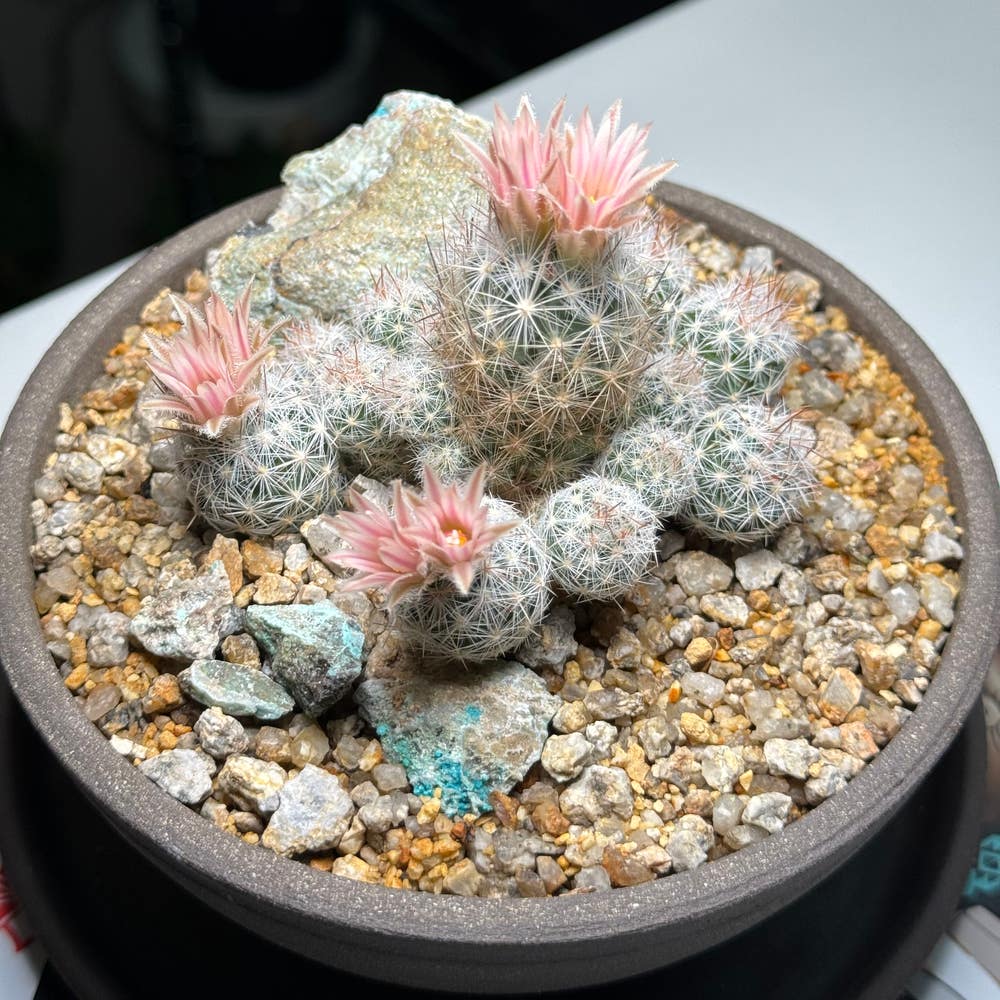
🌵 What Do I Do About Missouri Foxtail Cactus Root Rot?
Escobaria missouriensis
By the Greg Editorial Team
Jun 15, 2024•6 min read
This article was created with the help of AI so we can cover more plants for you. May contain errors. See one? Report it here.
Prevent the wilt before it starts—shield your cactus 🌵 from root rot with these essential care tips!
- Identify root rot early by checking for wilting and mushy roots.
- Act fast: remove, treat, repot in well-draining soil to save the cactus.
- Prevent with proper care: moderate watering, fertilization, and environmental control.
Identifying Root Rot in Missouri Foxtail Cactus
🚨 Signs and Symptoms of Root Rot
Wilting and discoloration are your first red flags. A Missouri Foxtail Cactus suffering from root rot may exhibit yellowing or browning leaves that detach with ease. But the true horror story is below the soil: roots that are mushy, dark, and smell like decay are screaming root rot.
🔍 Inspecting the Plant and Roots
To confirm your suspicions, it's time to play detective. Don your gloves and gently unearth the cactus. Shake off the soil and give the roots a rinse. Healthy roots should be firm and light in color. If they're anything but – think slimy or blackened – you've got a case of root rot on your hands. Remember, if the majority of the roots are toast, it's time to propagate any healthy stems left.
🕵️ Early Detection Is Key
Keep in mind, catching root rot early can mean the difference between plant resuscitation and a cactus funeral. Regular inspections are your best defense. If you spot signs of overwatering, like swollen, translucent leaves, take action before the rot sets in. And hey, if you find fungus on the soil, don't just stand there – it's a clear sign that trouble is brewing underground.
Remember, the Missouri Foxtail Cactus isn't just another pretty face in your plant collection – it's a living thing that's relying on you to spot the signs of distress. So keep those eyes peeled and those watering cans in check.

Treating Root Rot in Missouri Foxtail Cactus
🚑 Immediate Steps Upon Identification
Act fast—root rot waits for no one. If you've spotted the telltale signs of root rot in your Missouri Foxtail Cactus, it's time to channel your inner plant surgeon. Gently remove your cactus from its pot and shake off the excess soil. Inspect the roots; healthy ones are firm and white, while rotten roots are mushy and dark. Use sterilized scissors to snip off the bad parts. Be ruthless; sentimentality won't save your cactus.
🏥 After the Operation
Once the affected roots are history, give the remaining roots a fungicide bath to zap any lingering spores. Let's not repeat history. Now, repotting—grab a pot with excellent drainage and fill it with fresh, free-draining soil. Think of it as the cactus's new, rot-free apartment.
🌱 Soil and Pot Selection
Choosing the right soil and pot is like picking a good life partner—it's crucial for a healthy future. For your cactus, that means well-draining soil and a pot that doesn't hoard water like a greedy landlord. Terracotta pots are a good bet; they're breathable and help prevent waterlogging.
Remember, treating root rot is a race against decay. Be prompt, be precise, and your Missouri Foxtail Cactus might just forgive you for almost drowning it.

Adjusting Watering and Feeding to Prevent Root Rot
💧 Watering Techniques
Watering your Missouri Foxtail Cactus isn't about sticking to a strict schedule. It's about observing and responding to the plant's needs. Before you water, do a quick check: is the soil dry an inch below the surface? If it's damp, hold off on the H2O. When you do water, go for a thorough soaking until water runs free from the drainage holes—but don't let your cactus sit in a puddle. That's just asking for trouble.
🌱 Fertilization Schedule
Fertilizer is like a vitamin boost, not an all-you-can-eat buffet. Overdoing it can mess with the soil's mojo and harm those delicate roots. Stick to the recommended amounts and consider a slow-release formula to maintain a consistent nutrient level. If you're into the organic scene, compost or manure can be a game-changer, but again, moderation is key. Keep it balanced to keep root rot at bay.
🌍 Environmental Adjustments
Your cactus is a bit of a Goldilocks when it comes to moisture—it wants it just right. Make sure your growing environment isn't a sauna. Air circulation is your friend here, helping to keep things dry and fungal spores on the down-low. And if you're a fan of the bottom-watering technique, go for it. It's like a stealth move for hydration, getting water to the roots without the stems even knowing.
🛡️ Proactive Plant Care
Stay vigilant. Regularly inspect your plant for any signs that scream "I'm not okay!" like yellowing leaves or a musty smell. And remember, cleanliness is next to cactus godliness. Keep your tools and pots sterile to avoid introducing any unwanted guests. It's all about creating an environment where root rot is about as welcome as socks with sandals.

Preventing Root Rot Through Environmental and Maintenance Strategies
💡 Optimizing the Growing Environment
Temperature, humidity, and air circulation are the trifecta of a healthy Missouri Foxtail Cactus environment. Keep the temperature consistent, avoiding the plant equivalent of a cold shower or a sauna. Humidity should be just enough to keep the cactus happy without turning its pot into a swampy breeding ground for root rot.
🌬️ Air Circulation
Don’t let your cactus suffocate in stagnant air. Airflow is crucial; think of it as the plant’s breathing room. Position your cactus where the air can move freely, but not in a wind tunnel. Pruning is not just a haircut for your plant; it’s a way to ensure air circulates properly, reducing the risk of fungal parties.
🕵️ Regular Inspections and Maintenance
Be a plant detective; inspect your Missouri Foxtail Cactus regularly. If the soil feels like a wet sponge, it’s time to adjust your watering habits. Root checks are not invasive surgery but a necessary check-up. Use clean tools to poke around – think of it as a dental cleaning, but for your cactus.
🌿 Environmental Control Tactics
Mimic the cactus’s natural habitat. Too much humidity is like throwing a pool party for fungi. Use a fan or open a window to keep the air moving. If you’re overprotective and keep your cactus indoors, remember that a little fresh air never hurt anyone.
🌱 Long-Term Care Strategies
Loosen the soil occasionally to avoid compaction. It’s like fluffing a pillow for better sleep, but for your cactus. Mulching can be beneficial, but don’t overdo it – it’s a blanket, not a burial. Lastly, remember that the right amount of love and attention can make all the difference in preventing root rot.
⚠️ Safety First
This content is for general information and may contain errors, omissions, or outdated details. It is not medical, veterinary advice, or an endorsement of therapeutic claims.
Always consult a qualified healthcare professional before using any plant as food, medicine, or supplement.
Never eat any plant (or feed one to pets) without confirming its identity with at least two trusted sources.
If you suspect poisoning, call Poison Control (800) 222-1222, the Pet Poison Helpline (800) 213-6680, or your local emergency service immediately.
Spotted an error? Please report it here.
Prevent Missouri Foxtail Cactus root rot by catching symptoms early 🌵, and rely on Greg for tailored reminders and environmental tips to ensure your spiky friend never wilts.