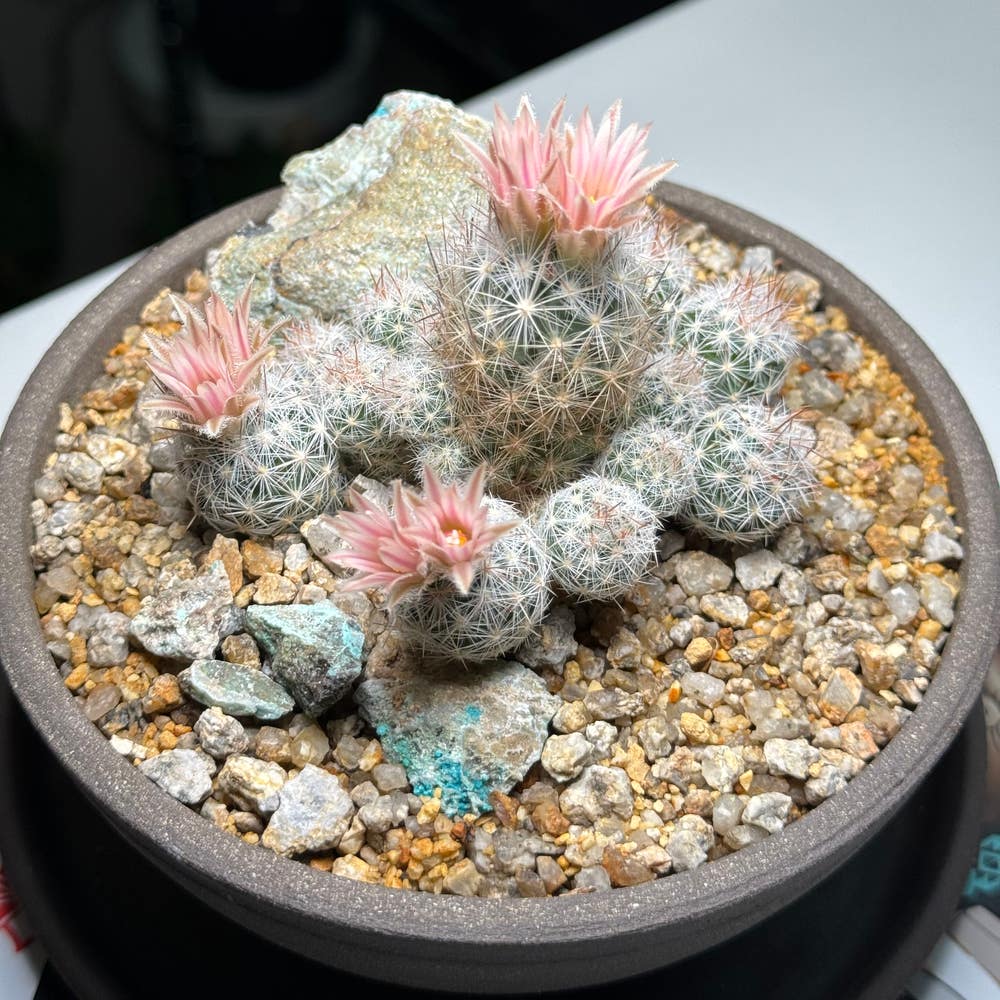
What Are The Bugs on My Missouri Foxtail Cactus? 🐛
Escobaria missouriensis
By the Greg Editorial Team
Jun 15, 2024•7 min read
This article was created with the help of AI so we can cover more plants for you. May contain errors. See one? Report it here.
Protect your cactus's charm 🌵 from tiny terrors with expert pest-busting tips!
- Spider mites create webs; treat with neem oil, sulfur soap, or predatory mites.
- Scale insects resemble bumps; control with alcohol, insecticidal soap, or horticultural oils.
- Prevent pests with cleanliness, proper airflow, and regular monitoring of your cactus.
Identifying and Treating Spider Mite Infestations
👀 Spotting the Culprits
Tiny terrors, spider mites are nearly microscopic but wreak macroscopic havoc. Look for silky webs on your Missouri Foxtail Cactus, especially under leaves and in nooks. The mites themselves might parade in red, brown, or yellow, but they're all bad news. Yellowing or browning foliage? Blame these guys.
⚔️ The Battle Plan
Immediate Action
Isolate your cactus. Spider mites are the worst kind of social—they spread. Prune any webbed wonders and bid them goodbye in a sealed bag.
🌿 Natural Remedies
Neem oil is your green gun here. Spray it with the determination of a plant parent protecting their leafy offspring. Not a fan of neem? Sulphur soap is another natural nemesis for these pests.
☠️ Chemical Warfare
Sometimes, you gotta bring out the big guns. Systemic insecticides go through the plant's system, poisoning pests with a stealthy surprise. But remember, with great power comes great responsibility—use as directed.
🦠 Biological Controls
Predatory mites are like the cool cousins who handle the bullies. Phytoseiulus persimilis is one such ally. They munch on spider mites like they're at an all-you-can-eat buffet.
🛡️ Prevention: A Tight Ship
Keep your cactus clean—dust is a spider mite's day spa. Water stress is a no-no; these pests love a thirsty plant. And airflow? Keep it moving. Stagnant air is like setting up a spider mite jazz club.
🕵️ Monitoring: Eyes on the Prize
Check your cactus. Often. Under leaves, between spines. You're on spider mite patrol. And if you catch them partying, crash it—fast.
🔁 Repeat Offenders
If you've treated once, don't trust the calm. Repeat treatments may be necessary. Spider mites are like bad habits—hard to kick. Keep at it until your cactus breathes easy again.

Battling Scale on Missouri Foxtail Cactus
🐞 Signs of Scale Insects
Scale insects are masters of disguise, masquerading as innocuous brown or white bumps on your Missouri Foxtail Cactus. These pests can be sneaky, often mistaken for part of the plant itself. Look for sticky honeydew or sooty mold as a telltale sign of their presence. If you spot any unusual lumps, give them a closer look; you might just find these unwelcome guests.
🛡️ Remedies for Scale Infestations
Isolation is key. If you find scale, quarantine your cactus to prevent a full-blown insect epidemic. For a light infestation, dabbing each scale with a cotton swab soaked in rubbing alcohol may just do the trick. Insecticidal soaps and horticultural oils are your next line of defense, smothering these pests in their tracks. Apply diligently, as scales can be quite tenacious.
💡 Tips to Prevent Future Issues
Prevention is better than cure. Keep your cactus in a well-ventilated area with plenty of sunlight to discourage scale squatters. Regular inspections are a must – consider it quality time with your spiky friend. New plants should be isolated for at least two weeks; think of it as a plant quarantine. And remember, introducing natural predators like ladybugs can turn your cactus into a no-fly zone for scale insects.

Managing Fungus Gnats and Fruit Flies
🐜 Identifying the Pests
Fungus gnats are those tiny, annoying black flies haunting your cactus's soil, not to be confused with the slightly larger fruit flies that adore overripe bananas. These gnats have a penchant for moist environments and are often seen playing around the soil surface or plant base. Fruit flies, on the other hand, are drawn to your decomposing kitchen fruit bowl rather than your plants.
🪰 Solutions for Control
Yellow sticky traps are your new best friends; they're like fly hotels where guests check in but don't check out. Letting the soil dry out between waterings is a game-changer, as it disrupts the gnats' spa-like breeding grounds. Introducing beneficial nematodes turns the tide of war in your favor, with these microscopic allies devouring gnat larvae like candy.
🛡️ Preventative Measures
Overwatering is a no-go. Ensure your potting mix is the equivalent of a well-draining desert oasis. Regularly clean your plants and pots to avoid decaying matter buffets for gnats. Always inspect new plants like a detective at a crime scene, looking for any signs of these unwanted guests.
🚨 When All Else Fails
If the gnats are throwing a party and your cactus is the venue, it's time to consider a soil drench with a hydrogen peroxide solution. It's like sending in the SWAT team—effective, but use with caution. And remember, insecticides are a last resort for indoor use; they're the big guns and should be handled with care.

Eradicating Mealybugs from Your Cactus
Mealybugs can turn your Missouri Foxtail Cactus from a spiky marvel into a sticky mess. Recognizing the problem early is key.
🚨 Telltale Signs of Infestation
Look for white cottony clusters, especially in leaf joints and under leaves. Yellowing, wilting, or deformed leaves can also signal an infestation. If ants are treating your cactus like a picnic spot, it's likely they're farming mealybugs for honeydew.
🛑 Immediate Action Steps
- Isolate the affected cactus to prevent spreading.
- Use a cotton swab dipped in rubbing alcohol to dab and kill visible mealybugs.
- For larger infestations, spray with a solution of 50% or 70% isopropyl alcohol.
🛡️ Preventative Measures
- Regularly inspect your cactus for early signs of mealybugs.
- Keep your cactus healthy; stress makes plants more susceptible to pests.
- Avoid over-fertilizing with nitrogen and overwatering, as this promotes new growth that mealybugs love.
- Clean tools and pots to prevent transferring mealybugs to your cactus.
💪 Persistent Problems
If mealybugs keep coming back, consider using a systemic insecticide. It's absorbed by the cactus and can protect it from the inside out. Remember, mealybugs are tenacious; multiple treatments may be necessary.
💡 Pro Tip
Lowering indoor temperatures can discourage mealybug infestations. They thrive between 70 to 90 degrees F, so a cooler environment can be less inviting.
Keep a watchful eye and a bottle of alcohol handy, and your Missouri Foxtail Cactus will thank you by staying mealybug-free.
Addressing Other Pests Specific to Missouri Foxtail Cactus
🐜 Aphids: The Sap-Suckers
Aphids are tiny but mighty, draining the life out of your Missouri Foxtail Cactus by sucking its sap. You'll spot them as small, pear-shaped critters, often green or black, throwing a party on new growth or under leaves. Blast them off with a strong water spray or apply insecticidal soap for a more thorough eviction.
🕵️ Thrips: The Stealthy Invaders
Thrips are slender, minuscule pests, making them masters of hide and seek on your cactus. They leave behind a telltale sign: silvery trails and speckled leaves. These ninja-like insects can be ousted with a spinosad-based insecticide, ensuring they don't get to slice and dice your plant's cells any longer.
🎨 Customized Treatment: Tailoring Your Approach
Every pest demands a unique strategy. For aphids, introducing ladybugs can be a game-changer—they're like natural pest control ninjas. Thrips, on the other hand, hate the taste of neem oil, making it your go-to weapon. Always remember, healthy plants are less inviting to pests, so keep your cactus well-fed and stress-free.
🚫 Prevention: The Best Medicine
Preventing pests is like avoiding spoilers for your favorite show—it's better not to encounter them in the first place. Quarantine new plants, keep your gardening tools clean, and inspect your cactus regularly. Sticky traps can also be allies, snagging any pests that dare to approach your beloved cactus.
🚨 When to Call It Quits
Sometimes, despite your best efforts, a pest infestation can turn into a full-blown apocalypse for your cactus. If the infestation is severe and the plant's health is in critical condition, it might be time to say goodbye. Dispose of the plant responsibly to prevent pests from spreading to other plants, and start anew with the wisdom gained from the experience.
⚠️ Safety First
This content is for general information and may contain errors, omissions, or outdated details. It is not medical, veterinary advice, or an endorsement of therapeutic claims.
Always consult a qualified healthcare professional before using any plant as food, medicine, or supplement.
Never eat any plant (or feed one to pets) without confirming its identity with at least two trusted sources.
If you suspect poisoning, call Poison Control (800) 222-1222, the Pet Poison Helpline (800) 213-6680, or your local emergency service immediately.
Spotted an error? Please report it here.
Eradicate pests and protect your Missouri Foxtail Cactus with Greg's tailored monitoring 🕵️♂️ and proactive care alerts, ensuring your green friend stays healthy and vibrant!