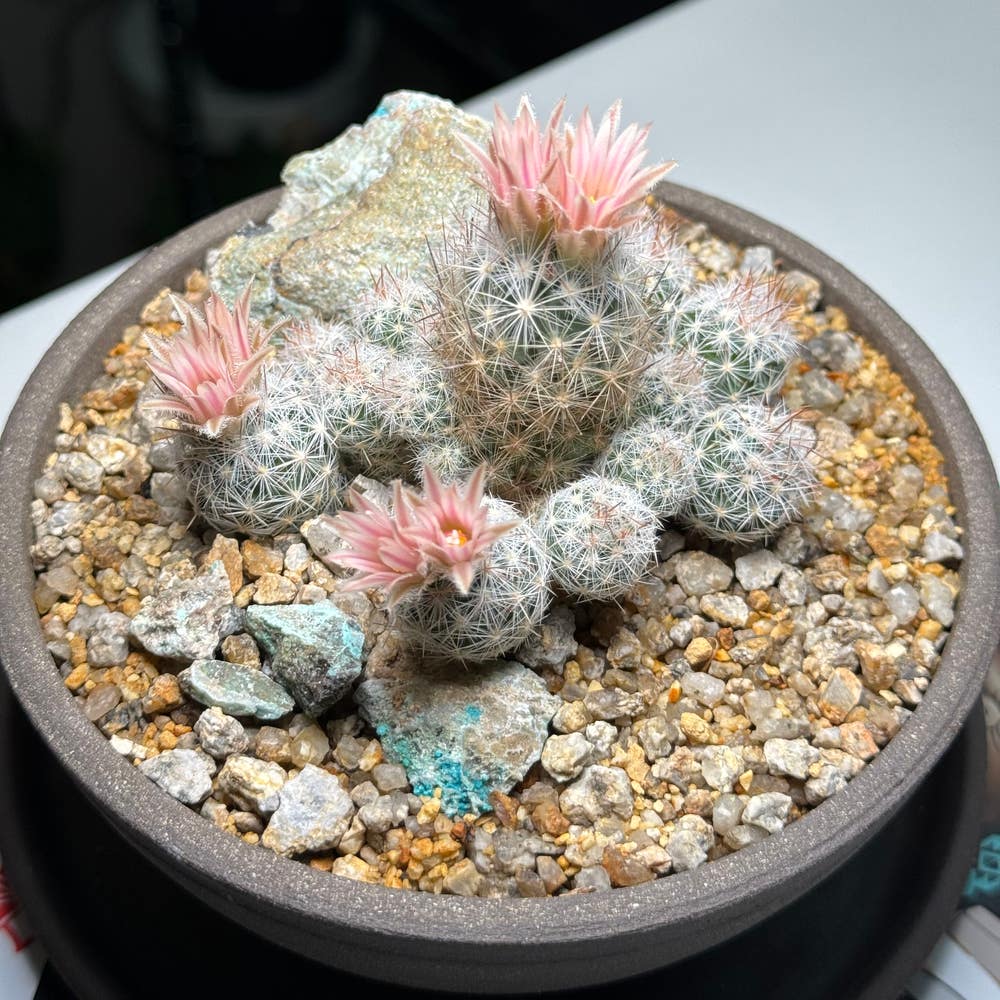
🌵 Why Are My Missouri Foxtail Cactus Leaves Mushy?
Escobaria missouriensis
By the Greg Editorial Team
Jun 15, 2024•7 min read
This article was created with the help of AI so we can cover more plants for you. May contain errors. See one? Report it here.
Revive your cactus 🌵 from mushy leaves with these critical, life-saving plant care tips!
- Mushiness signals overwatering, adjust watering and ensure soil dries properly.
- Remove affected parts and isolate cactus to prevent spread and promote health.
- Repot with well-draining soil to combat root rot and fungal issues.
Identifying Mushy Leaves in Missouri Foxtail Cactus
🍄 Physical Characteristics of Mushy Leaves
Discoloration is a dead giveaway. If your Missouri Foxtail Cactus is sporting leaves that have turned a shade of brown or yellow not typically seen in a healthy plant, take note. Mushiness follows suit; leaves should not resemble a soggy sponge. When they lose their usual firmness and start to feel soft, you're in the danger zone.
🚨 Early Signs Indicating the Onset of Mushiness
Wilting leaves are like the first cough before a cold; it's a sign that trouble is brewing. A leaf that droops sadly rather than standing proud is asking for help. And if you notice the stem is more squish than solid, it's time to act fast. Keep an eye out for brown spots or edges with a yellow halo—these are the red flags of impending mush.

Immediate Steps for Mushy Leaves
When your Missouri Foxtail Cactus starts feeling like overripe fruit, isolation is your first line of defense. Get it away from its plant buddies to curb any contagion.
🛡️ Isolating the Affected Cactus
Move your cactus to a quarantine zone. This isn't just about being a good plant parent; it's about protecting the whole botanical brood from potential spread.
🚑 Removing Affected Leaves
With sterile precision, remove the mushy leaves. Think of it as plant surgery—cleanliness is paramount. Dispose of the trimmings like they're biohazardous; your compost pile doesn't need this drama.
🩺 Assessing Plant Health
After the amputation, take a hard look at your cactus. If it's more mush than firm, you might be dealing with root rot. If the core is still solid, you've caught it in time.
Next Steps
Post-op, let your cactus dry out. This isn't the time for a sympathy drink. It needs a moment to recover. Keep a close eye on it, and if you've nailed the triage, you might just see it bounce back.

Correcting Watering Practices
Adjusting your Missouri Foxtail Cactus's watering frequency and quantity is crucial to combat mushiness. Here's how to get it right:
💧 Adjusting Watering Frequency and Quantity
Check the soil before you water—stick your finger in; if it's dry an inch down, it's time to water. If not, hold off. This isn't a guessing game; it's about responding to the cactus's needs. Overwatering is a common mistake, so remember: less is more. Your cactus isn't a fish; it doesn't want to swim.
🚰 Ensuring Proper Soil Drying Between Waterings
Make sure the soil has a chance to dry out between waterings. This isn't just a suggestion; it's a lifeline for your cactus. If you're the type to set reminders, do it for watering—just don't follow a strict schedule. Adapt to the plant's environment and seasonal changes. If you're feeling fancy, use a moisture meter, but your finger will do just fine.
Remember, the goal is moist, not soggy soil. If your cactus's pot feels heavier than your last breakup, it's probably waterlogged. Give it some space to breathe. If the soil's still wet from your last watering, skip the H2O and give it some tough love instead.

Soil Assessment and Improvement
🌧️ Checking for Waterlogged Soil and Signs of Root Rot
Waterlogged soil is the silent killer of the Missouri Foxtail Cactus. To check, stick a screwdriver into the soil near the roots. If it emerges with mud clinging to it, you've got a problem. Root rot manifests as black or brown mushy roots. If you spot these, it's triage time.
🌱 Repotting with Well-Draining Soil Mix
Repotting isn't just about giving your cactus a new home; it's about survival. Mix one part potting soil, one part coarse sand, and one part perlite for that perfect, well-draining concoction. Remember, a pot without drainage holes is a cactus coffin. Choose wisely.
Treating Root Rot in Missouri Foxtail Cactus
🚨 Identifying Signs of Root Rot
Root rot in your Missouri Foxtail Cactus is like a silent alarm—it doesn't blare until the damage is done. Dark brown or black roots that feel mushy or slimy are your cue. If leaves are wilting or yellowing and the soil smells like a swamp, you've got trouble brewing below the surface.
🛠️ Steps for Treating Root Rot
First, isolate your patient—no need to spread the gloom. Gently free the roots from their soil prison and give them a room-temperature shower. This isn't a spa day; it's a rescue mission. Spot the healthy roots—they're the pale, firm heroes—and bid farewell to the mushy villains with sterilized cutters.
🌱 Post-Trimming Care
After the bad roots have been given the boot, it's time for a fungicide dip to keep any lingering spores from throwing a comeback party. Then, tuck your cactus into a bed of fresh, well-draining soil. It's not a guaranteed save, but it's your best shot at a sequel for your cactus.
🌿 Promoting Healthy Roots
Let's not revisit this horror show. Water with a measured hand and ensure your potting mix is the cactus equivalent of a breathable raincoat—moisture without the muck. Keep an eye out for any signs of distress, and remember, sometimes the kindest cut is the one that prevents future rot.
Managing Fungal Infections
🍄 Recognizing Symptoms of Fungal Infections
Fungal infections in Missouri Foxtail Cactus can be sneaky pests. Look out for tell-tale signs like yellow rings, dark centers, or a 'bull’s eye' pattern on leaves. These symptoms may resemble battle scars from an unseen microscopic war. If leaves have a water-soaked appearance or you spot multiple spots merging, it's time to sound the alarm.
💉 Selecting and Applying Appropriate Treatments
When it comes to treatment, time is of the essence. Fungicides are your go-to weapon; copper-based options are a crowd favorite. But remember, it's not a one-size-fits-all situation—always check plant compatibility. For minor infections, consider starting with hydrogen peroxide sprays or cinnamon dusting. And let's not forget the importance of preventative measures: avoid overwatering, ensure good airflow, and don't let your tools become Trojan horses—sanitize them regularly. If you're dealing with a severe case, sometimes it's best to bid farewell and remove the affected plant to protect the rest of your green troop.
Optimizing Watering and Soil Maintenance
💧 Establishing a Consistent Watering Schedule
Consistency is key when watering your Missouri Foxtail Cactus. Overwatering is a no-no, but so is turning your cactus into a desert hermit. Find that sweet spot where the soil's moisture level is just right—think Goldilocks, but with a watering can. Use the finger test: if the soil feels dry an inch below the surface, it's time for a drink.
🌱 Choosing and Maintaining Well-Draining Soil
Your cactus craves a well-draining soil mix like a gourmet meal. It's all about balance—too much water retention and you're asking for mushy leaves; too little and your cactus might as well take up residence in a sandcastle. Amend with organic matter to keep the soil nutritious without turning it into a swamp. Remember, a pot without drainage holes is a recipe for disaster. If you're stuck with one, get creative and drill some holes. Your cactus's roots need air as much as they need water.
Environmental Control to Prevent Mushiness
💨 Ensuring Adequate Air Circulation
Airflow is the unsung hero in the saga of plant health. To prevent your Missouri Foxtail Cactus from turning into a mushy mess, think of air circulation as the plant's personal space. It needs enough room to breathe, but not so much that it's left gasping. Crack a window or employ a fan to keep the air moving. It's like avoiding the middle seat on a long flight—everyone's happier with a little elbow room.
🌞 Adjusting Placement for Optimal Light and Airflow
Light and air go together like peanut butter and jelly. Place your cactus where it can soak up the sun's rays without getting scorched. Bright, indirect light is the sweet spot. And while you're at it, make sure the spot isn't a still air trap. If the air around your cactus is more stagnant than a pond on a windless day, it's time to shake things up. Move your plant to a location where air can circulate freely, but not so windy it feels like it's living in a tornado. Keep it cool, keep it breezy, and watch those mushy leaves become a thing of the past.
⚠️ Safety First
This content is for general information and may contain errors, omissions, or outdated details. It is not medical, veterinary advice, or an endorsement of therapeutic claims.
Always consult a qualified healthcare professional before using any plant as food, medicine, or supplement.
Never eat any plant (or feed one to pets) without confirming its identity with at least two trusted sources.
If you suspect poisoning, call Poison Control (800) 222-1222, the Pet Poison Helpline (800) 213-6680, or your local emergency service immediately.
Spotted an error? Please report it here.
Revive your mushy Missouri Foxtail Cactus by preventing overwatering 🌵 with Greg's custom watering reminders and soil dryness checks.