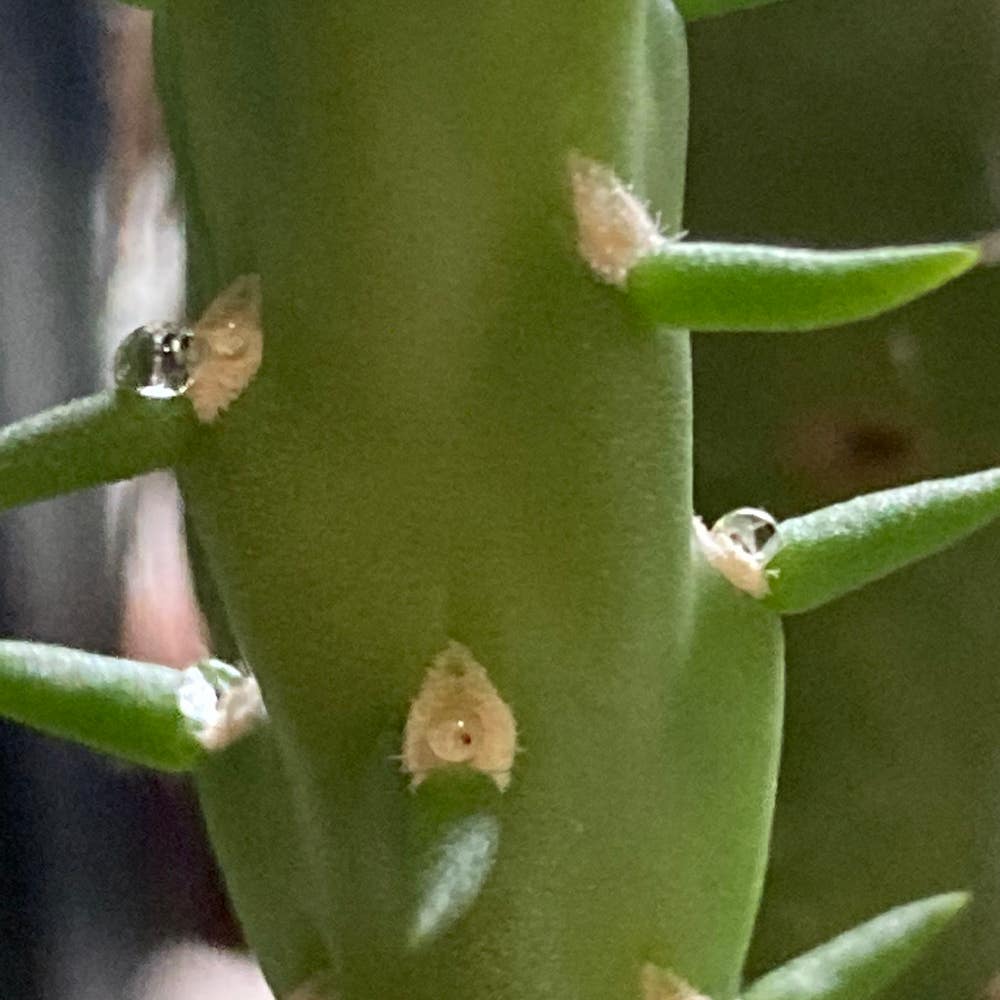
How and When Should I Cut Back My Pencil Cholla?
Cylindropuntia kleiniae
By the Greg Editorial Team
Apr 14, 2024•4 min read
This article was created with the help of AI so we can cover more plants for you. May contain errors. See one? Report it here.
Master the art of Pencil Cholla pruning 🌵 for a healthier, more stunning plant display!
- Spring and fall pruning aligns with Pencil Cholla's growth cycles.
- 🌵 Use shears and loppers; wear gloves for safe pruning.
- Post-prune care: Bright, indirect light and monitor for distress.
Best Time to Wield the Shears: When to Prune Pencil Cholla
🌱 Seasonal Timing for Pruning
Spring and fall are the prime seasons for pruning your Pencil Cholla. These periods align with the plant's growth cycles, which is crucial for encouraging vigorous development and minimizing stress. Pruning in the dormant winter months is a no-go; it's akin to interrupting a bear's hibernation. For the best results, prune after the blooming phase, when the plant is ready to focus on new growth.
🚦 Signs It's Time to Prune
Keep an eye out for visual cues that your Pencil Cholla is ready for a trim. New growth is a clear indicator that it's time to prune. However, don't hesitate if you spot brown, wilted, or rotting segments; these compromised areas should be removed promptly to prevent disease spread and to redirect the plant's energy towards healthier sections.
Pruning Like a Pro: Techniques and Tools
🛠️ Choosing Your Tools
Before you start reshaping your Pencil Cholla into the desert's answer to a topiary masterpiece, you'll need the right tools. Grab some pruning shears for precision work; they're like a surgeon's scalpel for your spiky friend. For the thicker, more obstinate branches, arm yourself with loppers—they're the muscle you need when shears just won't cut it. And don't forget, cleanliness is next to cacti godliness, so have some rubbing alcohol on hand to sterilize your tools before and after the job.
📝 Step-by-Step Pruning Guide
- Suit up with gloves and long sleeves unless you fancy a game of 'dodge the spines.'
- Inspect your Cholla for any segments that are damaged, diseased, or just plain dead weight.
- Plan your cuts; visualize the shape you're aiming for and identify the segments that need to go.
- Snip with confidence; cut at the base of the unwanted segment, making sure not to damage the healthy parts.
- Disinfect your tools after each cut to prevent spreading any potential pathogens.
✂️ Pruning for Shape and Beauty
When it comes to aesthetics, think of your Cholla as a living sculpture. Trim strategically to encourage a balanced growth that doesn't leave your plant top-heavy or lopsided. Aim to remove no more than 25% of the plant at a time to keep it from going into shock. And remember, while you're the artist, the Cholla's the canvas—work with its natural form for a result that's both healthy and pleasing to the eye.
Keeping It Healthy: Pruning for Plant Vigor
🌱 Spotting Trouble: Removing Damaged Segments
Pruning isn't just a haircut for your Pencil Cholla; it's a vital check-up. Discoloration and soft spots? They're red flags for rot or fungal issues. Shriveled sections could mean dehydration or root trouble. Get to the root of the problem before taking action. Old pruning stubs? They're an open invitation for decay. Snip them off to keep your plant's health in the green zone.
🌿 Thinning Out: Managing Overgrowth
Overgrowth is like a crowded party; nobody's comfortable. Thinning out branches improves air circulation, which is like giving your plant room to breathe. Weak growth? Cut it back harder than the strong shoots. It's tough love, but your plant will thank you with robust new growth. Remember, more space equals better light exposure and less disease drama. Keep it balanced for both aesthetics and stability; it's not just about looks, it's about plant longevity.
After the Snip: Post-Pruning Care
🌵 Minimizing Stress and Supporting Recovery
After pruning your Pencil Cholla, immediate care is crucial. Bright, indirect light is best for recovery, as direct sunlight can be too intense for fresh cuts. Maintain a stable temperature to prevent additional stress. Water the plant thoroughly, but avoid waterlogging. The soil should be kept on the drier side of moist, and only water again when the top inch feels dry.
🕵️ Monitoring and Maintenance
Vigilance is key in the days following a prune. Look out for yellowing leaves, drooping, or stunted growth, which are signs your plant may be in distress. If you spot these, reassess your care routine. It's not just about the cut but the recovery. Keep the plant's environment clean to prevent disease, and hold off on fertilization to avoid nutrient burn. Celebrate new growth—it's a thumbs-up from your plant. If problems persist, it might be time for another trim.
⚠️ Safety First
This content is for general information and may contain errors, omissions, or outdated details. It is not medical, veterinary advice, or an endorsement of therapeutic claims.
Always consult a qualified healthcare professional before using any plant as food, medicine, or supplement.
Never eat any plant (or feed one to pets) without confirming its identity with at least two trusted sources.
If you suspect poisoning, call Poison Control (800) 222-1222, the Pet Poison Helpline (800) 213-6680, or your local emergency service immediately.
Spotted an error? Please report it here.