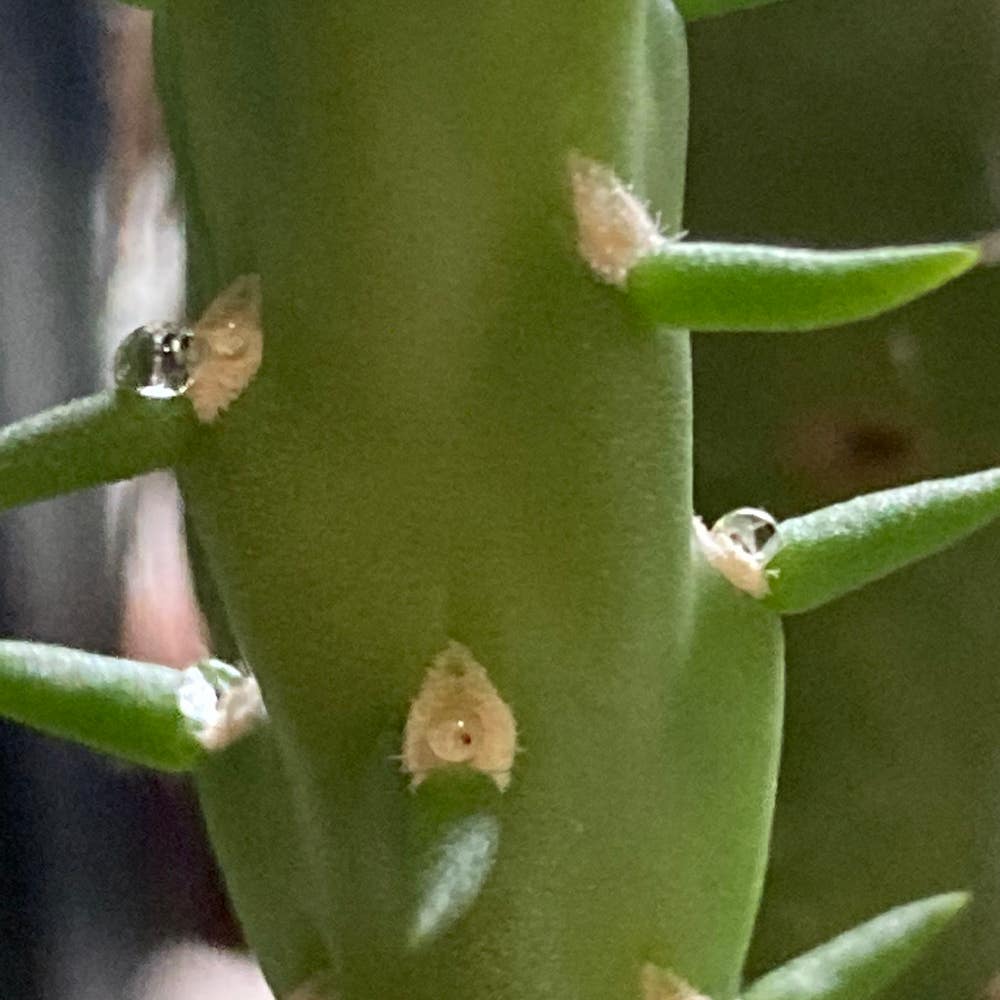
Why Are There Brown Spots on My Pencil Cholla?
Cylindropuntia kleiniae
By the Greg Editorial Team
Apr 14, 2024•3 min read
This article was created with the help of AI so we can cover more plants for you. May contain errors. See one? Report it here.
Prevent brown spots from ruining your Pencil Cholla's charm with our targeted rescue strategies! 🌵🛡️
- Sunburn causes bleached spots: Move to indirect light for recovery.
- Overwatering leads to mushy spots: Water only when soil is dry.
- Prevent pests and disease: Regular maintenance and proper watering.
Pinpointing the Culprits Behind the Brown Spots
☀️ Sunburn and Heat Stress
Sunburn on Pencil Cholla is no joke. It manifests as bleached, crispy areas, particularly where the sun hits hardest. If you spot these, it's a clear sign your plant has had too much UV fun.
Immediate Sunburn Relief
Move your Pencil Cholla to a shadier spot, stat. Gradual re-introduction to sunlight is key to avoid further leaf trauma. Think of it as a plant spa retreat from the harsh solar glare.
💦 Overwatering Woes
Overwatering turns Pencil Cholla spots into mushy messes. These spots are soft, dark, and scream, "Help, I'm drowning!"
Watering Routine Makeover
Time to rethink your watering strategy. Only water when the soil feels dry to the touch. Your Pencil Cholla will thank you for not treating it like a fish.
🐜 Pests and Pathogens
Pests and diseases are the ultimate party crashers. Spider mites leave tiny brown dots and webbing, while fungal infections flaunt spots with yellow halos or concentric rings.
Spotting the Difference
Pest damage often comes with webbing or sticky residue. Disease symptoms, however, are more about the artistic spots. Keep an eye out for these unwelcome guests and their telltale signs.
First Aid for Your Pencil Cholla
🌞 Emergency Response to Sunburn
If your Pencil Cholla is showing signs of sunburn, it's time for some shade. Relocate the plant to an area with indirect light to prevent further damage. A sunburn recovery plan should include monitoring for new growth, which indicates recovery.
💧 Reviving from Overwatering
When overwatering strikes, it's all about drying out. Cease watering immediately and consider adding materials like perlite to the soil to improve drainage. If the roots are not completely rotted, the plant may be salvageable by allowing the soil to dry out completely before the next watering.
🐜 Combating Pests and Diseases
For pests, a thorough inspection and cleaning of the plant can help. Remove any visible pests and apply an appropriate insecticide if necessary. In the case of fungal infections, a copper-based fungicide can be the right choice. Always monitor the plant's response to treatment and adjust as needed.
Keeping Brown Spots at Bay
🌞 Sun Protection Strategies
To shield your Pencil Cholla from the scorching sun, start by acclimating it to sunlight gradually. This means slowly increasing its exposure to bright conditions, avoiding the midday intensity. Use shade cloth or position it in a spot with dappled light to prevent solar overkill. Remember, it's not just about survival; it's about thriving without the crispy aftermath.
💧 Watering Wisdom
Watering your Pencil Cholla is less about sticking to a strict schedule and more about observing the plant's needs. Let the soil dry out completely before giving it another drink. This isn't just a suggestion—it's a lifeline. Overwatering is the equivalent of waterboarding for these desert dwellers. Use a well-draining soil mix and ensure your pot has drainage holes that aren't just for show.
🐜 Pest and Disease Prevention
Regular maintenance is your best defense against pests and diseases. Keep an eye out for freeloaders like spider mites and mealybugs. If you spot them, it's time for a clean-up, quarantine, and possibly a treatment that doesn't mess around. For fungal foes, avoid wetting the foliage and ensure good air circulation—think of it as giving your plant its personal space.
⚠️ Safety First
This content is for general information and may contain errors, omissions, or outdated details. It is not medical, veterinary advice, or an endorsement of therapeutic claims.
Always consult a qualified healthcare professional before using any plant as food, medicine, or supplement.
Never eat any plant (or feed one to pets) without confirming its identity with at least two trusted sources.
If you suspect poisoning, call Poison Control (800) 222-1222, the Pet Poison Helpline (800) 213-6680, or your local emergency service immediately.
Spotted an error? Please report it here.
Banish brown spots on your Pencil Cholla by monitoring its sun and water needs with Greg's smart alerts 🌵, ensuring a spotless recovery.