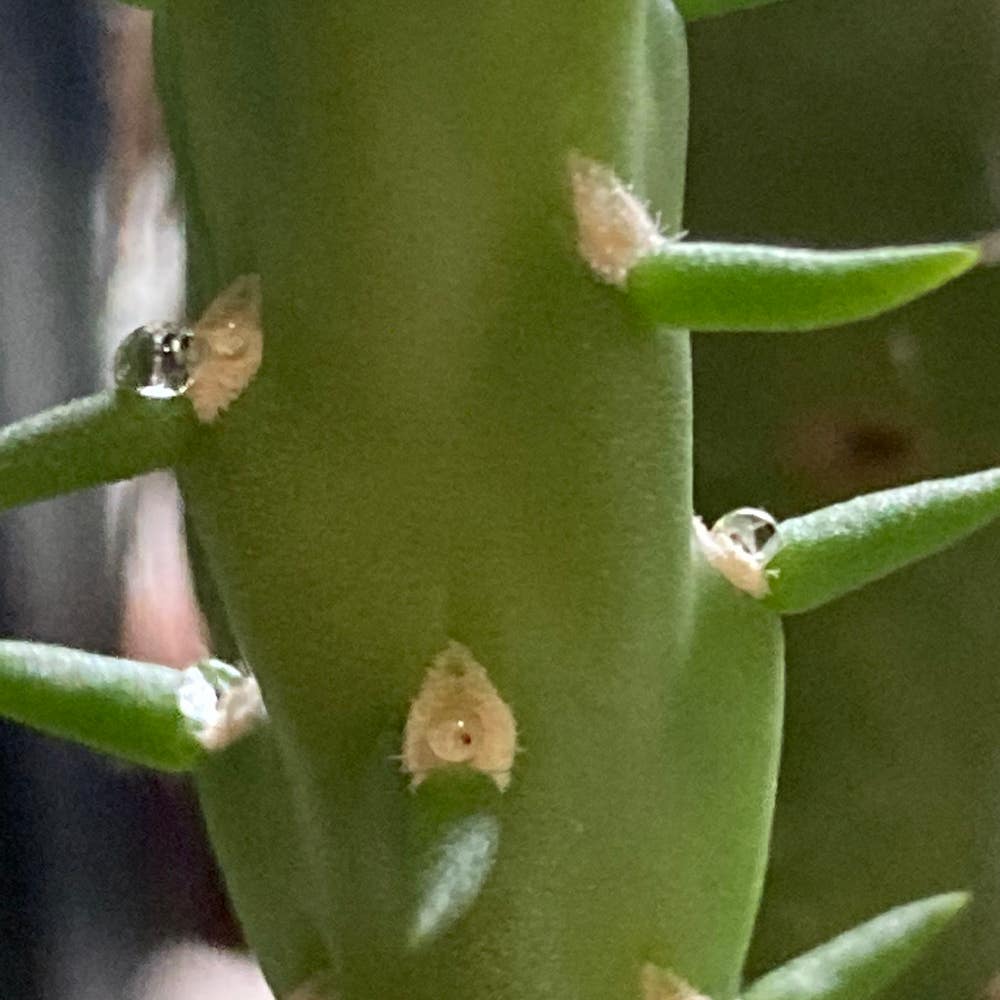
🌵 How Frequently Should I Water My Pencil Cholla?
Cylindropuntia kleiniae
By the Greg Editorial Team
Apr 14, 2024•3 min read
This article was created with the help of AI so we can cover more plants for you. May contain errors. See one? Report it here.
Discover the secret to a flourishing pencil cholla 🌵 by nailing its watering schedule—your plant's life depends on it!
- Wrinkled leaves signal thirst, water when top inch of soil is dry.
- 🌵 Mimic desert conditions with sunlight, low humidity, and seasonal watering adjustments.
- Proper drainage is crucial to prevent overwatering and root rot.
When Thirst Strikes: Decoding Pencil Cholla's Water Needs
💧 Spotting the Signs of Thirst
Pencil cholla won't send you a memo when it's thirsty, but it does have a tell-tale look. Watch for leaves that are more wrinkled than your favorite linen shirt. If the soil is pulling away from the pot, it's a clear sign your plant is as parched as a desert.
💦 The Perils of Overhydration
Too much water is a no-go for pencil cholla. Recognize overwatering when you see leaves turning as yellow as a caution sign. If the soil feels like a wet sponge, you've overstepped. A funky smell from the pot? That's root rot, and you're in the danger zone.
The Balancing Act: Factors That Dictate Watering Frequency
🏜️ Home Sweet Home: Mimicking the Desert Environment
Creating a mini-desert for your pencil cholla isn't as daunting as it sounds. It's about simulating the arid conditions where these cacti thrive. Ensure your space has plenty of sunlight and keep the humidity low. Your cactus will thank you with vigorous growth.
📅 Seasonal Shifts: Adapting to the Calendar
As the seasons change, so should your watering can's activity. Summer calls for a bit more hydration, while in winter, your cactus prefers a drier pot. It's like changing your wardrobe with the seasons—your cactus needs different care to match.
🌱 Growth Spurts and Dormant Phases
During the growth phase, typically spring and summer, your pencil cholla is thirstier. Water it more frequently, but always check the soil first. When it's dormant, usually in the cooler months, water it like you're rationing—sparingly and infrequently. Your cactus is basically hibernating, so don't wake it with a splash.
Crafting the Perfect Watering Schedule
💧 Starting Off on the Right Root
Establishing a watering routine is like setting the first domino in a chain; it sets the pace for your pencil cholla's health. Begin by watering when the top inch of soil is dry to the touch.
🌱 The Soil Tells All: When to Water Next
Your plant's thirst is not a mystery; the soil holds the clues. Forget the guesswork; use a moisture meter or your finger to check soil dryness. When that top inch feels like a forgotten cup of coffee—dry and neglected—it's time to water.
⛅️ Weather or Not: Responding to Climate
Your watering schedule isn't set in stone; it's more like a jazz improvisation, responding to the weather's whims. Hot, dry spells might call for more frequent watering, while a cool, rainy week could mean a watering hiatus for your cactus. Keep an eye on the forecast and let your plant ride the rhythm of the climate.
Watering Do's and Don'ts: Tips for a Happy Pencil Cholla
💧 The Right Sip: Water Quality and Quantity
Rainwater or de-chlorinated tap water is the drink of choice for your pencil cholla. Think of it as the preferred vintage for a plant connoisseur. When it comes to quantity, moderation is key. Overwatering is the silent dream killer of potential blooms.
🚰 Drainage Drama: Ensuring the Perfect Escape Route
Proper drainage isn't just a good idea; it's a mandate. Without it, you're inviting root rot to the party, and nobody wants that guest. Make sure your pot has drainage holes—it's as essential as having an escape plan for an awkward date.
⚠️ Safety First
This content is for general information and may contain errors, omissions, or outdated details. It is not medical, veterinary advice, or an endorsement of therapeutic claims.
Always consult a qualified healthcare professional before using any plant as food, medicine, or supplement.
Never eat any plant (or feed one to pets) without confirming its identity with at least two trusted sources.
If you suspect poisoning, call Poison Control (800) 222-1222, the Pet Poison Helpline (800) 213-6680, or your local emergency service immediately.
Spotted an error? Please report it here.
Ensure your pencil cholla is perfectly watered 🌵 with Greg's reminders to check soil dryness, helping you create a mini-desert haven right at home.