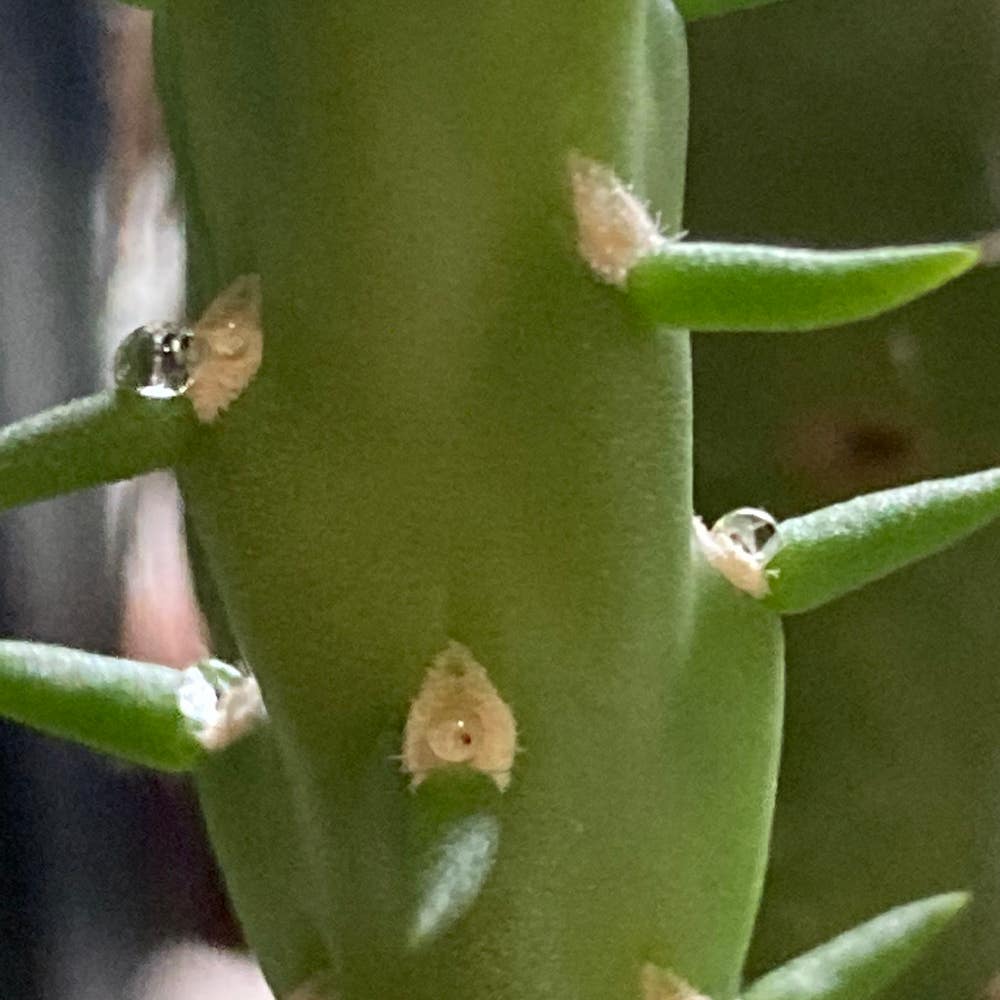
🐛 What To Do About Bugs on My Pencil Cholla?
Cylindropuntia kleiniae
By the Greg Editorial Team
Apr 14, 2024•4 min read
This article was created with the help of AI so we can cover more plants for you. May contain errors. See one? Report it here.
Defend your Pencil Cholla's charm 🌵 from bug brigades with top-notch, battle-tested tactics!
- 🌵 Identify pests early with signs like webs, bumps, or white deposits.
- 💦🛡️ Use water, neem oil, or alcohol swabs for eco-friendly pest control.
- 🕵️♂️ Prevent infestations with regular checks and proper environmental conditions.
Spot the Invaders: Identifying Common Pests
🕷️ Spider Mites
Spotting the signs: How to tell if spider mites have moved in.
Tiny webs and speckled leaves are your first clues that spider mites are feasting on your Pencil Cholla. These pests are like unwanted guests that don't know when to leave.
The spider mite showdown: Effective tactics to evict them.
Blast them with water or apply neem oil. Insecticidal soap is another trusty weapon. Consistency is key—repeat treatments to ensure these tiny terrors are gone for good.
🛡️ Scale Insects
Unwanted armor: Recognizing scale insects on your cactus.
Look for bumps on stems and leaves that seem to have set up camp without permission. These pests are like squatters with a sticky residue.
Scale warfare: Proven strategies to reclaim your Pencil Cholla.
Manual removal with a toothpick or alcohol swab can be effective. If they're stubborn, systemic insecticides might be your last resort. Rotate treatments to prevent resistance.
🦟 Fungus Gnats and Fruit Flies
Flying frustrations: Identifying these airborne annoyances.
Overwatered soil is a party zone for these pests. Adult flies and larvae in the soil are red flags.
Clearing the air: How to send fungus gnats and fruit flies packing.
Yellow sticky traps are like fly hotels with a one-way ticket. Reducing soil moisture turns your cactus's soil into an inhospitable desert.
🐛 Mealybugs
Cottony culprits: Spotting mealybugs before they settle.
White, fluffy deposits on your Pencil Cholla are a clear sign mealybugs are trying to make it their home. They're like the uninvited guests who bring their own cotton candy to the party.
Mealybug meltdown: Tips to terminate these fluffy foes.
Neem oil or insecticidal soap are your go-to solutions. Apply diligently to ensure these pests don't get a chance to throw another cotton ball fiesta.
Uncommon but Troublesome: Other Pests to Watch Out For
🐞 Aphids
Sticky situations: Aphids are the freeloaders of the insect world, clustering on new growth and secreting a gooey honeydew. This sticky mess can attract sooty mold, compounding your problems.
Aphid offensives: To send these sap-suckers packing, blast them with a strong water jet or dab them with a rubbing alcohol-soaked swab. For a serious infestation, consider systemic insecticides, but sparingly, to protect the good bugs.
🐜 Thrips
Invisible invaders: Thrips are the ninjas of the pest realm, leaving behind silvery trails and black specks. They're slender and blend in well, so you'll need a keen eye to spot them.
Thrip thrashers: Isolate new plants to prevent these pests from sneaking in. Prune affected areas and dispose of them promptly. If they persist, neem oil or insecticidal soap can be your allies. Introducing predators like ladybugs or lacewings can also turn the tide in your favor.
Section
Prevention: The Best Defense Against Pests
🕵️ Vigilance is Key: Regular Checks and Early Detection Tips
Regular inspections of your Pencil Cholla are like a security system; they help you spot trouble before it escalates. Get up close and personal with your plant, examining the nooks and crannies for any signs of pests. Early detection is crucial—it's the difference between an easy fix and a full-scale bug battle.
🏰 Creating a Fortress: Environmental Controls to Deter Pests
Your plant's environment can be a fortress against pests or an open invitation—it's all about control. Keep humidity in check; too much is a bug rave, too little is a stress signal to your cactus. Cleanliness is non-negotiable; think of it as sweeping the battlefield before the enemy arrives. And airflow? It's the invisible shield that keeps pests on their toes.
🚧 Quarantine Protocols: How to Introduce New Plants Without Pests
When new plants enter your space, quarantine them like they're the latest viral outbreak. This isolation period is your due diligence, ensuring no freeloading pests make it to your main plant collection. Think of it as a VIP check before letting plants mingle with your prized Pencil Cholla.
⚠️ Safety First
This content is for general information and may contain errors, omissions, or outdated details. It is not medical, veterinary advice, or an endorsement of therapeutic claims.
Always consult a qualified healthcare professional before using any plant as food, medicine, or supplement.
Never eat any plant (or feed one to pets) without confirming its identity with at least two trusted sources.
If you suspect poisoning, call Poison Control (800) 222-1222, the Pet Poison Helpline (800) 213-6680, or your local emergency service immediately.
Spotted an error? Please report it here.
Ensure your Pencil Cholla is pest-free 🐛 with Greg's custom care reminders and environmental tips to nip those buggy issues in the bud!