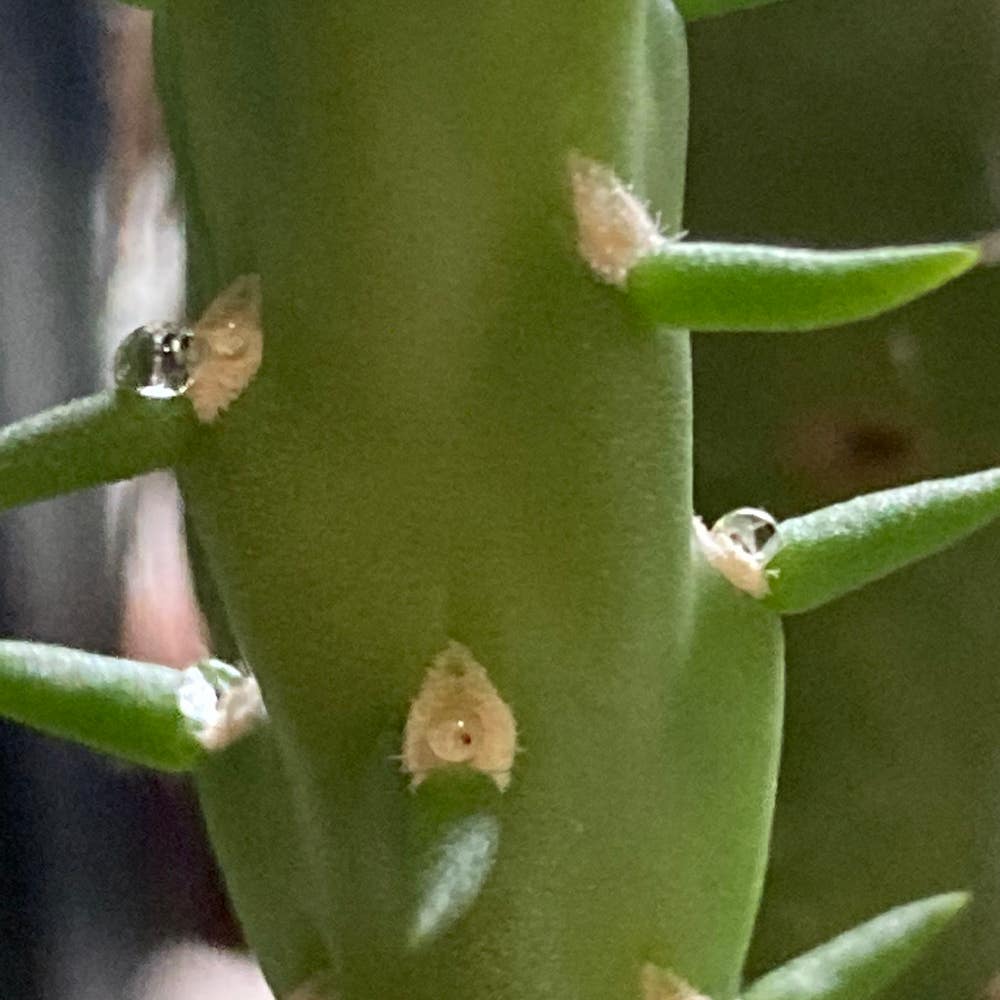
🌵 How to Cure Leaves Falling Over on Your Cholla Cactus
Cylindropuntia kleiniae
By the Greg Editorial Team
Oct 04, 2024•6 min read
This article was created with the help of AI so we can cover more plants for you. May contain errors. See one? Report it here.
Revive your Cholla cactus 🌵 with essential tips on watering and pest control for vibrant, healthy growth!
- 💧 Overwatering and underwatering are primary causes of leaf drop in Cholla Cactus.
- 🌡️ Environmental stress from temperature and humidity fluctuations can harm your cactus.
- 🐛 Regularly check for pests like mealybugs to prevent significant damage to your cactus.
Causes of Leaf Drop
💧 Overwatering Issues
Overwatering is a common culprit behind leaf drop in Cholla Cactus. Symptoms include a soft or mushy texture of leaves and yellowing or browning of leaf segments.
To prevent this, ensure your cactus is planted in well-draining soil. Signs of waterlogged soil, such as a persistent soggy feel, can indicate that your cactus is receiving too much moisture.
🚰 Underwatering Issues
On the flip side, underwatering can also lead to leaf drop. Look for wilting leaves and shriveling of leaf segments as telltale signs.
For optimal health, follow a recommended watering schedule tailored to your Cholla Cactus. If you notice the soil is bone dry or the cactus appears droopy, it’s time to give it a drink.
🐛 Pest Infestations
Pests can wreak havoc on your Cholla Cactus, leading to leaf drop. Common offenders include mealybugs and scale insects.
You might notice sticky residue on leaves or even visible pests clinging to the cactus. Regular inspections can help catch these issues early.
🌡️ Environmental Stress
Environmental factors play a significant role in the health of your Cholla Cactus. Ideally, it thrives in temperatures between 70°F and 100°F, but extreme temperatures can stress the plant.
Humidity is another factor to consider. High humidity can lead to stress, so watch for signs like leaf drop or discoloration when conditions fluctuate.
Understanding these causes can help you take proactive steps to keep your Cholla Cactus healthy and thriving. Next, we’ll explore the symptoms of an unhealthy cactus to further refine your care strategies.
Symptoms of Unhealthy Cactus
🌵 Wilting Leaves
Wilting leaves on your Cholla Cactus can signal a couple of issues. It often stems from either overwatering or underwatering, both of which can stress the plant.
Environmental stress factors, like sudden temperature changes, can also contribute to wilting. Keeping an eye on your cactus's surroundings is crucial for its health.
🎨 Discoloration
Discoloration is another telltale sign of an unhealthy cactus. Yellowing leaves typically indicate overwatering, while browning often points to underwatering or sunburn.
Understanding these color changes can help you diagnose your cactus's health. Addressing discoloration promptly can prevent further damage.
🥴 Soft or Mushy Texture
A soft or mushy texture in your Cholla Cactus is a serious concern. This often indicates severe overwatering, leading to root rot and other health issues.
The texture of the leaves is a key diagnostic tool. If they feel squishy, it’s time to reassess your watering habits and soil conditions.
Recognizing these symptoms early can make a significant difference in your cactus's recovery. Next, let’s explore how to diagnose the specific problems affecting your Cholla Cactus.
Diagnosis and Treatment
🕵️♂️ Diagnosing the Problem
Assessing Soil Moisture
To tackle leaf drop in your Cholla cactus, start by checking the soil moisture. A simple finger test can help; insert your finger about an inch into the soil. If it feels dry, it’s time to water.
Alternatively, consider using a moisture meter for a more precise reading. This tool can help you avoid the pitfalls of overwatering or underwatering.
Checking for Pests
Next, inspect your cactus for pests. Look closely at the stems and leaves for any visible signs of infestation.
Using a magnifying glass can reveal tiny pests like mealybugs or scale insects that might be hiding. Early detection is key to preventing further damage.
Evaluating Light Exposure
Light is crucial for the health of your Cholla cactus. Ideally, it should receive bright, indirect sunlight for several hours each day.
If you notice leggy growth or pale leaves, your cactus may not be getting enough light. Adjusting its position can make a significant difference.
💧 Treatment Options
Adjusting Watering Practices
Once you've diagnosed the issue, it’s time to adjust your watering practices. In general, Cholla cacti prefer a watering schedule that allows the soil to dry out completely between waterings.
During the growing season, water more frequently, but reduce this in the winter months. This balance is vital for maintaining healthy leaves.
Pest Control Methods
If pests are the culprit, you have several control options. Organic solutions like neem oil or insecticidal soap can effectively eliminate unwanted guests.
For a hands-on approach, manually remove pests with a soft cloth or cotton swab. This method can be satisfying and effective.
Improving Light Conditions
Finally, consider enhancing your cactus's light exposure. If it’s not thriving in its current spot, try relocating it to a sunnier area.
If natural light is limited, using grow lights can provide the necessary boost. Your Cholla cactus will thank you for the extra care.
With these diagnosis and treatment strategies, you’re well on your way to restoring your Cholla cactus to its vibrant self. Next, let’s explore some prevention strategies to keep your cactus healthy long-term.
Prevention Strategies
🌵 Best Practices for Cactus Care
Ideal Soil Mix
To keep your Cholla cactus thriving, start with a well-draining soil mix. A combination of sand and perlite is ideal, as it allows excess water to escape, preventing root rot.
Maintaining the right pH balance is crucial too. Aim for a slightly acidic to neutral pH (around 6.0 to 7.0) to promote healthy growth.
Proper Potting Techniques
Choosing the right pot can make all the difference. Always select pots with drainage holes to ensure that excess moisture can escape.
Consider the size of the pot as well. A pot that’s too small can restrict growth, while one that’s too large may retain too much moisture.
Seasonal Care Adjustments
Your cactus care routine should adapt with the seasons. In winter, reduce watering frequency as the plant enters dormancy, while summer may require more frequent hydration.
Keep an eye on temperature changes too. Monitoring your cactus’s environment during seasonal transitions helps prevent stress from extreme conditions.
🔍 Monitoring Plant Health
Regular Inspections
Make it a habit to inspect your Cholla cactus weekly. Look for any signs of stress or pests, as early detection can save your plant from serious issues.
Regular checks help you stay ahead of potential problems, ensuring your cactus remains healthy and vibrant.
Signs of Stress to Watch For
Be vigilant for key indicators of stress. Changes in leaf color or texture can signal underlying issues that need attention.
Also, observe growth patterns. A lack of vigor or unusual growth can indicate that your cactus needs a change in care or environment.
By following these prevention strategies, you can keep your Cholla cactus healthy and flourishing, setting the stage for a vibrant display in your home or garden.
⚠️ Safety First
This content is for general information and may contain errors, omissions, or outdated details. It is not medical, veterinary advice, or an endorsement of therapeutic claims.
Always consult a qualified healthcare professional before using any plant as food, medicine, or supplement.
Never eat any plant (or feed one to pets) without confirming its identity with at least two trusted sources.
If you suspect poisoning, call Poison Control (800) 222-1222, the Pet Poison Helpline (800) 213-6680, or your local emergency service immediately.
Spotted an error? Please report it here.
Keep your Cholla Cactus thriving 🌱 by using Greg's tailored watering alerts and pest management tips to prevent leaf drop and ensure optimal growth!