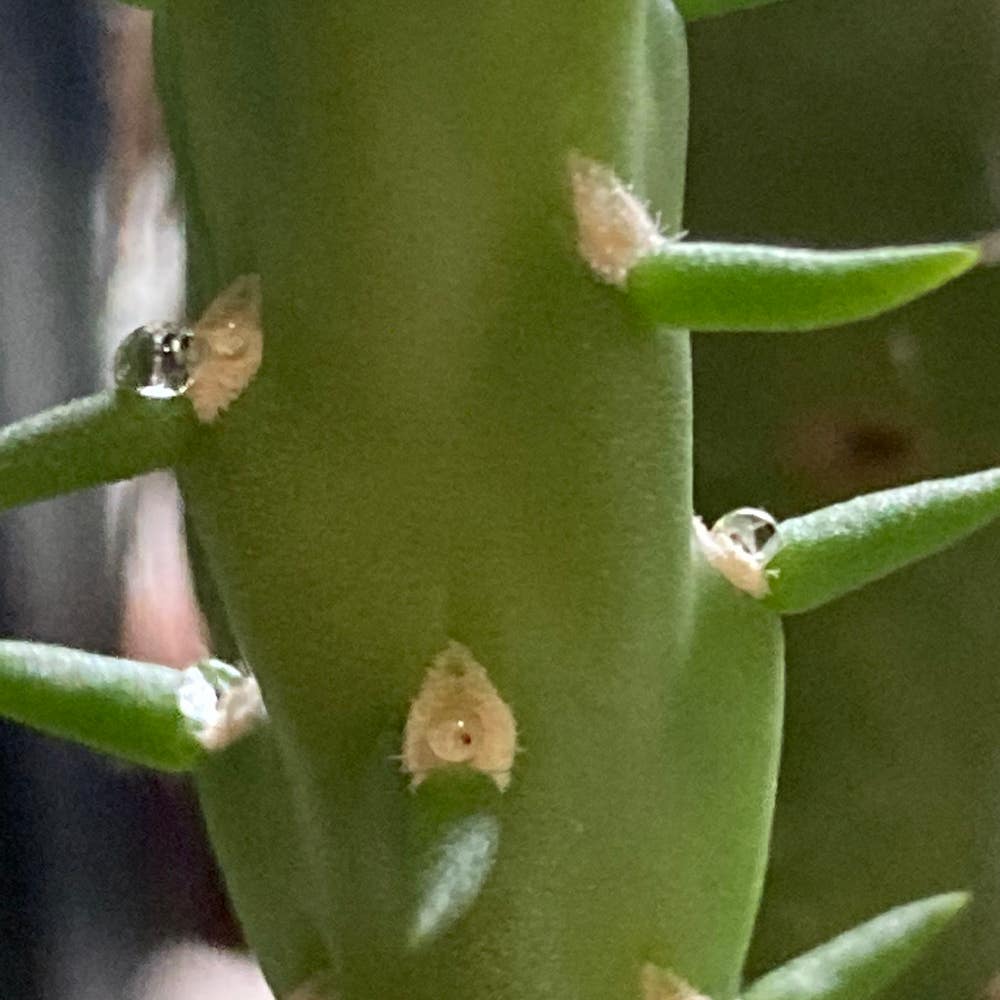
🌵 How to Cure Dropping Leaves on Your Cholla Cactus
Cylindropuntia kleiniae
By the Greg Editorial Team
Oct 04, 2024•5 min read
This article was created with the help of AI so we can cover more plants for you. May contain errors. See one? Report it here.
Master essential care tips to keep your Cholla cactus thriving 🌵 and prevent frustrating leaf drop!
- 💧 Overwatering causes root rot, leading to leaf drop in Cholla cacti.
- 🌵 Cholla cacti prefer arid conditions; high humidity can stress them.
- 🔍 Regular pest inspections are crucial to prevent leaf drop and maintain health.
Causes of Leaf Drop
💧 Overwatering and Root Rot
Excess moisture is a leading cause of root rot in Cholla cacti. When roots sit in waterlogged soil, they become mushy and emit a foul odor, leading to yellowing segments and eventual leaf drop.
To prevent this, ensure your cactus is planted in well-draining soil. Choose pots with drainage holes to facilitate proper moisture levels.
🚰 Underwatering and Drought Stress
On the flip side, underwatering can also stress your Cholla cactus. Signs include shriveled segments and a dry appearance, indicating that your plant is struggling.
To keep your cactus healthy, establish a consistent watering routine. Monitor the soil's dryness and water when it feels dry to the touch.
🌡️ Environmental Stress Factors
Temperature
Cholla cacti thrive in temperatures ranging from 70°F to 100°F (21°C to 38°C). Extreme temperatures, whether too hot or too cold, can adversely affect their health.
Keep your cactus in a stable environment to avoid temperature-related stress.
💨 Humidity
Cholla cacti prefer low humidity levels. High humidity can lead to stress and contribute to leaf drop, as these plants are adapted to arid conditions.
Ensure good air circulation around your cactus to maintain optimal humidity levels.
🐛 Pest Infestations
Common Pests
Mealybugs and spider mites are common pests that can infest Cholla cacti. Look for signs such as webbing, sticky residue, or visible insects on your plant.
Regular inspections can help catch these pests early before they cause significant damage.
⚠️ Impact on Leaf Health
Pests can severely impact leaf health, leading to leaf drop and overall decline. They sap nutrients from the plant, weakening it over time.
Addressing pest issues promptly is crucial for maintaining a healthy cactus.
🦠 Diseases Affecting Cholla Cactus
Cholla cacti are susceptible to various diseases, including fungal infections and bacterial blight. Symptoms often include discoloration, wilting, and leaf drop.
Early detection and treatment are vital to prevent further damage and ensure your cactus remains healthy.
Diagnosis and Treatment
🌿 Diagnosing the Cause of Leaf Drop
Assessing Watering Habits
Understanding your watering habits is crucial for your Cholla cactus's health. Evaluate how often and how much water you provide; too much can lead to root rot, while too little can cause drought stress.
Look for signs of overwatering, such as yellowing segments and mushy roots. Conversely, shriveled segments and a dry appearance indicate underwatering.
Checking for Pests and Diseases
Inspecting your cactus for pests and diseases is essential. Start by examining the plant closely for any visible insects or webbing, which are signs of pests like mealybugs or spider mites.
Next, check for symptoms of disease, such as discoloration or wilting. Early detection can make a significant difference in treatment outcomes.
Evaluating Environmental Conditions
Assessing the environmental conditions is equally important. Check the temperature and humidity levels; Cholla cacti thrive in temperatures between 70°F and 100°F (21°C to 38°C) and prefer low humidity.
Ensure your cactus receives adequate sunlight, ideally full sun for 6-8 hours daily. Proper exposure can significantly enhance its health and resilience.
🛠️ Treatment Options
Adjusting Watering Practices
Establishing a proper watering schedule is vital for your Cholla cactus. Base your schedule on seasonal changes and climate conditions to ensure optimal hydration.
Look for signs that indicate when to water, such as the soil feeling dry to the touch. This will help you avoid both overwatering and underwatering.
Improving Soil Drainage
Soil drainage is critical for cactus health. Use well-draining soil mixes and consider potting techniques that enhance drainage, such as adding perlite or sand.
Ensure your pots have drainage holes to prevent excess moisture buildup. This simple step can save your cactus from root rot.
Pest Control Methods
Managing pests effectively is key to maintaining your cactus's health. Explore both organic and chemical options for pest control, depending on your preferences.
Regular monitoring and preventive measures, such as cleaning the plant and surrounding area, can help keep pests at bay. Stay vigilant to catch any infestations early.
Disease Management Strategies
Addressing diseases promptly is essential for your Cholla cactus. Familiarize yourself with treatment options for common diseases, such as fungal infections and bacterial blight.
Remember to sterilize your tools and maintain plant hygiene. This practice can prevent the spread of diseases and promote a healthier environment for your cactus.
By diagnosing and treating leaf drop effectively, you can help your Cholla cactus thrive. Next, let’s explore prevention strategies to keep your cactus healthy in the long run.
Prevention Strategies
🌵 Best Practices for Cactus Care
Ideal Watering Schedule
Establishing a proper watering schedule is crucial for your Cholla cactus. Water frequency should be adjusted based on environmental conditions, ensuring the soil dries out completely between waterings.
Soil Selection and Potting Tips
Choosing the right soil mix is essential for optimal drainage. Use a blend specifically designed for cacti, and ensure your pot has drainage holes to prevent water accumulation.
Optimal Sunlight Exposure
Cholla cacti thrive in full sun, requiring 6-8 hours of direct sunlight daily. Adjust their placement according to seasonal changes to maintain their health and vigor.
🌦️ Seasonal Care Considerations
Adjusting Care During Different Seasons
As seasons change, so should your care routine. Watering needs will differ between summer and winter, so keep an eye on temperature fluctuations to ensure your cactus remains healthy.
Preparing for Temperature Fluctuations
Protecting your Cholla cactus from extreme weather is vital. Consider indoor care during harsh conditions, while outdoor plants may need additional shielding from intense sun or cold snaps.
By following these prevention strategies, you can help your Cholla cactus thrive and reduce the risk of leaf drop. Next, we will explore how to diagnose the causes of leaf drop effectively.
⚠️ Safety First
This content is for general information and may contain errors, omissions, or outdated details. It is not medical, veterinary advice, or an endorsement of therapeutic claims.
Always consult a qualified healthcare professional before using any plant as food, medicine, or supplement.
Never eat any plant (or feed one to pets) without confirming its identity with at least two trusted sources.
If you suspect poisoning, call Poison Control (800) 222-1222, the Pet Poison Helpline (800) 213-6680, or your local emergency service immediately.
Spotted an error? Please report it here.
Keep your Cholla cactus thriving 🌵 by using Greg's tailored watering reminders and pest alerts to prevent leaf drop and ensure optimal care!