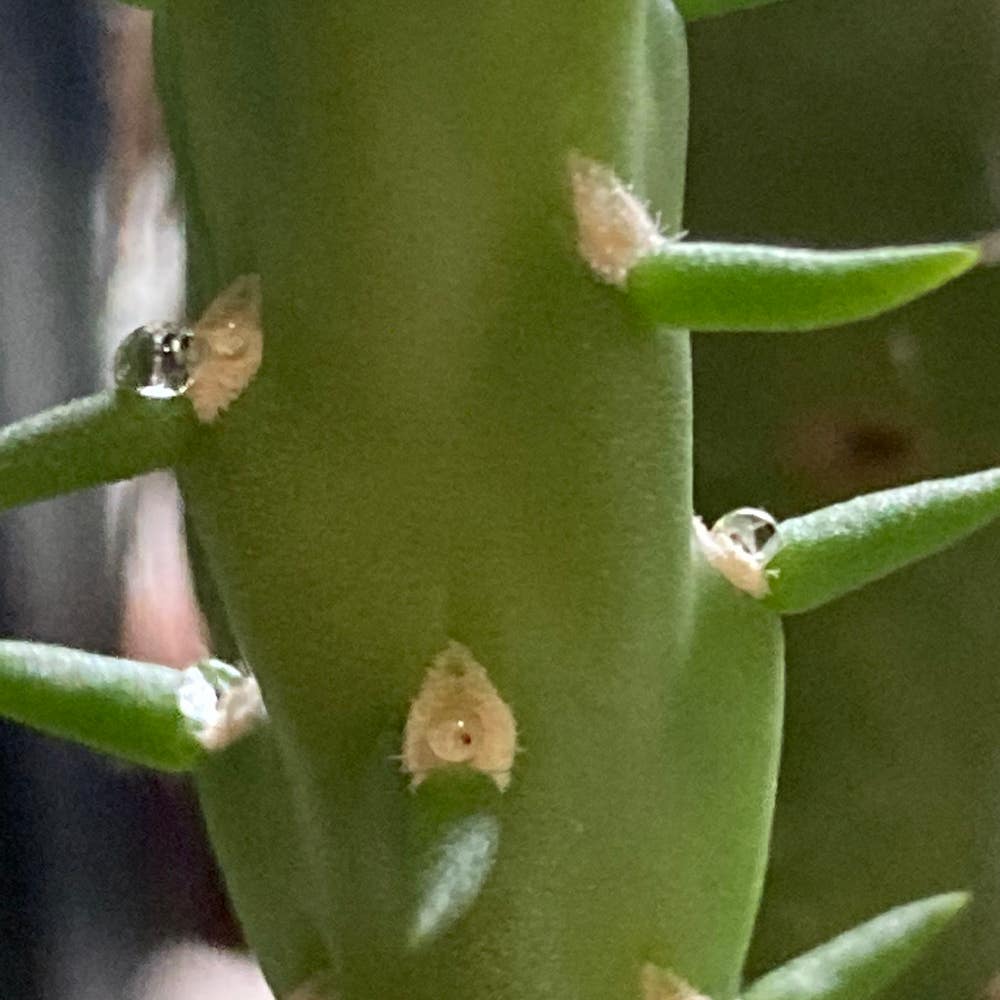
🌵 How to Fix Curling Leaves on Your Cholla Cactus
Cylindropuntia kleiniae
By the Greg Editorial Team
Oct 04, 2024•6 min read
This article was created with the help of AI so we can cover more plants for you. May contain errors. See one? Report it here.
Revitalize your cholla cactus with expert tips to prevent curling leaves and promote vibrant growth! 🌵
- 🌵 Curling leaves indicate watering issues; assess moisture levels regularly.
- ☀️ Cacti need 6-8 hours of bright, indirect sunlight for optimal health.
- 🐛 Inspect for pests like mealybugs; use sticky traps for monitoring.
Diagnosing the Problem
Assessing Watering Habits 🌊
Understanding your watering habits is crucial for your cholla cactus's health. Check the soil moisture regularly, ideally every week, to ensure it’s not too dry or too wet.
You can use a moisture meter for precise readings or simply stick your finger into the soil about an inch deep. If it feels dry, it’s time to water; if it’s still moist, hold off.
Evaluating Light Exposure ☀️
Light is another key factor in preventing curling leaves. Your cholla cactus thrives in 6-8 hours of bright, indirect sunlight each day.
If you notice your cactus stretching or leaning towards a light source, it’s a sign it’s not getting enough light. Adjust its position to ensure it receives adequate sunlight.
Checking for Pests 🐜
Pests can wreak havoc on your cactus, leading to curling leaves. Conduct regular visual inspections and consider using sticky traps to catch any unwanted visitors.
Look for signs of infestation, such as webbing, sticky residue, or visible insects. Early detection can save your cactus from further damage.
Analyzing Soil Conditions 🌱
The right soil type is essential for your cactus's well-being. A well-draining cactus mix is crucial to prevent root rot and other issues.
Ensure your pots have adequate drainage holes. This allows excess water to escape, keeping the roots healthy and happy.
Identifying Nutrient Levels 🥦
Nutrient levels in the soil can also affect your cactus. Use soil testing kits to determine the nutrient content and identify any deficiencies.
Signs of nutrient deficiency include leaf discoloration and poor growth. Addressing these issues promptly can help restore your cactus’s vitality.
By diagnosing these key areas, you can effectively address the curling leaves on your cholla cactus. Next, we’ll explore practical solutions to help your cactus thrive.
Solutions for Curling Leaves
🌊 Adjusting Watering Practices
Signs of Overwatering
Overwatering is a common issue that can lead to curling leaves. Look for symptoms like yellowing leaves and mushy stems; these are clear indicators that your cholla cactus is drowning.
To remedy this, allow the soil to dry out completely before rewatering. This simple adjustment can make a world of difference.
Signs of Underwatering
On the flip side, underwatering can also cause curling leaves. If you notice wrinkled leaves and dry soil, your cactus is likely thirsty.
In this case, water thoroughly until moisture drains from the bottom of the pot. This ensures your cactus gets the hydration it needs.
☀️ Modifying Light Conditions
Optimal Sunlight
Light exposure is crucial for healthy cactus growth. Aim for bright, indirect sunlight for 6-8 hours daily to keep your cholla thriving.
If your cactus isn’t getting enough light, consider moving it to a brighter location or using sheer curtains to filter the sunlight.
Protecting from Excessive Heat
Excessive heat can stress your cactus, leading to curling leaves. Use shade cloth or relocate your cactus during peak sun hours to protect it from harsh conditions.
Additionally, keep an eye on temperature fluctuations to ensure your cactus remains comfortable.
🐞 Pest Management Strategies
Identifying Common Pests
Pests can wreak havoc on your cactus, so it’s essential to identify them early. Look for mealybugs, which appear as white, cotton-like masses on stems, and spider mites, characterized by fine webbing and stippled leaves.
Regular inspections can help catch these pests before they cause significant damage.
Treatment Options
Once you've identified pests, it's time to act. Organic solutions like neem oil and insecticidal soap can effectively eliminate these nuisances.
For a more hands-on approach, consider mechanical methods such as hand-picking pests or using water sprays to dislodge them.
🌱 Nutrient Supplementation
Recommended Fertilizers
Nutrient levels play a vital role in cactus health. Use a balanced cactus fertilizer with low nitrogen to support growth.
Apply this fertilizer every 4-6 weeks during the growing season for optimal results.
Signs of Nutrient Deficiency
If your cactus is showing yellowing leaves or poor growth, it may be lacking essential nutrients. Adjusting your fertilizer type and frequency can help rectify these issues.
By keeping an eye on nutrient levels, you can ensure your cholla cactus remains vibrant and healthy.
With these solutions in hand, you’re well-equipped to tackle curling leaves on your cholla cactus. Next, let’s explore some preventative measures to keep your cactus thriving long-term.
Preventative Measures
🌵 Best Practices for Cactus Care
Ideal Soil Mix
Creating the right soil mix is crucial for your cholla cactus. Aim for a blend of 50% cactus mix, 25% perlite, and 25% sand to ensure proper drainage and aeration.
Proper Potting Techniques
Choosing the right pot can make all the difference. Always select pots with drainage holes and consider repotting every 2-3 years or when your cactus becomes root-bound.
Seasonal Care Adjustments
Caring for your cactus changes with the seasons. Reduce watering frequency during winter months and move your cactus to brighter spots in spring to promote healthy growth.
🌤️ Monitoring Environmental Conditions
Temperature and Humidity Considerations
Your cholla cactus thrives in a temperature range of 70°F to 100°F (21°C to 38°C). It prefers low humidity, which is essential for optimal growth.
Seasonal Changes and Their Impact
Recognizing seasonal growth patterns is key. Adjust your care routine based on these changes, especially during dormancy periods, to keep your cactus healthy and vibrant.
With these preventative measures in place, your cholla cactus will be well-equipped to thrive. Next, let’s explore common misconceptions about cactus care that could be holding you back.
Common Misconceptions
🌵 Myths About Cactus Care
One common myth is that cacti do not need water. In reality, these resilient plants require specific watering schedules tailored to their environment.
Understanding when and how much to water is crucial for their health. Overwatering or underwatering can lead to curling leaves and other issues.
💧 Clarifying the Role of Humidity
Another misconception is that cacti thrive in high humidity. Most cacti actually prefer dry environments, which mimic their natural habitats.
Excess humidity can lead to rot and other problems. Keeping humidity levels low is essential for optimal growth.
🦾 Understanding Cactus Resilience
Many people believe that cacti are indestructible. While they are hardy, cacti still need proper care to thrive and avoid stress.
Neglecting their specific needs can lead to curling leaves and other signs of distress. Treating them with the right attention ensures they flourish beautifully.
Understanding these misconceptions can help you provide better care for your cholla cactus. With the right knowledge, you can create an environment where your cactus thrives.
⚠️ Safety First
This content is for general information and may contain errors, omissions, or outdated details. It is not medical, veterinary advice, or an endorsement of therapeutic claims.
Always consult a qualified healthcare professional before using any plant as food, medicine, or supplement.
Never eat any plant (or feed one to pets) without confirming its identity with at least two trusted sources.
If you suspect poisoning, call Poison Control (800) 222-1222, the Pet Poison Helpline (800) 213-6680, or your local emergency service immediately.
Spotted an error? Please report it here.
Keep your cholla cactus thriving 🌵 by using Greg's tailored reminders for watering and sunlight, ensuring it stays healthy and free from curling leaves!