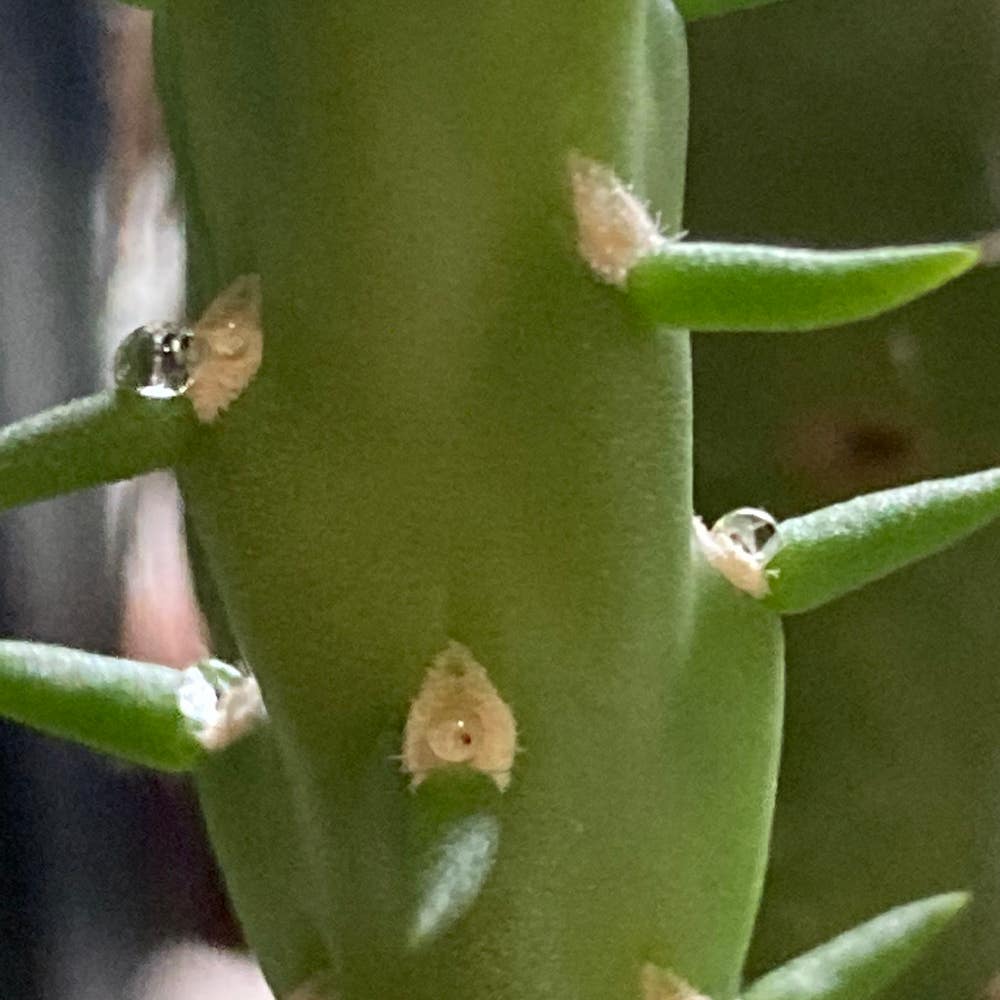
🌵 Actions to Take When Cholla Cactus Leaves Turn Yellow
Cylindropuntia kleiniae
By the Greg Editorial Team
Oct 04, 2024•6 min read
This article was created with the help of AI so we can cover more plants for you. May contain errors. See one? Report it here.
Keep your Cholla cactus thriving 🌵 by mastering the secrets to diagnosing and preventing yellowing leaves!
- 🌵 Overwatering causes yellow leaves; ensure soil dries completely between waterings.
- ☀️ Cholla Cactus needs 6-8 hours of sunlight; balance light to prevent yellowing.
- 🐛 Regular pest inspections are crucial; catch infestations early to protect your cactus.
Causes of Yellowing Leaves
💧 Overwatering and Its Effects
Overwatering is a common culprit behind yellowing leaves in Cholla Cactus. Symptoms include yellowing leaves, mushy stems, and root rot, which can be detrimental to your plant's health.
To prevent this, ensure your cactus is planted in well-draining soil. This helps avoid water accumulation, which can lead to root rot characterized by a foul smell, blackened roots, and wilting even when you think you’re watering adequately.
🥦 Nutrient Deficiencies
Nitrogen Deficiency
Nitrogen is essential for your cactus's overall health. When nitrogen is lacking, you may notice yellowing of older leaves and stunted growth.
This nutrient plays a crucial role in promoting lush, green foliage, so keeping it balanced is vital.
Magnesium Deficiency
Magnesium deficiency manifests as interveinal chlorosis, where the area between leaf veins turns yellow. Magnesium is key for photosynthesis and maintaining leaf health.
Without sufficient magnesium, your cactus may struggle to thrive, impacting its vibrant appearance.
☀️ Sunlight Exposure Issues
Cholla Cactus thrives in full sun, ideally receiving 6-8 hours of direct sunlight daily. Insufficient light can lead to yellowing leaves and elongated growth as the plant stretches toward the light.
Conversely, too much sunlight can scorch the leaves, resulting in browning tips. Finding the right balance is essential for your cactus's well-being.
🐞 Pest Infestations
Common Pests
Pests can wreak havoc on your Cholla Cactus. Mealybugs appear as white, cotton-like masses on stems, while scale insects have a hard, shell-like appearance.
Signs of an infestation include yellowing leaves, stunted growth, and sticky residue on the plant. Regular inspections can help you catch these pests early.
🌡️ Environmental Stress
Environmental factors can also contribute to yellowing leaves. Cholla Cactus prefers temperatures between 20°C to 30°C (68°F to 86°F) and low humidity.
Fluctuations in temperature or high humidity can stress your cactus, leading to yellowing leaves, wilting, and poor growth. Keeping your plant in a stable environment is crucial for its health.
Understanding these causes can help you take proactive steps to keep your Cholla Cactus vibrant and healthy. Next, we’ll explore how to diagnose yellow leaves effectively.
Diagnosing Yellow Leaves
Identifying Symptoms 🌼
Start with a visual inspection of your Cholla cactus. Look for patterns of yellowing—are the leaves turning yellow all over or just in specific areas?
Comparing your plant to a healthy one can provide insight. Notice differences in color and vigor; this can help pinpoint the issue.
Assessing Soil Moisture Levels 💧
Next, check the soil moisture levels. Use techniques like the finger test or a moisture meter to determine if your cactus is getting the right amount of water.
Ideally, the soil should feel dry to the touch before you water again. This prevents overwatering, a common cause of yellowing leaves.
Checking for Pests and Diseases 🐛
Regular inspections are crucial for spotting pests and diseases. Look closely at the stems and soil for any signs of infestation.
Identifying diseases early can save your cactus. Watch for symptoms of fungal infections or root rot, which can lead to yellowing leaves.
Evaluating Light Conditions ☀️
Assess the light exposure your cactus receives. Consider its location and any obstacles that might block sunlight.
If your cactus isn’t getting enough light, moving it to a sunnier spot can make a significant difference. Adequate sunlight is essential for vibrant, healthy leaves.
By diagnosing these issues early, you can take action to restore your cactus's health. Next, let’s explore how to alleviate yellow leaves effectively.
Alleviating Yellow Leaves
🌊 Adjusting Watering Practices
To revive your Cholla cactus, start by adjusting your watering habits. Allow the soil to dry completely between waterings to prevent further yellowing.
Deep watering is key. This technique encourages robust root growth, ensuring your cactus can access moisture more effectively.
🌱 Fertilizing with Appropriate Nutrients
Next, consider the nutrients your cactus needs. Use balanced NPK fertilizers or specific cactus formulas to provide essential elements for growth.
Timing matters! Fertilize during the growing season, particularly in spring and summer, to support your cactus's recovery.
☀️ Modifying Light Exposure
Light is crucial for a healthy cactus. If your plant is struggling, move it to a location with adequate sunlight.
For indoor plants, using grow lights can make a significant difference. This supplemental lighting can help mimic natural sunlight, promoting better growth.
🐞 Treating Pest Infestations
Don’t overlook the possibility of pests. Organic pest control methods like neem oil or insecticidal soap can effectively manage infestations.
For a hands-on approach, consider mechanical removal. Hand-picking pests or using a soft brush can help keep your cactus healthy and thriving.
By implementing these strategies, you can help your Cholla cactus bounce back from yellowing leaves. Next, let’s explore how to prevent yellow leaves from becoming a recurring issue.
Preventing Yellow Leaves
💧 Best Practices for Watering
Establishing a consistent watering schedule is crucial for your Cholla cactus. Water only when the soil is completely dry to the touch, ensuring you avoid the pitfalls of overwatering.
Using appropriate containers is equally important. Always choose pots with drainage holes to allow excess water to escape, preventing root rot.
🌱 Soil Selection and Amendments
Selecting the right soil type can make all the difference. A cactus mix or well-draining potting soil is recommended to support healthy growth.
Consider adding amendments like perlite or sand to enhance drainage. This will help keep your cactus's roots healthy and thriving.
☀️ Optimal Light Conditions for Growth
Cholla cacti thrive in full sun, so positioning them in a south-facing window or outdoor area is ideal. They need at least 6-8 hours of sunlight daily to flourish.
Don’t forget to monitor light intensity, especially with seasonal changes. Adjusting their placement can help maintain optimal growth conditions.
🐞 Regular Pest Monitoring and Control
Routine inspections are essential for keeping pests at bay. Check your cactus every few weeks for any signs of infestation.
Implement preventive measures like using diatomaceous earth or introducing beneficial insects. These strategies can help maintain a healthy environment for your cactus.
By following these preventive measures, you can ensure your Cholla cactus remains vibrant and healthy, minimizing the risk of yellowing leaves. Next, let’s explore seasonal considerations to further enhance your cactus care.
Seasonal Considerations
🌧️ Seasonal Watering Adjustments
Watering frequency for Cholla Cactus varies with the seasons. In winter, reduce watering; during the active growth period in spring and summer, increase it.
Yellowing leaves can signal dormancy, indicating that your cactus needs less water. Pay attention to these signs to keep your plant thriving.
📅 Fertilization Schedules Based on Growth Cycles
Timing is crucial for fertilizing your cactus. Start fertilizing in early spring as growth begins, using a balanced approach.
During active growth, consider higher nitrogen levels to support robust development. This simple adjustment can make a significant difference in your cactus's health.
🌡️ Preparing for Temperature Changes
Temperature fluctuations can stress your Cholla Cactus. Protect it from frost by moving it indoors or using protective coverings when necessary.
In extreme heat, provide shade to prevent scorching. Being proactive about temperature changes will help maintain your cactus's vitality throughout the seasons.
As you adapt your care routine, remember that seasonal adjustments are key to a healthy Cholla Cactus. Next, we’ll explore how to prevent yellow leaves effectively.
⚠️ Safety First
This content is for general information and may contain errors, omissions, or outdated details. It is not medical, veterinary advice, or an endorsement of therapeutic claims.
Always consult a qualified healthcare professional before using any plant as food, medicine, or supplement.
Never eat any plant (or feed one to pets) without confirming its identity with at least two trusted sources.
If you suspect poisoning, call Poison Control (800) 222-1222, the Pet Poison Helpline (800) 213-6680, or your local emergency service immediately.
Spotted an error? Please report it here.
Keep your Cholla Cactus vibrant and thriving 🌵 by using Greg's tailored care reminders to master watering, nutrients, and light exposure for optimal health!