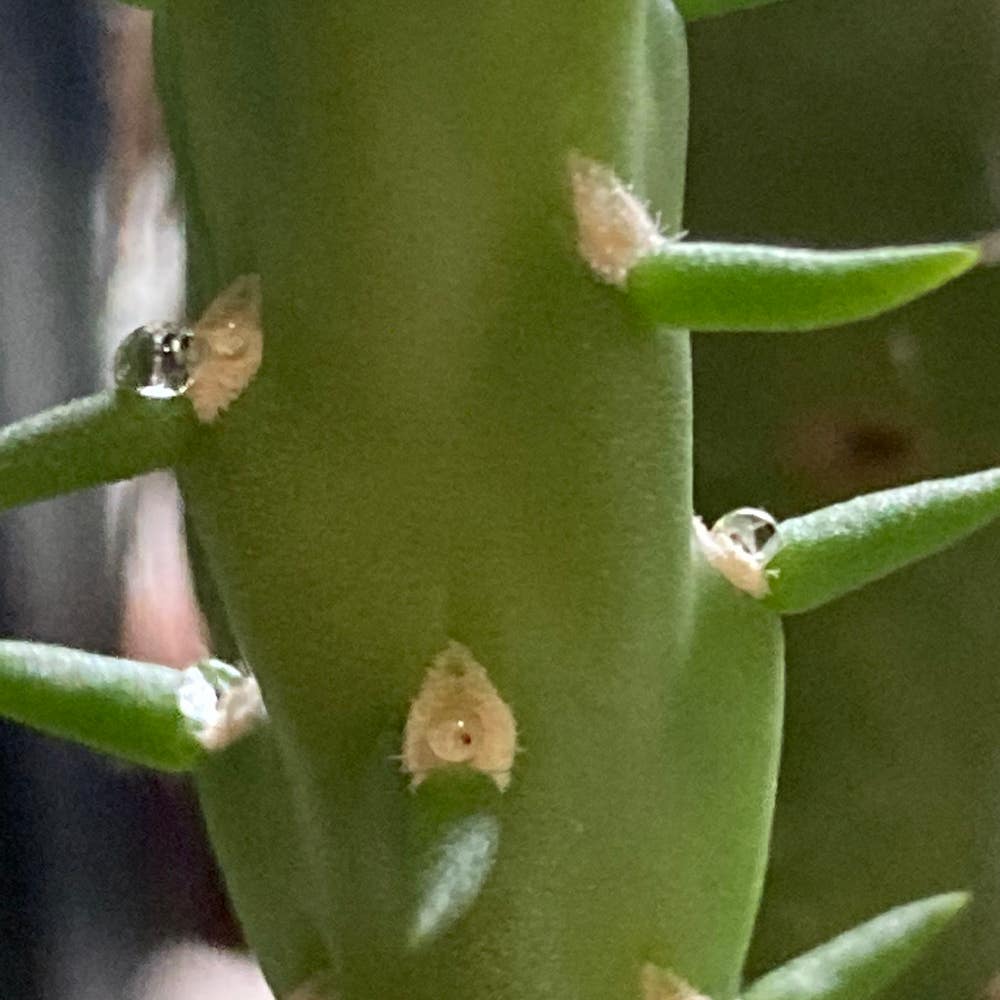
Best Tips for Droopy Leaves on Cholla Cactus 🌵
Cylindropuntia kleiniae
By the Greg Editorial Team
Oct 04, 2024•4 min read
This article was created with the help of AI so we can cover more plants for you. May contain errors. See one? Report it here.
Revive your droopy Cholla cactus 🌵 with essential tips on watering and pest control for vibrant growth!
- 💧 Overwatering causes droopy leaves; ensure proper soil drainage to prevent root rot.
- 🌵 Underwatering leads to shriveled leaves; maintain a balanced watering routine.
- 🌡️ Cholla cacti thrive in warm, dry conditions; monitor humidity and temperature closely.
Causes of Droopy Leaves
💧 Overwatering Effects
Excess water is a common culprit behind droopy leaves in Cholla cacti. When the roots sit in soggy soil, they can rot, leading to yellowing leaves and a mushy texture.
Proper soil drainage is crucial for cactus health. Without it, your plant may struggle to thrive, making it essential to choose the right potting mix.
🚰 Underwatering Effects
On the flip side, underwatering can also cause droopy leaves. Signs include shriveled leaves and a dry appearance, indicating that your cactus is in distress.
To prevent wilting and maintain overall plant health, establish a consistent watering schedule. Regular checks can help ensure your Cholla gets just the right amount of moisture.
🌡️ Environmental Stress
Temperature
Cholla cacti thrive in temperatures between 70°F to 100°F (21°C to 38°C). Extreme temperatures, whether too hot or too cold, can negatively impact leaf health.
Keeping your cactus within this ideal range is vital for its well-being. Sudden temperature shifts can lead to droopy leaves as the plant struggles to adapt.
🌬️ Humidity
Cholla cacti prefer low humidity environments. High humidity can create conditions that contribute to droopy leaves, as excess moisture can overwhelm the plant.
Monitoring humidity levels is essential for maintaining a healthy cactus. A dry atmosphere will help your Cholla flourish.
🐛 Pest Infestations
Pests like mealybugs and scale can wreak havoc on your Cholla cactus. These invaders often leave behind sticky residue and can be visible on the plant.
Recognizing the connection between pests and droopy leaves is crucial. Early detection can save your cactus from further damage and restore its vitality.
Diagnosis and Treatment
🌵 Identifying the Problem
How to Assess Droopy Leaves
When you notice droopy leaves on your Cholla cactus, start with a thorough assessment. Check the soil moisture by inserting your finger about an inch deep; if it feels soggy, overwatering might be the culprit.
Next, evaluate environmental conditions. Is your cactus exposed to extreme temperatures or high humidity? These factors can also contribute to droopiness.
Differentiating Between Overwatering and Underwatering
Identifying whether your cactus is overwatered or underwatered is crucial. For overwatering, look for yellowing leaves and a mushy texture, while underwatered plants often display shriveled leaves and a dry appearance.
Visual cues are key. Overwatered leaves may feel soft, whereas underwatered ones will be firm but shriveled. Pay attention to these differences to guide your next steps.
💧 Treatment Solutions
Adjusting Watering Schedule
Creating a balanced watering routine is essential for your cactus's health. Water your Cholla cactus only when the top inch of soil is dry, typically every two to three weeks.
Seasonal adjustments are also important. During the growing season, increase watering frequency, but reduce it in winter when the plant is dormant.
Improving Soil Drainage
Enhancing soil drainage can prevent future droopiness. Use a well-draining cactus mix or add perlite to your existing soil to improve aeration.
If drainage issues persist, consider repotting your cactus. Choose a pot with drainage holes to ensure excess water can escape.
🐞 Pest Control Methods
Regular inspections for pests can save your cactus from severe damage. Look for common pests like mealybugs and scale, which can leave sticky residue on leaves.
For pest control, consider both organic and chemical options. Neem oil is a great organic choice, while insecticidal soap can tackle more severe infestations. Early detection is key to keeping your cactus healthy.
With these diagnosis and treatment strategies, you can effectively address droopy leaves and promote a thriving Cholla cactus. Next, let’s explore prevention strategies to keep your cactus in top shape.
Prevention Strategies
Best Practices for Watering 🌊
Effective watering is crucial for keeping your Cholla cactus healthy. Aim to water deeply but infrequently, allowing the soil to dry out completely between sessions.
Using the Greg plant care app can be a game-changer. It sends reminders tailored to your cactus's needs, ensuring you never over or under-water.
Seasonal Care Adjustments 🌦️
As the seasons change, so should your care routine. In the warmer months, your cactus may need more frequent watering, while in cooler months, reduce the frequency to prevent root rot.
Keep an eye on environmental conditions like temperature and humidity. Adjusting your care based on these factors can make a significant difference in your cactus's health.
Regular Health Checks for Early Detection 🔍
Conduct regular health checks to catch potential issues early. Aim for a quick inspection every couple of weeks to assess leaf condition and overall plant vitality.
Look for key indicators such as leaf texture and color. Early detection can save your cactus from more severe problems down the line.
By implementing these prevention strategies, you can help ensure your Cholla cactus remains vibrant and healthy. Next, let’s explore how to diagnose and treat any issues that may arise.
⚠️ Safety First
This content is for general information and may contain errors, omissions, or outdated details. It is not medical, veterinary advice, or an endorsement of therapeutic claims.
Always consult a qualified healthcare professional before using any plant as food, medicine, or supplement.
Never eat any plant (or feed one to pets) without confirming its identity with at least two trusted sources.
If you suspect poisoning, call Poison Control (800) 222-1222, the Pet Poison Helpline (800) 213-6680, or your local emergency service immediately.
Spotted an error? Please report it here.
Keep your Cholla cactus perky and proud 🌵 by using Greg's tailored watering reminders and pest alerts to ensure it thrives without droopy leaves!