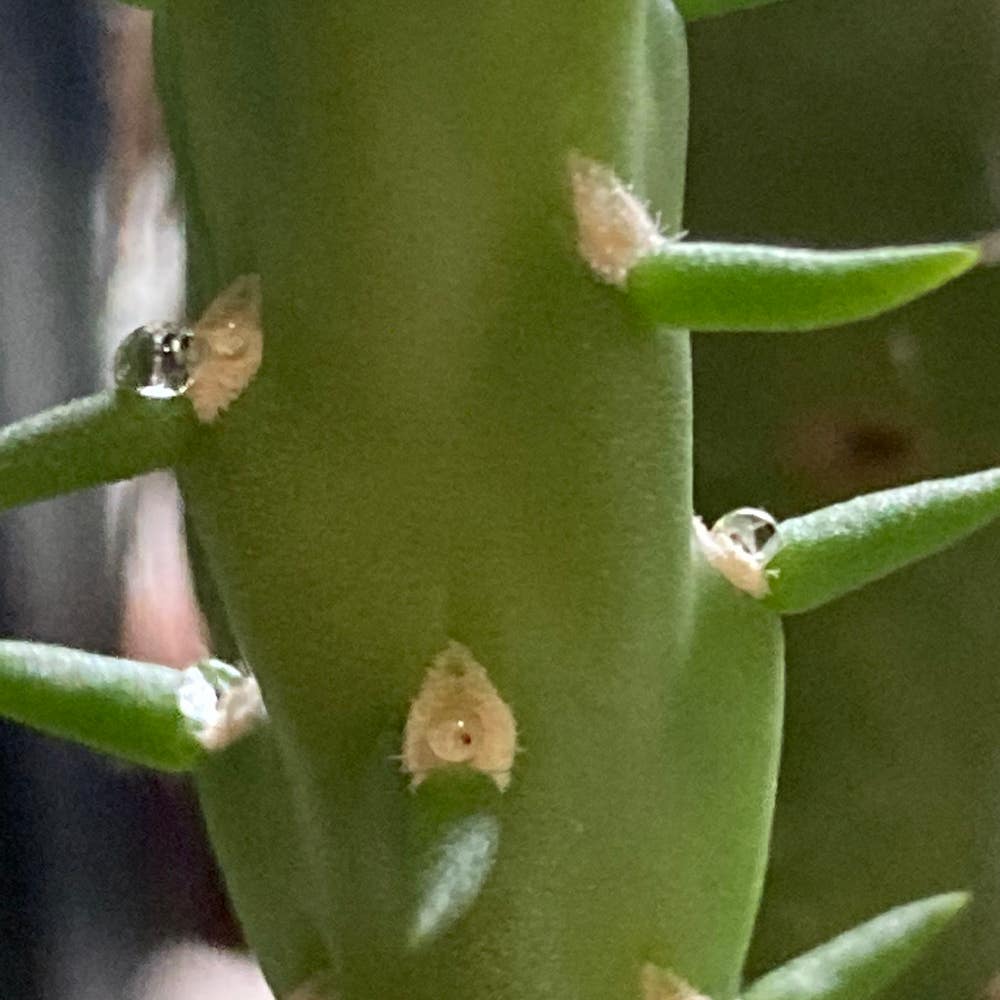
Why Are the Leaves on My Pencil Cholla Turning Yellow?
Cylindropuntia kleiniae
By the Greg Editorial Team
Apr 14, 2024•5 min read
This article was created with the help of AI so we can cover more plants for you. May contain errors. See one? Report it here.
Uncover the secret to reviving your Pencil Cholla's yellow leaves for a lush, green comeback 🌵🌿!
- Water wisely to prevent yellow leaves from over or underwatering.
- Nutrient balance is key; use fertilizers to address deficiencies.
- Light and temperature matter; find the sweet spot for your Cholla.
Spotting the Signs: Yellow Leaves on Your Pencil Cholla
🚰 Recognizing Overwatering and Underwatering
Yellow leaves can be the silent alarm of improper watering. Overwatering makes the soil soggy, depriving roots of oxygen and inviting rot. Conversely, underwatering leaves the soil bone-dry, stressing the plant. The soil should feel like a damp sponge—not a swamp or a desert.
🍽️ Identifying Nutrient Deficiencies
Nutrient deficiencies often manifest as yellowing leaves. A nitrogen shortage turns leaves pale, while a lack of phosphorus and potassium can stunt growth and flowering. Regularly check for uniform yellowing, which may indicate a broader issue with nutrient uptake.
🌞 Environmental Stress: Too Much or Too Little Light
Lighting is crucial. Too much sun can scorch leaves, turning them yellow; too little can weaken the plant. Aim for a sweet spot where your Cholla gets plenty of indirect light without being baked or left in the dark. Adjust gradually to prevent shock.
Getting to the Root: Causes of Yellowing Leaves
💧 The Watering Balancing Act: Overwatering vs. Underwatering
Overwatering is like throwing a non-swimmer into the deep end—your Pencil Cholla's roots can't breathe. Signs include soggy soil and leaves that feel like overfilled water balloons. On the flip side, underwatering turns your cactus into a desert castaway. Look for dry soil and leaves that whisper for water with their wilted, yellow plea.
🌿 Starved of Nutrients: What Your Cholla is Missing
Nutrient deficiencies are the silent drama of the plant world. Your Cholla might be crying out for a balanced diet. Yellow leaves can signal a lack of essential nutrients like nitrogen, phosphorus, or potassium. It's like trying to run a marathon on an empty stomach—your plant needs fuel to flourish.
🌞 Light and Temperature: Finding the Sweet Spot
Too much light is like a never-ending day at the beach for your Cholla—sunburn is real. Conversely, too little light is like living in perpetual twilight; it saps the life and color from your plant. Aim for the Goldilocks zone of bright, indirect light. And remember, temperature swings are the mood swings of the plant world—too hot or too cold, and your Cholla will protest with yellow leaves.
Turning Over a New Leaf: Remedial Steps
💧 Adjusting Your Watering Techniques
Before you water, check the soil; it should be dry an inch below the surface. If it's not, hold off on the H2O. Remember, your plant's thirst varies with the seasons—go easy during the winter months. Pots with drainage holes are non-negotiable; they're your best bet against waterlogged roots. And hey, if you're feeling fancy, a watering can with a long spout lets you target the base like a plant-care sniper, avoiding unwanted leaf showers.
🌱 Replenishing Nutrients: Fertilizers and Soil Amendments
When your Pencil Cholla looks more pale than perky, it might be screaming for nutrients. A balanced, water-soluble fertilizer at half strength during the growing season should perk it right up. But don't get overzealous—keep it off the leaves to avoid chemical tans, and mix it well into the soil. If your soil's as tired as last year's meme, consider repotting with a fresh, well-draining mix. Think perlite, pumice, or even a dash of compost for that slow-release magic.
🌞 Adapting to the Environment: Light and Temperature Adjustments
Light and temperature can be as fickle as your mood on a Monday morning. Too much sun can turn your Cholla into a crispy critter, while not enough will have it stretching out like a cat in a sunbeam. Find that sweet spot where the light is bright but not scorching. And when it comes to temperature, keep it as stable as your favorite barista's mood—no dramatic spikes or drops. If you notice your plant's leaves still throwing shade (by turning yellow), it might be time to play musical chairs and move it to a better spot.
Keeping the Green: Preventive Tips and Tricks
💧 Watering Wisdom: Establishing a Routine
Consistency is your Cholla's best friend. Establish a watering routine that's as reliable as your morning alarm. Use a soil moisture meter to avoid the guesswork—water only when the soil feels like a day-old sponge, dry on top but still moist within.
🌱 Soil and Fertilizer: Laying the Foundation for Health
The right soil mix is crucial; it should drain faster than a sink in an infomercial. As for fertilizer, think of it as a vitamin boost, not a daily meal. Quarter-strength during the growing season should suffice. Remember, overfeeding is as bad as overwatering.
🌿 Creating a Stress-Free Zone for Your Cholla
Light is like a Cholla's coffee—it needs the right amount to thrive. Ensure your plant gets bright, indirect light but doesn't bake in the midday sun. Temperature stability is key; avoid placing your Cholla near drafty windows or heat sources. And keep those tools clean—hygiene is as important for your Cholla as it is for you.
⚠️ Safety First
This content is for general information and may contain errors, omissions, or outdated details. It is not medical, veterinary advice, or an endorsement of therapeutic claims.
Always consult a qualified healthcare professional before using any plant as food, medicine, or supplement.
Never eat any plant (or feed one to pets) without confirming its identity with at least two trusted sources.
If you suspect poisoning, call Poison Control (800) 222-1222, the Pet Poison Helpline (800) 213-6680, or your local emergency service immediately.
Spotted an error? Please report it here.
Ensure your Pencil Cholla thrives with spot-on care 🌵 by using Greg to tailor watering and nutrient schedules, preventing yellow leaves before they start.