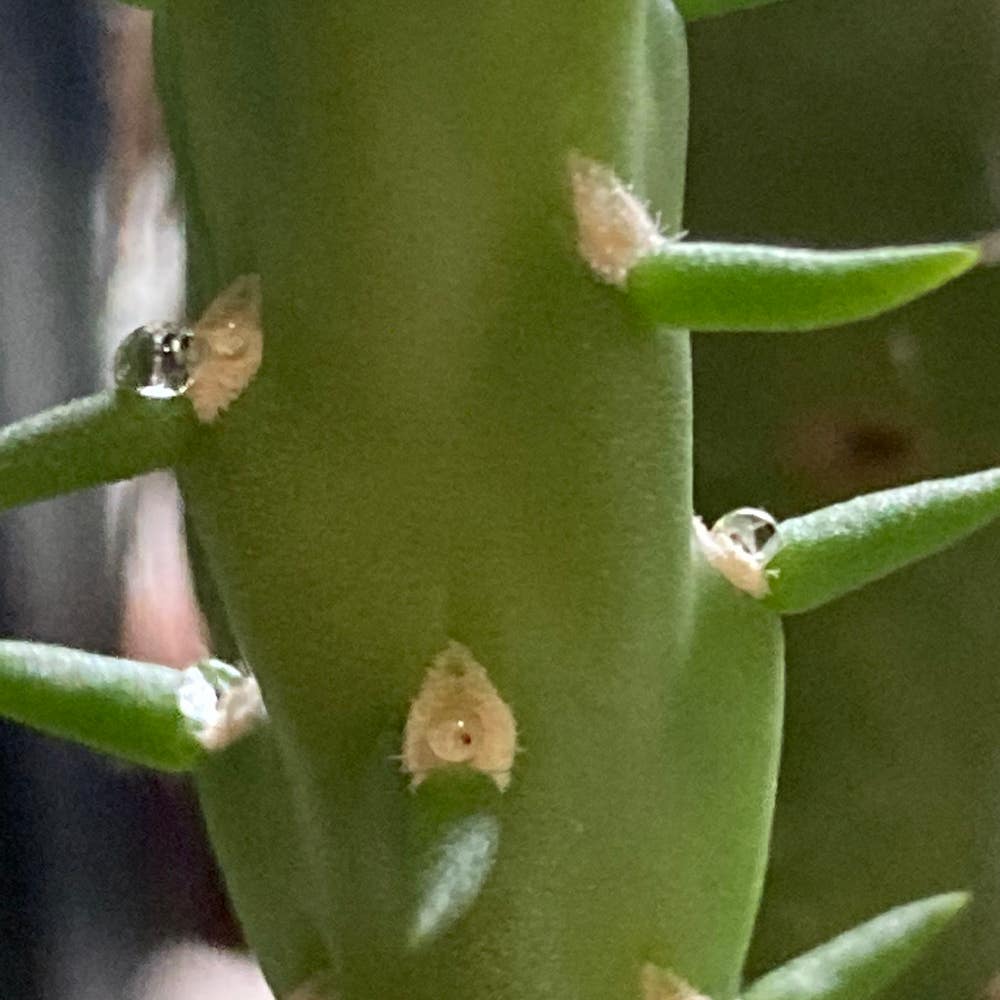
Why Are My Pencil Cholla Leaves Curling?
Cylindropuntia kleiniae
By the Greg Editorial Team
Apr 14, 2024•4 min read
This article was created with the help of AI so we can cover more plants for you. May contain errors. See one? Report it here.
Solve your Pencil Cholla's leaf-curl mystery 🌵 and restore its perky posture with expert tips!
- Dehydration causes leaf curl: Water when soil is dry.
- Heat and overwatering harm: Move to cool spot, let soil dry.
- Pests and fungus? Act fast: Use insecticidal soap, improve air circulation.
Spotting the Signs: Leaf Curling in Pencil Cholla
🏜️ Dehydration Drama: Is Your Plant Thirsty?
Crisp, wrinkled leaves on your Pencil Cholla scream dehydration. It's like your plant's been on a desert trek without a water bottle. Check the soil; if it's drier than a stand-up comedian's wit, it's time to water.
🚰 Too Much Love: The Perils of Overwatering
Yellowing leaves and a wilted stance are your Cholla's way of saying, "Help, I'm drowning!" Root rot sets in when love turns into waterlogging. Balance is key; let the soil dry out a bit before the next watering session.
🌞 Feeling the Heat: Environmental Stress Impact
Leaves curling tighter than a rolled-up yoga mat can signal a Cholla in distress. If your plant is baking like a cookie in the oven, it's time to dial down the heat. Create a chill zone by moving it to a cooler spot with indirect sunlight.
Unwanted Guests: Pests and Diseases Causing Trouble
🕷️ The Tiny Terrors: Spider Mites
Spider mites are sneaky invaders, turning leaves into their personal buffets. Look for fine webs and stippled leaves as signs of their presence. To evict these pests, a blast of water can dislodge them, but for a stubborn infestation, insecticidal soap or neem oil is your go-to. Remember, these critters hate a good shower, so keep the foliage clean to prevent future squatters.
🍄 Fungal Foes: Battling Leaf Curl Culprits
Fungal infections are the silent saboteurs of your Pencil Cholla. White or black spots on leaves scream 'fungus among us'. If you spot these party poopers, it's time for a fungicide intervention. But don't just spray and pray; improve air circulation and keep those leaves dry to stop the rave before it starts. Prevention beats cure, so stay vigilant and keep your Cholla's environment less fungal-friendly.
The Careful Cure: Reviving Curly Leaves
💧 Water Wisdom: Finding the Sweet Spot
When it comes to watering your Pencil Cholla, think of it as a Goldilocks scenario—too much or too little can lead to leaf curling. The goal is moist, well-drained soil. Use a moisture meter to eliminate the guesswork and ensure you're hitting that sweet spot.
Avoid the "Puddle of Doom" by steering clear of waterlogging. The "Soak and Dry" method is your best bet: water thoroughly, then wait until the soil's top inch is dry before watering again. Remember, consistency is key, so keep a schedule and adjust as needed for seasonal changes.
🌿 Environment Enrichment: Tailoring the Perfect Home
Light and temperature need to be just right for your Cholla to thrive. Aim for a spot with bright, indirect sunlight and stable temperatures that mimic a mild spring day. Too much direct sun can lead to stress and more curling leaves.
Humidity is another piece of the puzzle. If your indoor air is drier than a stand-up comedian's wit, consider using a humidifier or a pebble tray to increase moisture levels. Just don't turn your space into a tropical rainforest; balance is the name of the game. Keep a hygrometer handy to monitor the humidity and make adjustments as necessary.
Prevention is Key: Keeping Your Cholla Cheerful
💧 A Routine to Root For: Consistent Care Schedules
Crafting a watering calendar is like syncing your plant to life's rhythm. It's about knowing when your Cholla craves a drink and when it prefers a drought. Seasonal adjustments are crucial; as temperatures rise, so might your plant's thirst. Conversely, in cooler months, your Cholla's need for water may wane. Keep it simple: water when dry, and always check the soil before you do.
👀 Vigilant Monitoring: Staying Ahead of Stress
Regular check-ups are non-negotiable. Think of it as a plant's physical exam—catching issues before they balloon into full-blown problems. Early intervention is key; droopy leaves might signal a need for more water, while yellowing could be a cry for less. Adjust care based on these signals, and remember, consistency is your Cholla's best friend.
⚠️ Safety First
This content is for general information and may contain errors, omissions, or outdated details. It is not medical, veterinary advice, or an endorsement of therapeutic claims.
Always consult a qualified healthcare professional before using any plant as food, medicine, or supplement.
Never eat any plant (or feed one to pets) without confirming its identity with at least two trusted sources.
If you suspect poisoning, call Poison Control (800) 222-1222, the Pet Poison Helpline (800) 213-6680, or your local emergency service immediately.
Spotted an error? Please report it here.
Keep your Pencil Cholla perfectly hydrated and pest-free with Greg's 🌵 tailored watering schedules and care tips, ensuring your plant thrives in any season!