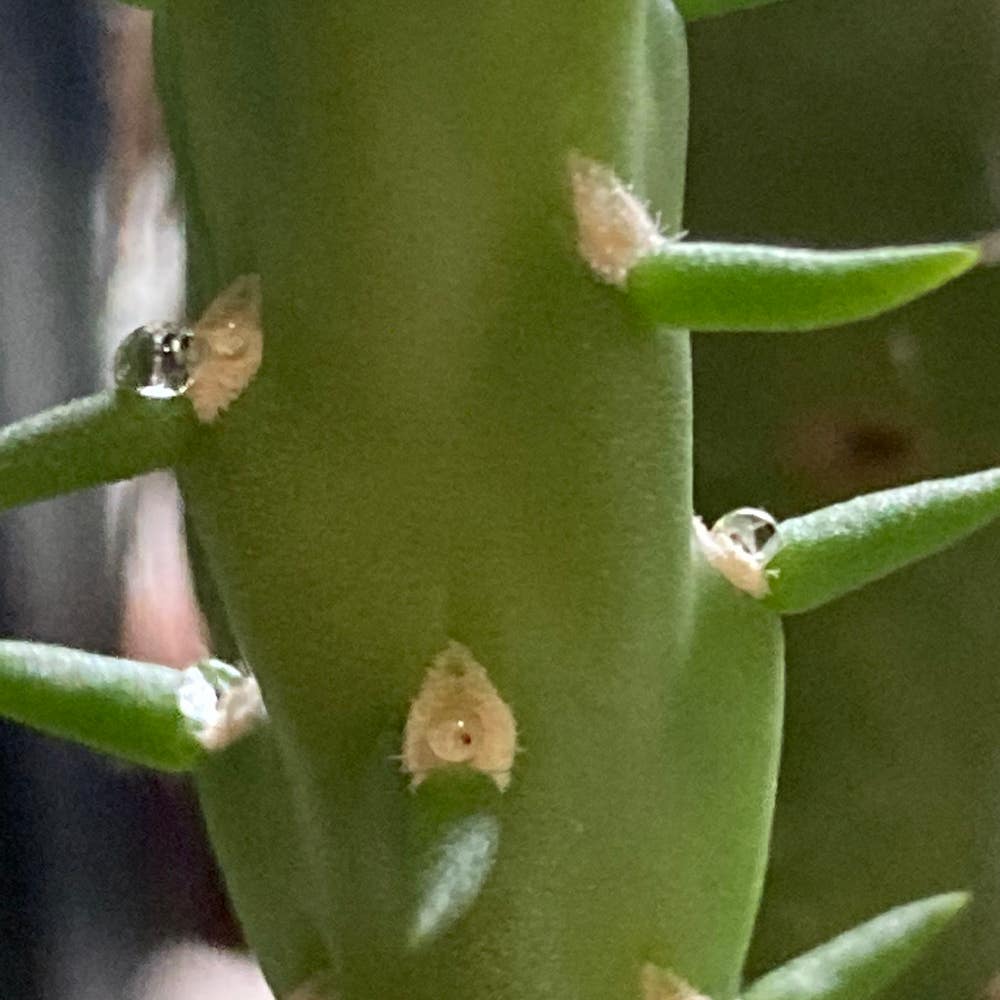
Why Are My Pencil Cholla Leaves Mushy? 💧
Cylindropuntia kleiniae
By the Greg Editorial Team
Apr 14, 2024•3 min read
This article was created with the help of AI so we can cover more plants for you. May contain errors. See one? Report it here.
Revive your Pencil Cholla from mushiness to firmness with these essential care tips! 🌵💧
- Overwatering leads to mushiness, adjust watering and soil drainage.
- Prune affected areas to promote health and prevent spread.
- Sunlight and air circulation are key to preventing leaf mushiness.
Spotting the Trouble: Signs Your Pencil Cholla is Unhappy
💦 Overwatering Symptoms
Identifying waterlogged soil and stem discoloration is crucial. Your Pencil Cholla's roots are gasping for air if the soil feels more like a swamp than a desert. Discoloration in stems, often turning a sickly yellow, is the plant's way of saying, "I've had enough!"
🚫 Root Rot Red Flags
Root rot is a silent assassin. It starts unseen, beneath the soil, but soon enough, the symptoms rise to the surface. Yellowing leaves, a wilted posture, and a general look of despair are your Cholla's white flags of surrender to this underground menace.
🍄 Fungal Infections: A Silent Foe
Fungal infections creep in like uninvited guests. Look for brown spots with a yellow halo or any mold gatecrashing on the soil's surface. These signs indicate your Pencil Cholla is in a fungal funk and needs intervention.
First Aid for Your Pencil Cholla
🚱 Cutting Back on Water
Immediately cease watering your Pencil Cholla to let the soil dry out. This isn't neglect; it's necessary triage. Check the soil moisture by sticking your finger an inch deep. If it's damp, hold off on the H2O.
Soil and Drainage: The Foundation of Health
Choose a well-draining soil mix; think cactus or succulent blend. If you're feeling crafty, mix in some perlite or coarse sand. Ensure your pot has drainage holes—no one likes wet feet, especially not cacti.
🌱 Pruning: When to Snip
Get your sterilized scissors ready. Snip off the mushy parts with the precision of a bonsai master. It's not just a haircut; you're redirecting your plant's energy to the healthy tissue. Remember, prune with purpose—every cut should help your plant thrive.
Keeping Mushiness at Bay: Long-Term Care Strategies
💧 Watering Wisdom: Finding the Balance
Watering your Pencil Cholla isn't about sticking to a strict schedule. It's about tuning into the plant's needs. Wait until the soil is bone-dry before even thinking about giving it a drink. During the scorching summer months, water when the topsoil feels like a parched desert. In the chill of winter, cut back—your cactus is basically hibernating.
🌵 The Right Environment for Your Cactus
Sunlight is your cactus's best friend. Make sure it gets a generous dose daily to prevent any mushiness from setting in. Air circulation is just as crucial; a stagnant room is a recipe for disaster. Keep the air moving with a fan or by placing your plant in a well-ventilated area. Humidity should be on the low side—think arid, not tropical. If you're battling high humidity, a dehumidifier can be a game-changer.
Regular pruning helps more than you might think. It's not just about aesthetics; it's about health. By snipping off the excess, you're promoting better airflow, which is vital for keeping those leaves firm. And don't forget about the pot. Terra cotta is the way to go, with its moisture-wicking superpowers and breathability. Ensure there are enough drainage holes to let any excess water escape.
Remember, your Pencil Cholla doesn't need a helicopter plant parent. It craves independence. Give it the right conditions, and it'll thrive—mush-free.
⚠️ Safety First
This content is for general information and may contain errors, omissions, or outdated details. It is not medical, veterinary advice, or an endorsement of therapeutic claims.
Always consult a qualified healthcare professional before using any plant as food, medicine, or supplement.
Never eat any plant (or feed one to pets) without confirming its identity with at least two trusted sources.
If you suspect poisoning, call Poison Control (800) 222-1222, the Pet Poison Helpline (800) 213-6680, or your local emergency service immediately.
Spotted an error? Please report it here.
Prevent mushy leaves and root rot in your Pencil Cholla by using Greg for tailored watering schedules 🌵, ensuring your desert buddy thrives in any environment.