🌵 Why Are My Pencil Cholla Leaves Droopy?
Cylindropuntia kleiniae
By the Greg Editorial Team
Apr 14, 2024•3 min read
This article was created with the help of AI so we can cover more plants for you. May contain errors. See one? Report it here.
Perk up your Pencil Cholla 🌵 with the right sips of water and cozy sunbeams! ☀️
- Droopy leaves signal watering issues; check soil moisture and pot weight.
- Overwatering and underwatering have distinct signs: mushy vs. brittle leaves.
- Consistent care is crucial; adjust water, light, and temperature as needed.
Spotting the Signs of Droopiness
🍃 Visual Clues
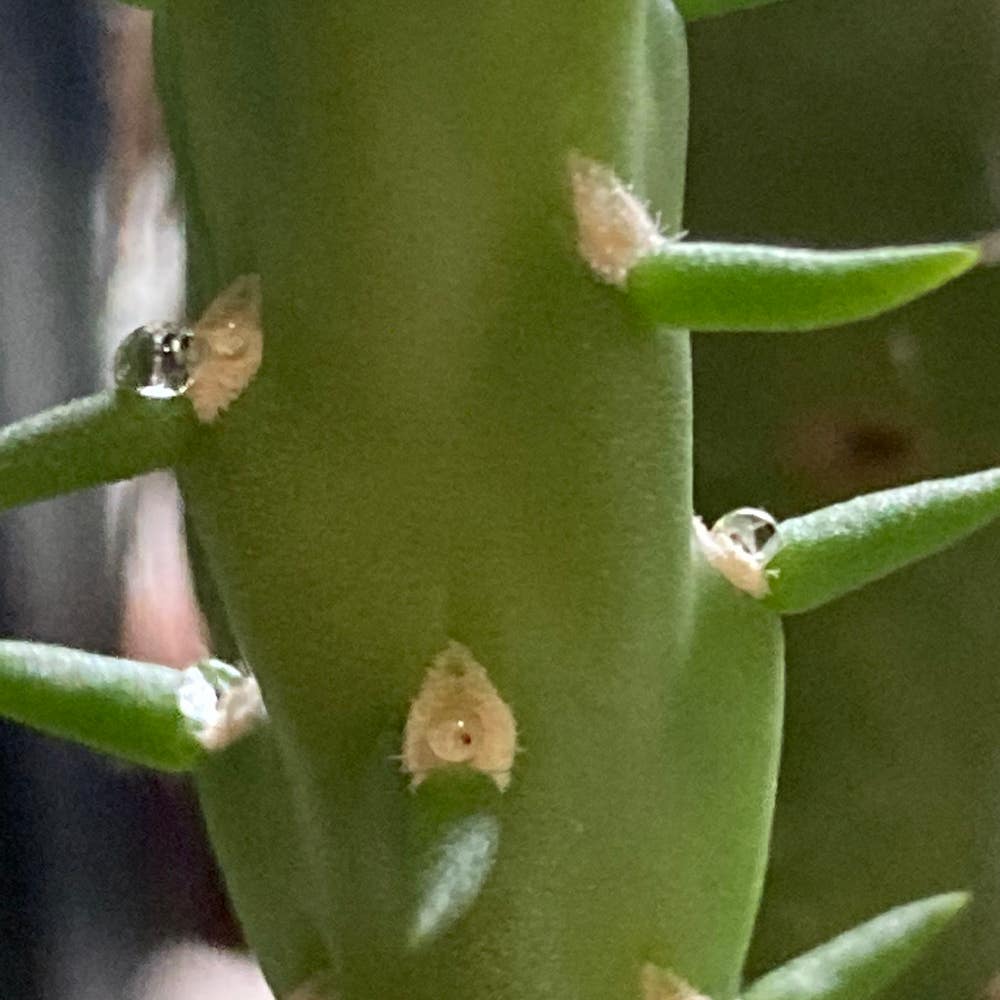
Droopy leaves are the Pencil Cholla's white flags of surrender. They hang down, lacking their usual spunk. If they're turning yellow, think of it as the plant's version of a yellow traffic light—cautioning you to check your watering habits. Brown, crispy leaves are crying out for water. Swollen or translucent leaves? That's a sign of overindulgence in water.
🌱 Root Health Check
To play detective with the roots, you'll need to get your hands dirty. If the soil feels like a drowned sponge, it's too wet. Crumbly, desert-dry soil is a cry for hydration. Uniform droopiness across the plant is a red flag for systemic issues. Mushy leaves are a telltale sign of overwatering, while brittle ones scream for a drink. Remember, the pot's weight is a clue—heavy means too much water, light means not enough.
Unearthing the Causes of Droopiness
💧 Thirsty Roots: The Perils of Underwatering
Crispy leaves and soil that crumbles at a touch scream underwatering. Your Pencil Cholla is essentially on a forced march without a canteen. The pot's surprising lightness? That's your cue to water.
💦 Drowning in Excess: The Overwatering Problem
Yellow leaves and stems with the consistency of a wet noodle are classic overwatering signs. Roots need oxygen; too much water and they're practically drowning. It's like a plant hangover—leaves droop, roots may give up.
🌡 Feeling Stressed: Environmental Factors
Temperature swings and inadequate light can make your Pencil Cholla's leaves droop like a disappointed parent. Sudden changes in the plant's environment are like unexpected cold showers—they shock the system, causing leaves to lose their perkiness.
Nursing Your Pencil Cholla Back to Perkiness
💧 Fine-Tuning the Watering Regimen
Your Pencil Cholla's thirst is as unique as your Netflix queue—tailor it. Start by feeling the soil; if it's dry an inch down, it's showtime for the watering can. Remember, these plants are more camel than fish; they prefer a drink only when their soil is Sahara-dry. Water deeply, then let the pot go bone-dry before the next encore.
🌞 Creating a Cozy Environment
Light and temperature are like the VIP section for your Pencil Cholla. Bright, indirect light is the golden ticket, so park your plant in a spot where the sun's rays are like a warm hug, not a scorching slap. As for the thermostat, keep it steady—65°F-70°F by day, a touch cooler at night. Your Cholla doesn't need a sweater, but it doesn't want to ice skate either. Keep it away from drafts; they're about as welcome as a phone call during your favorite show's season finale.
Keeping Your Pencil Cholla Perky
💧 Watering Wisdom: Best Practices
To maintain proper hydration for your Pencil Cholla, it's crucial to avoid extremes. Water deeply when the soil feels dry an inch below the surface, then let it dry out completely before the next watering. This mimics the natural desert rains and droughts the plant is adapted to.
🌡️ Consistency is Key: Maintaining Ideal Conditions
Consistency isn't just a buzzword; it's your Pencil Cholla's lifeline. Keep the environment stable—bright light, warm days, cooler nights. Adjust care with the seasons: less water when it's cooler, a bit more during the heat. Remember, a happy Cholla is a perky Cholla.
⚠️ Safety First
This content is for general information and may contain errors, omissions, or outdated details. It is not medical, veterinary advice, or an endorsement of therapeutic claims.
Always consult a qualified healthcare professional before using any plant as food, medicine, or supplement.
Never eat any plant (or feed one to pets) without confirming its identity with at least two trusted sources.
If you suspect poisoning, call Poison Control (800) 222-1222, the Pet Poison Helpline (800) 213-6680, or your local emergency service immediately.
Spotted an error? Please report it here.
Revive your Pencil Cholla's perkiness with Greg's custom hydration plan 🌵, tailored to keep your plant thriving, not just surviving.