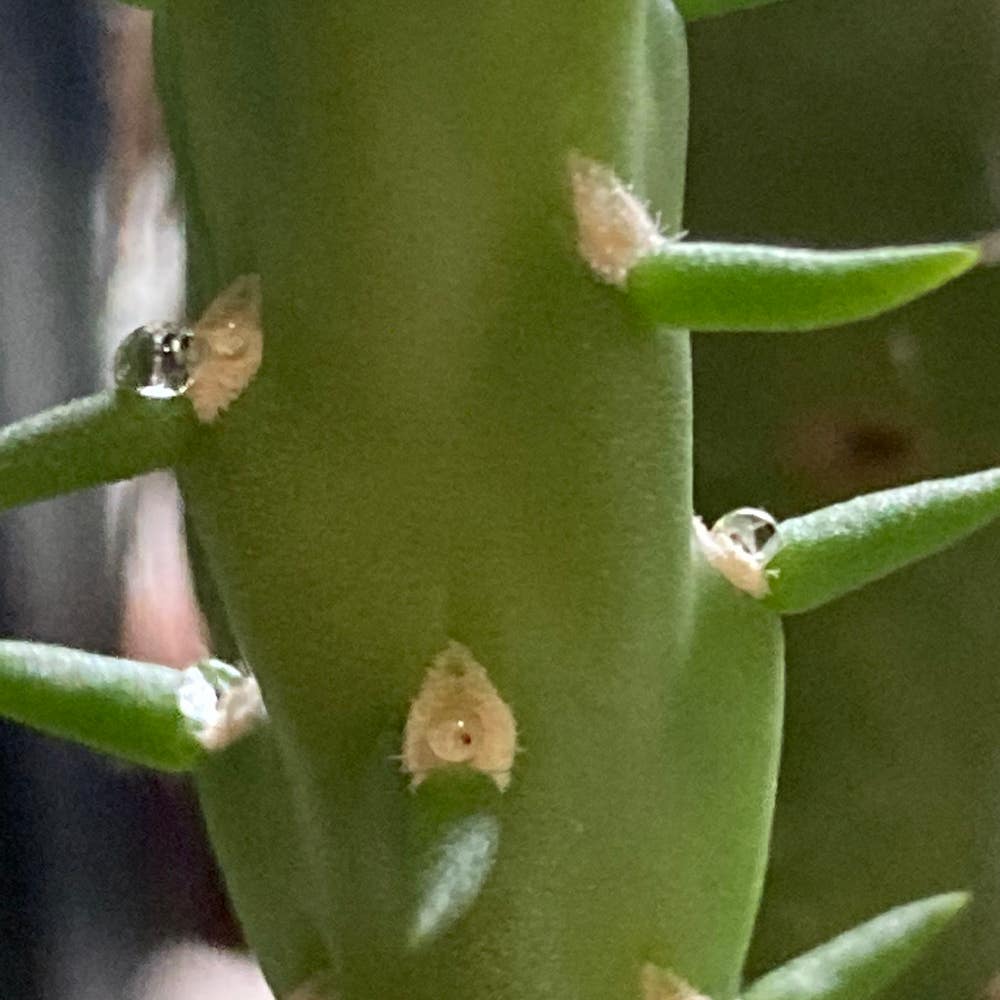
🌵 What Does It Mean When Hoffmann's Teddy Bear Cholla Blooms?
Cylindropuntia fosbergii
By the Greg Editorial Team
Feb 29, 2024•4 min read
This article was created with the help of AI so we can cover more plants for you. May contain errors. See one? Report it here.
- 🌸 Vibrant blooms signal Cholla health, lack of flowers calls for care review.
- ☀️ Bright, direct sunlight for 4-6 hours is key for Cholla blooming.
- 🌵 Well-draining soil and phosphorus-rich fertilizer boost blooming potential.
When Blooms Speak Volumes
🌸 Spotting the Signs of Flower Power
Cholla cacti aren't shy about announcing their bloom intentions. Look for new growth at the tips of stems, a sign that flowers are gearing up for their grand entrance. Brightness in color and a surge in growth are your cues to start the countdown.
🌺 What Flowers Tell Us About Cholla Health
Blooms are like a health report card for your Cholla. Vibrant flowers signal a contented plant, while a lack of blooms or off-timing may suggest it's time to reassess your care strategy. Consistent flowering aligns with happy plant vibes, so take note of what your Cholla is telling you.
Shine a Light to Get Flowers Bright
🌞 The Perfect Light Recipe for Cholla Blooms
Hoffmann's Teddy Bear Cholla thrives under the sun's caress. Bright, direct sunlight is non-negotiable for coaxing out those blooms. Aim for a sweet spot of 4 to 6 hours daily. It's this solar embrace that signals your Cholla to start its floral performance.
🌼 Adjusting Light for the Bloom Countdown
As bloom-time nears, observation becomes key. Watch for budding signs and adjust your Cholla's light diet. Too much sun and you're flirting with leaf burn, too little and the blooms might ghost you. Consider using a timer for indoor lights to mimic the natural day-night cycle, tricking your Cholla into showtime mode. Full spectrum bulbs can be your ace, offering the light spectrum your plant craves.
The Climate Recipe for Cholla Flowering
🌞 Temperature Tweaks for Peak Blooms
Cholla cacti are sun worshippers; they crave warmth to unleash their floral potential. Consistency in temperature is crucial; think of it as the steady beat your Cholla dances to. Aim for a daytime range of 65°F to 75°F (18°C to 24°C), avoiding the drama of drastic swings. If you're in a cooler climate, consider a plant heat mat to provide a gentle, steady warmth supply. And remember, when winter hits, these desert natives prefer it on the cooler side, so don't overdo it with the heat.
💧 Humidity Hacks for Happy Blooms
Humidity can be a tricky beast. Too much, and you're hosting a mold fiesta; too little, and the blooms might crisp up faster than a fallen leaf in autumn. Aim for a humidity level of 40-60%—the sweet spot for Cholla blooms. Use a hygrometer to keep tabs on moisture levels. If your air is drier than a stand-up comedian's wit, a pebble tray or humidifier can be a game-changer. And don't forget about airflow; it's like giving your plants room to breathe. A fan can help, especially if you're growing indoors. Remember, stability is key—your Cholla isn't looking for a thrill ride.
Soil and Water: The Foundation of Flowers
🌵 The Right Soil Mix for Blooming Chollas
Cholla cacti demand a well-draining soil mix, much like their desert origins. Combine sand, perlite, and a standard cactus potting mix to mimic their native habitat. This gritty blend allows roots to access air and water without the risk of waterlogging.
💧 Water Wisdom for Flowering Success
Watering your Cholla is a delicate dance of timing and quantity. In the growing season, water when the soil is dry to the touch, but pull back during dormancy. Remember, consistency is key—regular, infrequent watering aligns with the Cholla's natural rhythms.
Pro Tips for a Blooming Bonanza
🌸 Encouraging Your Cholla to Flower
Phosphorus-rich fertilizers are your Cholla's best friends when it's showtime. Apply these bloom boosters as the buds begin to form, but don't overdo it—precision is key. Rotate your plant periodically; it's not just about symmetry, it's about giving each side its fair share of the spotlight.
🌼 Keeping the Blooms Coming
Post-bloom, don't slack off. Prune judiciously during the growth phase, typically in spring or early summer. This isn't a hack job; it's strategic snipping to set the stage for next season's performance. And keep an eye out for pests—they're not just annoying, they're bloom burglars. Stick to a disciplined watering and fertilizing schedule after the last flower has taken its bow, and you'll be setting up your Cholla for an encore.
⚠️ Safety First
This content is for general information and may contain errors, omissions, or outdated details. It is not medical, veterinary advice, or an endorsement of therapeutic claims.
Always consult a qualified healthcare professional before using any plant as food, medicine, or supplement.
Never eat any plant (or feed one to pets) without confirming its identity with at least two trusted sources.
If you suspect poisoning, call Poison Control (800) 222-1222, the Pet Poison Helpline (800) 213-6680, or your local emergency service immediately.
Spotted an error? Please report it here.
Watch your Cholla cacti 🌵 burst into bloom with Greg's personalized care reminders and optimal environment settings for each growth sign.