Why Are There Brown Spots on My Mountain Marigold? ❗️
Tagetes lemmonii
By the Greg Editorial Team
Mar 26, 2024•4 min read
This article was created with the help of AI so we can cover more plants for you. May contain errors. See one? Report it here.
Banish brown spots 🍂 and restore your Mountain Marigold's splendor with expert care tips!
- Fungal foes and water woes cause brown spots on Mountain Marigold.
- Adjust watering habits by checking soil and plant's hydration indicators.
- Balance light, temperature, and airflow to prevent environmental stress.
Spotting the Trouble: Identifying and Diagnosing Brown Spots
🍂 What Do Brown Spots Look Like?
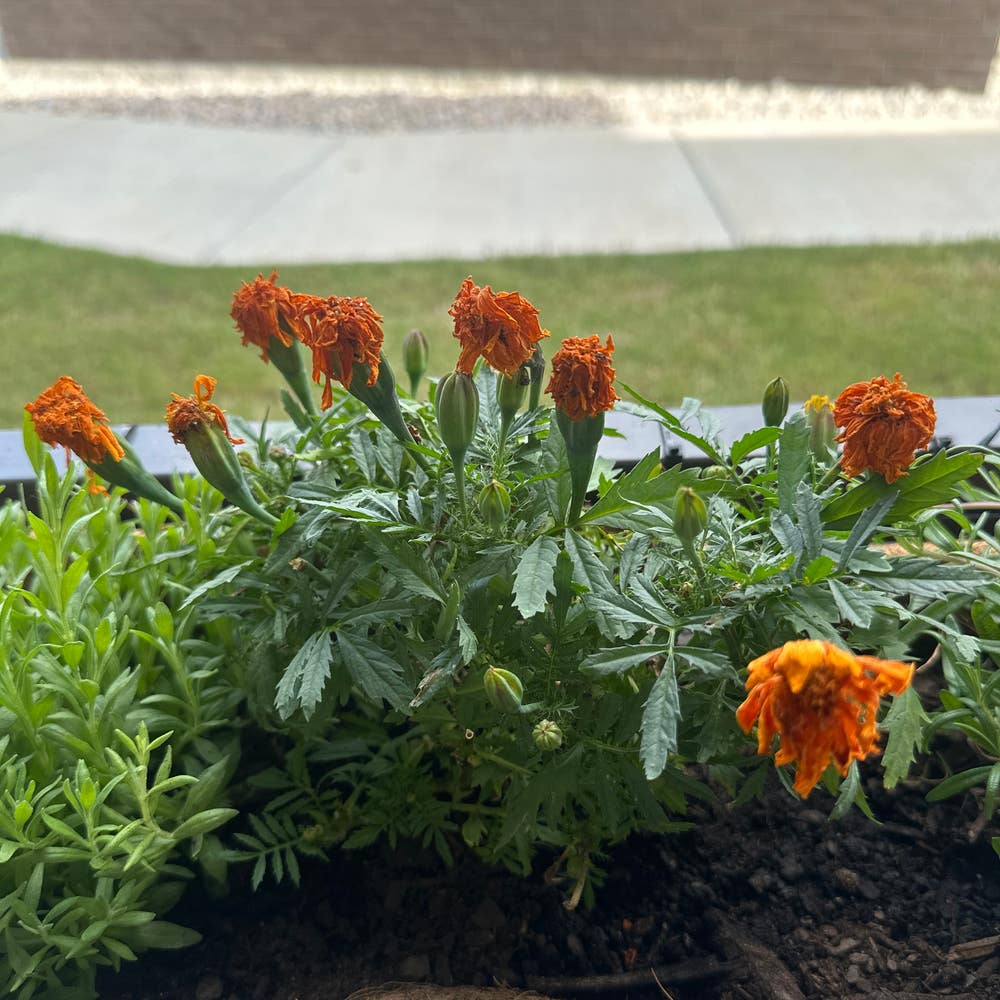
Brown spots on Mountain Marigold can range from tiny specks to larger blotches. They might be uniform or scatter across the leaf like a rogue's gallery. Some come with a colorful halo, while others are a stark brown. They may appear on the leaf's top or bottom, and their position can be a clue to the cause.
🕵️ Usual Suspects: Pinpointing the Cause
🍄 Fungal Foes
Fungal infections often present as brown spots with a yellow halo. If your Mountain Marigold's leaves are throwing a brown spot masquerade with a bullseye pattern, it's likely a fungus like Alternaria. These uninvited guests love moisture and can spread rapidly if conditions are right.
💧 Water Woes
Watering can be a tricky business. Too much, and you may find soft, squishy spots with a water-soaked look. Too little, and the spots become dry and brittle. Both are signs that your watering routine needs a tweak.
🌿 Environmental Enemies
Don't forget about environmental stress. Leaves with brown spots that feel like they've had too much sun could be suffering from a sunburn. Conversely, if they're in a shady spot and looking sad, it might be a case of light deprivation. Extreme temperatures and poor airflow can also stress your Mountain Marigold, leading to those unsightly brown patches.
Fungal Infections: The Battle Plan
🍄 Spotting the Fungus Among Us
Fungal infections are like unwanted guests at your plant's party, and they leave brown spots as their calling cards. To confirm these party crashers are fungi, look for spots with concentric rings or a halo effect. These patterns are the fungi's signature—think of them as graffiti tagging your Mountain Marigold with an "I was here."
🌿 Fungicide to the Rescue
When it's time to kick out the fungal invaders, fungicides are your bouncers. But don't go wild with the spray—use it as the label dictates, like it's the rulebook for plant club security. Rotate your fungicides to keep the fungi off-balance; it's like changing the locks so the pests can't sneak back in. And remember, safety first: gear up in protective wear, keep the kids and pets away, and treat your plant with the precision of a surgeon.
Watering Wisdom: Finding the Sweet Spot
💧 Reading the Leaves
Mountain Marigold leaves are natural indicators of hydration needs. If leaves are drooping or turning yellow, it's a sign of too much love with the watering can. Conversely, dry, crispy leaves are a cry for water.
🚿 Adjusting Your Watering Tactics
Check the soil before watering; if the top inch feels dry, it's time for a drink. Adjust your watering schedule with the seasons, as your plant's thirst will vary. A moisture meter can be your best friend for precision watering. Remember, aim for moist soil, not a swamp or a parched desert.
Environmental Tweaks to Keep the Spots Away
🌞 Light and Temperature
Mountain Marigolds are like Goldilocks; they prefer conditions that are just right. Bright, indirect sunlight is their sweet spot. Too much sun can lead to a leafy burnout, while too little leaves them lackluster. As seasons change, so should your plant's position. Keep it moving to match the sun's mood swings.
Airflow and Humidity
Stale air is to fungi what a stagnant pond is to mosquitoes—a breeding ground. Keep the air around your Mountain Marigold as fresh as a spring morning. Space plants to let the breeze through, or use a fan if you're playing indoor gardener. Humidity should be moderate, like a casual Friday—comfortable but not over the top. Use a hygrometer to keep tabs and adjust as needed.
⚠️ Safety First
This content is for general information and may contain errors, omissions, or outdated details. It is not medical, veterinary advice, or an endorsement of therapeutic claims.
Always consult a qualified healthcare professional before using any plant as food, medicine, or supplement.
Never eat any plant (or feed one to pets) without confirming its identity with at least two trusted sources.
If you suspect poisoning, call Poison Control (800) 222-1222, the Pet Poison Helpline (800) 213-6680, or your local emergency service immediately.
Spotted an error? Please report it here.
Banish those brown spots and ensure your Mountain Marigold thrives by using Greg to monitor 🌡️ your plant's environment and tailor your care routine.