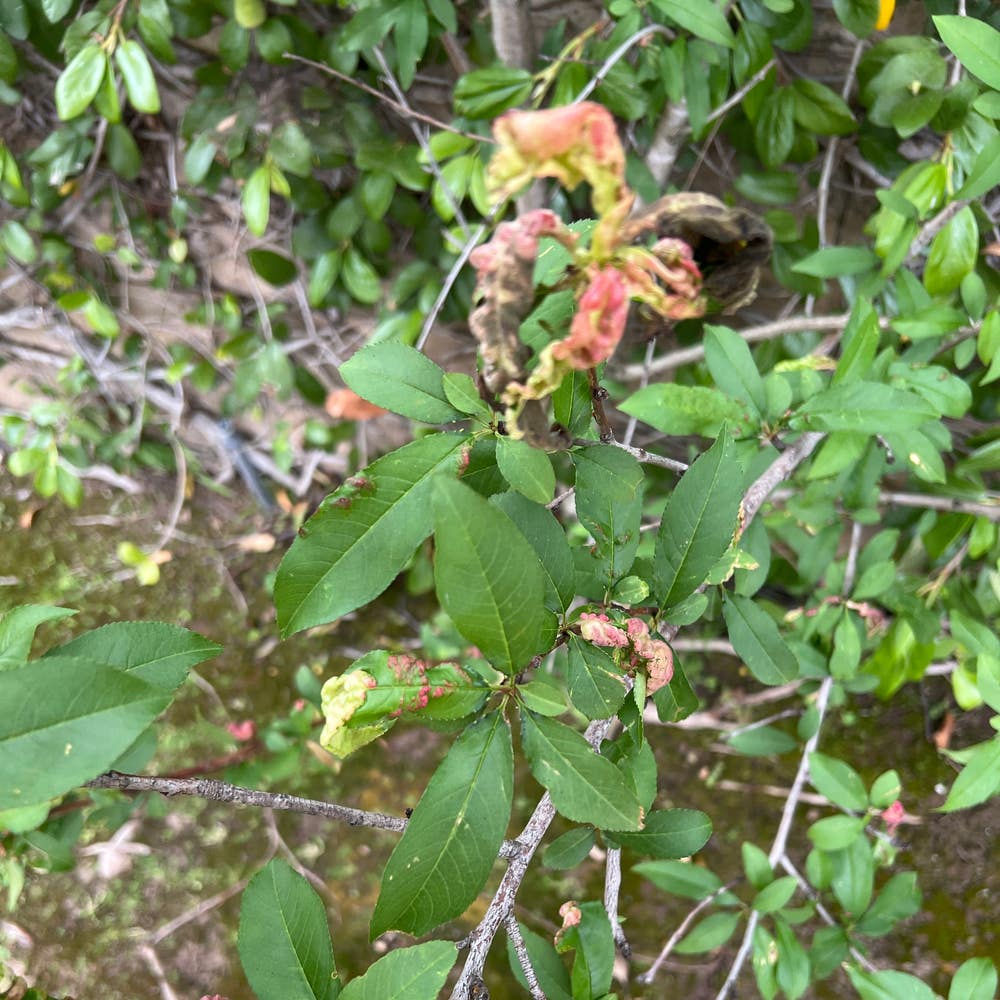
Black Spots on My Peach Tree Leaves
Prunus persica
By the Greg Editorial Team
Jun 18, 2024•4 min read
This article was created with the help of AI so we can cover more plants for you. May contain errors. See one? Report it here.
- Black spots signal health issues, affecting peach tree vigor and fruit yield.
- Fungi and bacteria are main culprits, thriving in moist, poorly circulated conditions.
- Prevent with pruning, airflow, and use copper-based or natural treatments as needed.
Spot the Spots: Identifying Black Spots and Their Implications
🍑 What do black spots look like?
Black spots on peach tree leaves are alarm bells, not just unsightly blemishes. They often manifest as dark lesions, varying in size and sometimes surrounded by a yellow halo. This halo is a telltale sign of a fungal issue, not just a simple leaf imperfection. Photos can aid in quick identification, but nothing beats the naked eye for spotting these irregularities.
🚨 Why it's more than just a cosmetic issue
Black spots are more than a mere eyesore; they're symptomatic of deeper health issues that can compromise your tree's vigor and fruit yield. These spots can be the harbingers of disease, leading to a domino effect of plant health problems. It's crucial to understand that a healthy peach tree should have leaves free of any such spots. If you're seeing these signs, it's time to roll up your sleeves and get to work.

Unearthing the Culprits: Common Causes of Black Spots
🍄 Fungal Foes: Peach Leaf Curl and Others
Fungi are the main villains in the tale of black spots on peach leaves. They love to party in the moist conditions created by overwatering or a lack of proper air circulation. Symptoms include tiny lesions that grow into larger, unsightly spots, often leading to yellowing leaves and premature leaf drop. Peach leaf curl, in particular, distorts leaves with a reddish discoloration before the black spots even appear.
🦠 Bacterial Bullies: Spotting Bacterial Spot
Bacterial infections are the sneaky intruders that slip through the smallest wounds on your peach tree's leaves. Unlike their fungal counterparts, bacterial spots can ooze and give off a sticky residue. They're particularly fond of prolonged leaf wetness, so if your tree's leaves are frequently left damp, bacteria might just be your culprit.
🌿 Environmental Accomplices
The environment can be an unwitting accomplice to black spots. Humidity and airflow are key players; too much of the former and not enough of the latter create a fungal fiesta. Watering practices also contribute; it's not just about the quantity of water but ensuring it doesn't stick around like an unwelcome houseguest.

Battling Black Spots: Treatment Tactics
🛡️ Choosing Your Weapons: Fungicides vs. Bactericides
When black spots invade your peach tree leaves, it's time to choose your arsenal wisely. Copper-based sprays are your go-to for bacterial battles, acting like a shield against the microscopic invaders. For fungal foes, consider fungicides containing chlorothalonil or mancozeb—they're the equivalent of sending in the troops to reclaim your tree's territory.
💚 The Organic Defense: Natural and Non-Chemical Methods
If the thought of chemical warfare on your greenery makes you cringe, fear not. Neem oil is the eco-friendly knight, ready to defend your peach tree without the fallout. For a DIY approach, mix baking soda and soap; it's like setting up a neighborhood watch for your leaves. And remember, these natural remedies aren't just kinder to the environment; they're a nod to sustainable plant parenthood.

Fortifying Your Peach Tree: Prevention Strategies
🌳 Cultural Practices for Disease Deterrence
Pruning isn't just a haircut for your peach tree; it's crucial surgery. Snip away the dead or diseased foliage to boost air flow and thwart fungal conspiracies. Clean, sharp tools are your best friends here—dull ones mangle and tear, inviting trouble.
Watering is a delicate dance—too much, and you're throwing a pool party for pathogens. Proper drainage is key, and a watering schedule that mimics Mother Nature's less-is-more approach in dry spells can keep roots robust and rot at bay.
👀 Vigilance and Tree Health
Regular inspections are your eyes on the ground. Spotting trouble early means you can nip it in the bud—literally. Look for signs of pests, funky fungi, or just general malaise.
Healthy trees don't happen by accident. They're the product of love, labor, and a little bit of luck. Fertilize thoughtfully, because too much of a good thing (nitrogen, I'm looking at you) can lead to lush leaves but no peaches.
Remember, prevention is a full-time gig. It's about staying one step ahead of the game, with a keen eye and a steady hand. Keep your peach tree in fighting form, and it'll pay you back in spades—or in this case, peaches.
⚠️ Safety First
This content is for general information and may contain errors, omissions, or outdated details. It is not medical, veterinary advice, or an endorsement of therapeutic claims.
Always consult a qualified healthcare professional before using any plant as food, medicine, or supplement.
Never eat any plant (or feed one to pets) without confirming its identity with at least two trusted sources.
If you suspect poisoning, call Poison Control (800) 222-1222, the Pet Poison Helpline (800) 213-6680, or your local emergency service immediately.
Spotted an error? Please report it here.
Keep your peach tree's leaves spotless and thriving 🍑 with Greg's tailored watering reminders that help prevent those pesky black spots and promote a hearty harvest.