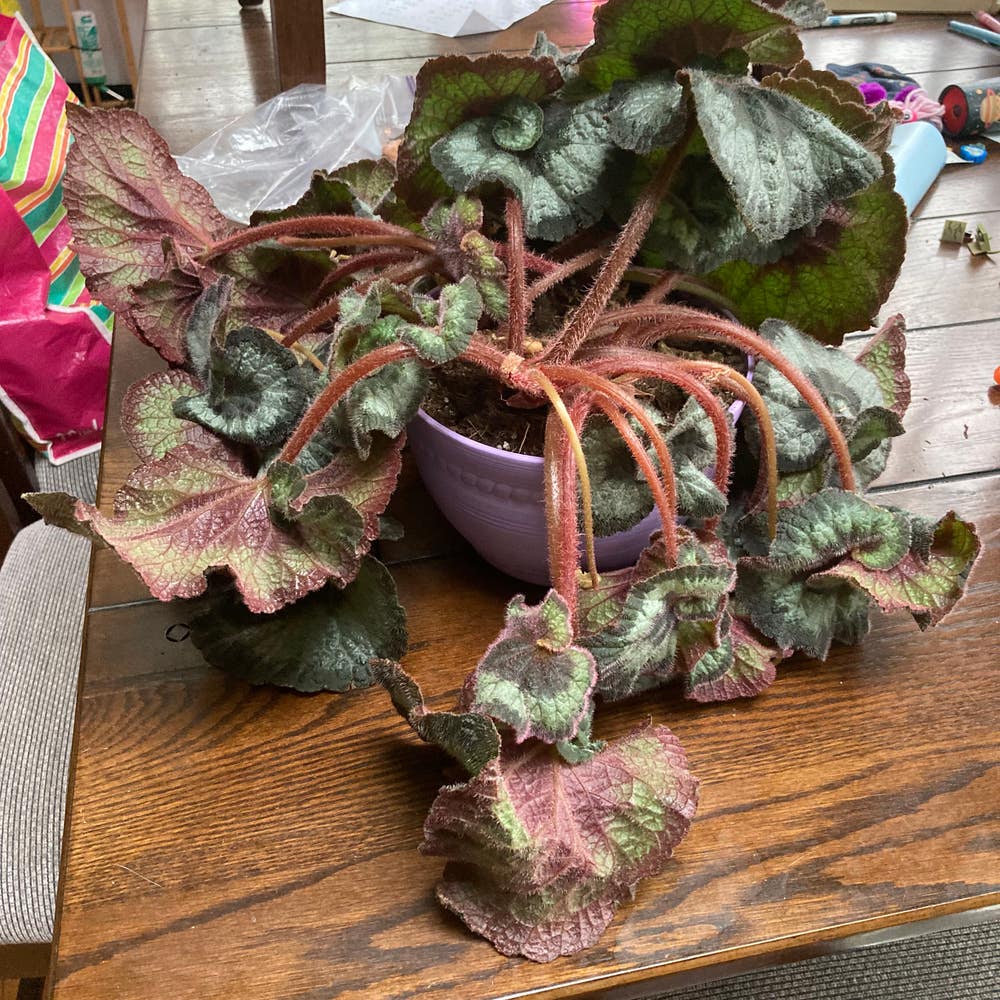
🐌 Why Are My Rex Begonia 'Escargot' Leaves Turning Yellow?
Begonia 'Escargot'
By the Greg Editorial Team
Jun 18, 2024•4 min read
This article was created with the help of AI so we can cover more plants for you. May contain errors. See one? Report it here.
Stop the yellowing of your Rex Begonia 'Escargot' leaves with these essential care tips! 🌿🔍
- Over/underwatering causes yellow leaves; soil should be moist, not soaked.
- Bright, indirect light is key; too much or too little harms leaves.
- Balanced fertilizing is crucial; use a 10-10-10 NPK ratio, but don't overfeed.
Pinpointing the Culprits Behind Yellow Leaves
💧 Too Much H2O: The Overwatering Problem
Yellow leaves can be a red flag for overwatering. If your Rex Begonia 'Escargot' has leaves that are more yellow than a highlighter, it's time to reassess your watering habits. The soil should feel like a wrung-out sponge, not a soaked one.
Root rot is the grim reaper of plant health, often caused by overzealous watering. If the roots are as soft as overripe fruit, you've got a problem. To prevent this, let the soil dry out a bit between waterings.
🏜️ Not Enough Water: The Underwatering Issue
Conversely, leaves that are as dry as yesterday's toast could signal underwatering. A thirsty Rex Begonia 'Escargot' will have soil that's drier than a desert.
To keep the soil's moisture level just right, water when the top inch feels dry. Think of it as giving your plant a steady sip, not a gulp. Consistency is key.
🌞 Light and Shadow: Finding the Sweet Spot
Too much sun can scorch your Rex Begonia 'Escargot' like a bad day at the beach. On the flip side, too little light will leave it reaching for more.
To find the light sweet spot, aim for bright, indirect light. It's like putting your plant in the equivalent of a shaded hammock on a sunny day.
🔥 Feeling Hot and Cold: Temperature Swings
Temperature swings can make your plant as moody as a teenager. Rex Begonia 'Escargot' prefers a stable environment, not one that fluctuates more than your favorite soap opera's plotline.
Keep your plant away from drafts and direct heat sources. Think of it as keeping your plant in a cozy, temperature-controlled bubble.

Feeding Time: Are Nutrients the Issue?
💡 Spotting Signs of Nutrient Starvation
Yellow leaves on your Rex Begonia 'Escargot' might be shouting for nitrogen. If it's all leaves and no flowers, it's likely overdosing on nitrogen while phosphorus and potassium are getting the cold shoulder.
Weak stems? Your plant could be sending an SOS for a nutritional boost. Don't ignore these cries for help; they're the plant equivalent of a rumbling stomach.
🍽️ The skinny on fertilizers: what to use and how often
A balanced fertilizer, typically with an NPK ratio of 10-10-10, is like a well-rounded meal for your plant. It's the plant version of a balanced diet, ensuring all essential nutrients are on the plate.
Apply fertilizer according to the instructions—this isn't a buffet. Overfeeding can lead to nutrient burn, which is like giving your plant a food coma.
Regular feeding can help prevent deficiencies, but remember, moderation is key. It's a meal, not an all-you-can-eat buffet. Too much can do more harm than good.
Conduct a soil test to get the lowdown on what's missing. It's like a blood test for your plant, revealing any nutritional deficiencies that might not be obvious at first glance.
Keep an eye on how your plant responds to feeding. It's a bit like a first date; read the signals and adjust your approach accordingly. Too much love in the form of fertilizer can be just as detrimental as neglect.

Turning Over a New Leaf: Remedies and Prevention
💧 Watering Wisdom: Getting It Just Right
In the quest for hydrated bliss, your Rex Begonia 'Escargot' demands a Goldilocks approach to watering. Check the soil moisture with your finger or a moisture meter—only water when the top inch feels dry.
Choose a soil mix that's the life of the party for roots, one that holds moisture yet drains like a dream. Repotting? Now's your chance to upgrade to a pot with proper drainage holes.
🌞 Light and Temperature Harmony
Your plant's leafy green wardrobe relies on nailing the light. Bright, indirect sunlight is the sweet spot—too much and you'll cook the leaves, too little and they'll sulk.
Keep your begonia away from drafts and fluctuating temperatures. Think of it as creating a microclimate that doesn't give your plant the chills or the sweats.
🍽️ A Balanced Diet: Fertilizing Without Overdoing It
Nutrient-rich meals without the food coma—that's what your plant craves. A balanced, water-soluble fertilizer every few weeks during the growing season will do the trick. Ease up in the winter, your plant's not trying to bulk up then.
Remember, it's a fine line between nourishing and overwhelming—don't turn your plant into a fertilizer junkie.

⚠️ Safety First
This content is for general information and may contain errors, omissions, or outdated details. It is not medical, veterinary advice, or an endorsement of therapeutic claims.
Always consult a qualified healthcare professional before using any plant as food, medicine, or supplement.
Never eat any plant (or feed one to pets) without confirming its identity with at least two trusted sources.
If you suspect poisoning, call Poison Control (800) 222-1222, the Pet Poison Helpline (800) 213-6680, or your local emergency service immediately.
Spotted an error? Please report it here.
Prevent yellowing in your Rex Begonia 'Escargot' by letting Greg remind you when to water 💧 and fertilize, for leaves that stay as spiraled and green as their namesake!