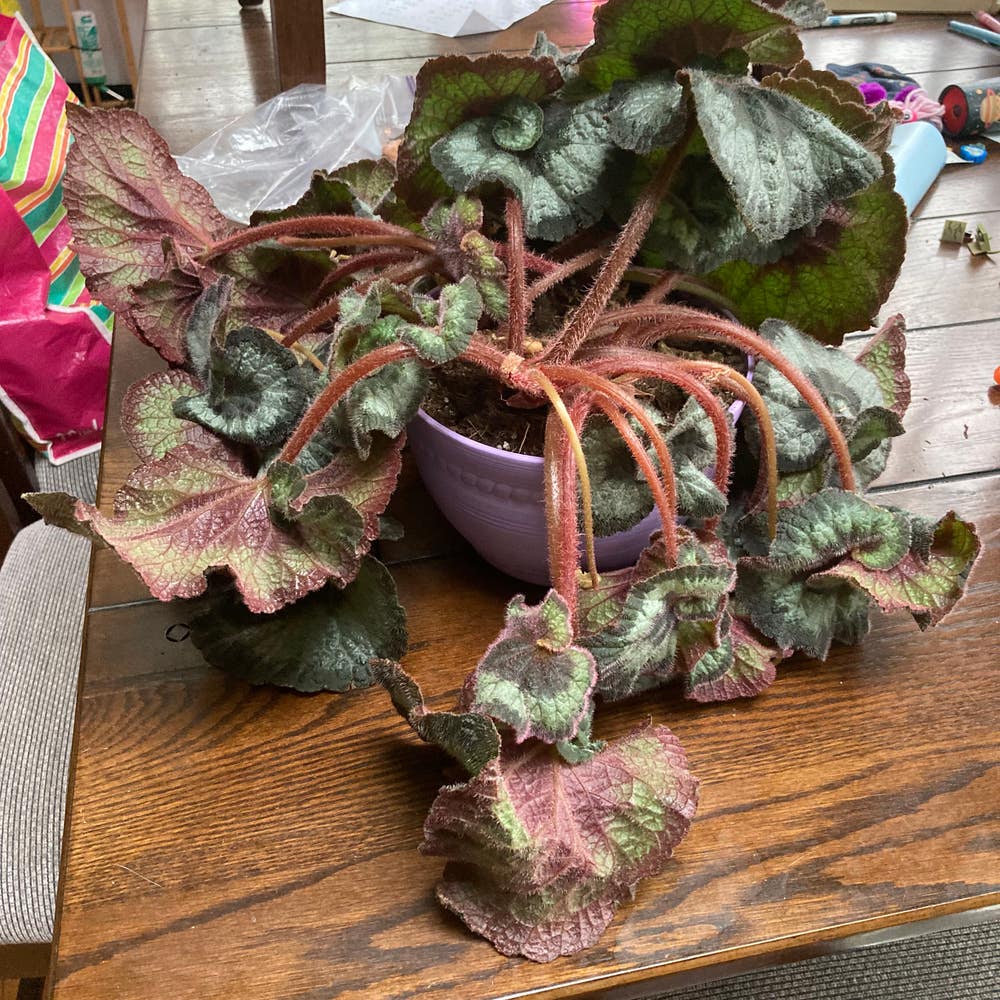
🐌 Black Spots on My Rex Begonia 'Escargot' Leaves
Begonia 'Escargot'
By the Greg Editorial Team
Jun 18, 2024•4 min read
This article was created with the help of AI so we can cover more plants for you. May contain errors. See one? Report it here.
Rescue your 'Escargot' from black spots and restore its spiral splendor with this essential care guide! 🌀🌿
- Black spots signal distress; also watch for yellowing, curling, wilting.
- Fungal/bacterial infections love soggy, poorly circulated environments.
- Prevent with proper care: isolate, adjust watering, improve air and light.
Spotting the Trouble: Identifying Black Spots
🕵️ Visual Clues: What Do Black Spots Look Like?
Rex Begonia 'Escargot' leaves with black spots are sending an SOS. These spots are small, dark, and can be less than ⅛ inch in diameter. Initially, they might seem like harmless flecks, but without action, they can evolve into larger, more ominous blotches. Texture is a tell; they could be raised, sunken, or flat—each a different whisper of the underlying issue.
🚩 Beyond the Spots: Recognizing Related Symptoms
It's not just about the spots. Look for other symptoms like yellowing leaves or a general decline in plant vigor. If the spots are surrounded by yellow halos or if the leaves begin to curl or wilt, it's a clear sign that your plant is under duress. These are the red flags that signal it's time to move beyond mere observation to intervention.
⚠️ When to Worry: Severity and Spread
The spread of black spots is like a wildfire; it can be slow and steady or rapid and relentless. If new growth is affected first, it's a distress signal that shouldn't be ignored. A quick spread suggests a serious problem, possibly a bacterial or fungal infection. It's crucial to assess the situation with urgency—think of it as triage for your treasured 'Escargot'.

Rooting Out the Causes
⛅️ Weather Woes: How Environment Contributes
Environmental factors are frequent offenders when it comes to the health of your Rex Begonia 'Escargot'. Too much moisture, insufficient airflow, and temperature extremes can all create a playground for pathogens. Your plant doesn't have a taste for the extreme; it craves stability.
🦠 Unwanted Guests: Fungal and Bacterial Culprits
Fungi and bacteria love a good, soggy environment. Overwatering your 'Escargot' is akin to sending out invites to a fungi party. Air circulation is key—without it, you're basically rolling out the red carpet for these uninvited guests.
👩⚕️ Plant Stress Factors: Understanding Underlying Issues
Stress isn't just a human problem; plants feel the pressure too. Inadequate lighting, poor soil conditions, and incorrect pot sizes can all contribute to a stressed-out Begonia. Stress weakens your plant's defenses, making it more susceptible to those dreaded black spots.

The Green Doctor's Treatment Plan
🚑 First Aid: Immediate Steps to Take
Isolate the affected Rex Begonia 'Escargot' to prevent any potential spread to other plants. Remove any leaves with black spots using sterilized scissors; this is plant surgery, and cleanliness is key. Ensure the plant is not sitting in excess water – overwatering is often a crime scene for fungal growth.
🌿 Going Organic: Natural Remedies to Apply
Neem oil is your go-to eco-warrior against fungal foes. Apply it as a natural fungicide, but remember, it's not a one-hit wonder; consistent application is necessary. For a home remedy, try a baking soda and water mixture as a mild preventative spray. It's like a homemade vaccine for plants.
🌱 Adjusting Care: Long-term Changes for Plant Health
Reevaluate your watering habits; your plant's roots aren't snorkels. Moderation is the mantra. Improve soil drainage by incorporating perlite or coarse sand. Ensure your 'Escargot' is living its best life with adequate air circulation and light; think breathable cotton tee, not a stuffy sweater. Keep a close eye on your plant's progress, logging any changes. It's the diary of Dr. Green Thumb, and you're the author.

Keeping Your 'Escargot' Spot-Free
💡 Ideal Conditions: Crafting the Perfect Environment
To keep your Rex Begonia 'Escargot' in pristine condition, it's crucial to mimic its natural habitat. Bright, indirect sunlight is like a cozy blanket for your plant, while sharp-draining soil ensures it's not drowning in excess moisture. Maintain a consistent temperature; your 'Escargot' dislikes surprises as much as you do when your alarm goes off on a Saturday.
🛡️ Vigilance and Care: Routine Checks and Balances
Regular inspections are your best defense against the onset of black spots. Think of it as a daily health check-up for your plant. Keep the foliage dry and the air around it moving to prevent fungal parties. Clean up fallen leaves promptly—good housekeeping isn't just for humans. It's like checking for expired food in your fridge; you don't want anything funky growing.
🌱 Building Defenses: Boosting Plant Immunity
Strong plants are less inviting to pests and diseases. Avoid overfertilizing—it's like overeating; it can do more harm than good. Encourage beneficial predators as your plant's personal bodyguards against pests. And remember, a clean growing environment is a happy one, so keep your gardening tools as spotless as your 'Escargot's' leaves.
⚠️ Safety First
This content is for general information and may contain errors, omissions, or outdated details. It is not medical, veterinary advice, or an endorsement of therapeutic claims.
Always consult a qualified healthcare professional before using any plant as food, medicine, or supplement.
Never eat any plant (or feed one to pets) without confirming its identity with at least two trusted sources.
If you suspect poisoning, call Poison Control (800) 222-1222, the Pet Poison Helpline (800) 213-6680, or your local emergency service immediately.
Spotted an error? Please report it here.
Keep your Rex Begonia 'Escargot' thriving 🌿 with Greg's personalized care reminders that prevent black spots by ensuring the perfect balance of moisture and airflow.