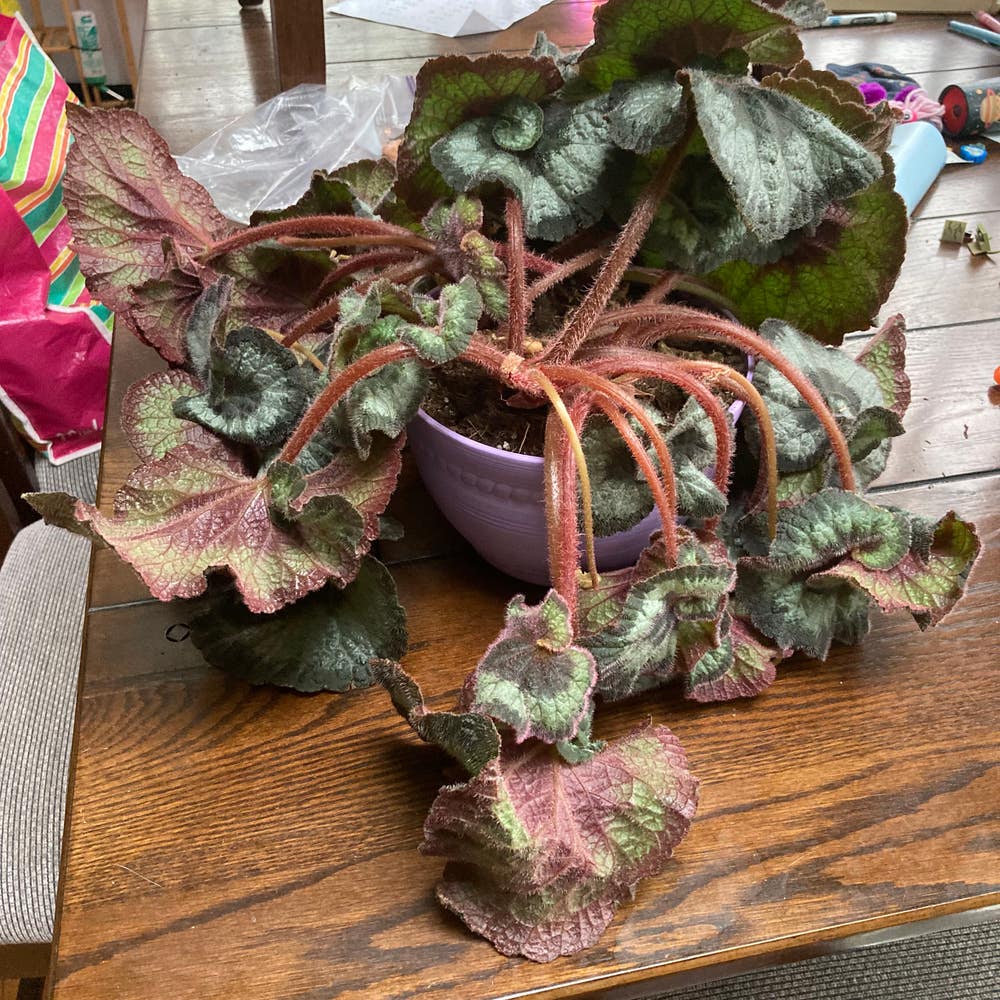
🐌 Why Are My Rex Begonia 'Escargot' Leaves Mushy?
Begonia 'Escargot'
By the Greg Editorial Team
Jun 18, 2024•4 min read
This article was created with the help of AI so we can cover more plants for you. May contain errors. See one? Report it here.
Unravel the secret to firm, healthy 'Escargot' leaves and bid farewell to mushiness! 🍃🔍
- Overwatering leads to mushy leaves, check soil moisture with your finger.
- 🚫💧 Poor drainage causes root rot, ensure pot has free-flowing holes.
- 📅 Set a watering schedule, use moisture meter or finger test.
Spotting Trouble: Signs Your 'Escargot' is Too Soggy
💦 Overwatering Overload
If your Rex Begonia 'Escargot' leaves feel more like a wet sponge than a crisp leaf, you're likely dealing with overwatering. Leaves may swell up, looking as bloated as a balloon before a birthday party pops.
To check if you're overdoing it with the H2O, stick your finger into the soil. If the top inch feels like a damp basement, it's time to give your watering can a rest. Remember, your 'Escargot' prefers a drink, not a dive.
🚰 Drainage Drama
When your 'Escargot' is more submerged than a submarine, you've got a drainage issue. A quick peek at the bottom of your pot should reveal whether it's a mini pool party for unwanted root guests.
Check if water drains freely through the pot's holes. If it doesn't, you're one step away from crafting an accidental bog for your begonia. Make sure your pot isn't holding water hostage – your 'Escargot' isn't training for an underwater marathon.

Root Rot: The Silent Leaf Killer
🌱 Unearthing the Problem
Root rot is the stealthy saboteur of your Rex Begonia 'Escargot'. It's not just about the leaves; it's a subterranean crisis. Mushy leaves are the distress signals your plant sends when its roots are in jeopardy. If the roots look like they've seen better days—dark, slimy, and anything but firm—it's time to play plant detective.
🌿 The Root of the Matter
Root rot doesn't just stay underground; it climbs up, turning your 'Escargot' into a mushy mess. This condition is a death sentence if left unchecked, as it prevents the plant from absorbing essential nutrients and water. Think of it as a clogged pipe in your plant's plumbing system—nothing good comes from it.

Turning the Tide: Saving Your 'Escargot' from Sogginess
💧 Water Wisely
Fine-tuning your watering routine is crucial for a thriving 'Escargot'. It's not about marking days on a calendar; it's about observing and responding to your plant's needs. The soil should feel like a well-wrung sponge—moist but not wet.
Probe the soil with your finger; if the top inch feels dry, it's time to water. Established plants in larger pots can go a bit longer, waiting until the top two inches are dry. Remember, the leaves are off-limits—water the soil directly to avoid trapping moisture in the foliage.
🚰 Drainage to the Rescue
Upgrade your potting mix to ensure swift water flow and prevent root suffocation. A blend of coconut coir and perlite strikes the right balance between water retention and drainage.
Choose a pot that's the Goldilocks of containers—not too big, not too small, and with drainage holes that scoff at excess water. If you're forgetful, consider a self-watering pot, but if you're hands-on, make checking the soil's moisture a daily ritual.

Keeping Your 'Escargot' High and Dry
💧 A Watering Schedule That Works
Crafting a watering calendar for your Rex Begonia 'Escargot' isn't rocket science, but it does require attention to detail. Water every 8 days, or adjust based on the dryness of the topsoil. Use a simple calendar alert to remind you; it's like having a personal assistant for plant care.
- Check the soil before watering. If the top inch is dry, it's time to hydrate.
- Direct watering to the soil to avoid wetting the leaves, which can lead to disease.
🛠 Tools and Tricks for Getting the Moisture Level Just Right
Invest in a moisture meter for a no-guess game in hydration. It's like a thermometer for your plant's thirst. Alternatively, trust the old-school finger test— if the top inch of soil feels like a dry handshake, it's watering time.
- Use room-temperature water to avoid shocking the roots.
- Consider a drip irrigation system if you're prone to forgetfulness. It's like a slow and steady IV drip for your plant.
🌱 Root Vigilance
Regular root inspections are like check-ups for your plant's underground world. Gently unpot your 'Escargot' to ensure the roots are white and firm, not brown and mushy.
- Repot with a mix of coconut coir and perlite for that perfect moisture balance.
- Maintain around 50% humidity. Use a pebble tray or humidifier, but don't aim it directly at your plant.
Keeping the roots strong and the leaves firm is all about balance. It's a dance between too much and too little, and your 'Escargot' relies on you to lead.
⚠️ Safety First
This content is for general information and may contain errors, omissions, or outdated details. It is not medical, veterinary advice, or an endorsement of therapeutic claims.
Always consult a qualified healthcare professional before using any plant as food, medicine, or supplement.
Never eat any plant (or feed one to pets) without confirming its identity with at least two trusted sources.
If you suspect poisoning, call Poison Control (800) 222-1222, the Pet Poison Helpline (800) 213-6680, or your local emergency service immediately.
Spotted an error? Please report it here.
Ensure your Rex Begonia 'Escargot' thrives with crisp, healthy leaves 🍃 by leveraging Greg's custom watering plan and moisture monitoring for unbeatable plant care success.