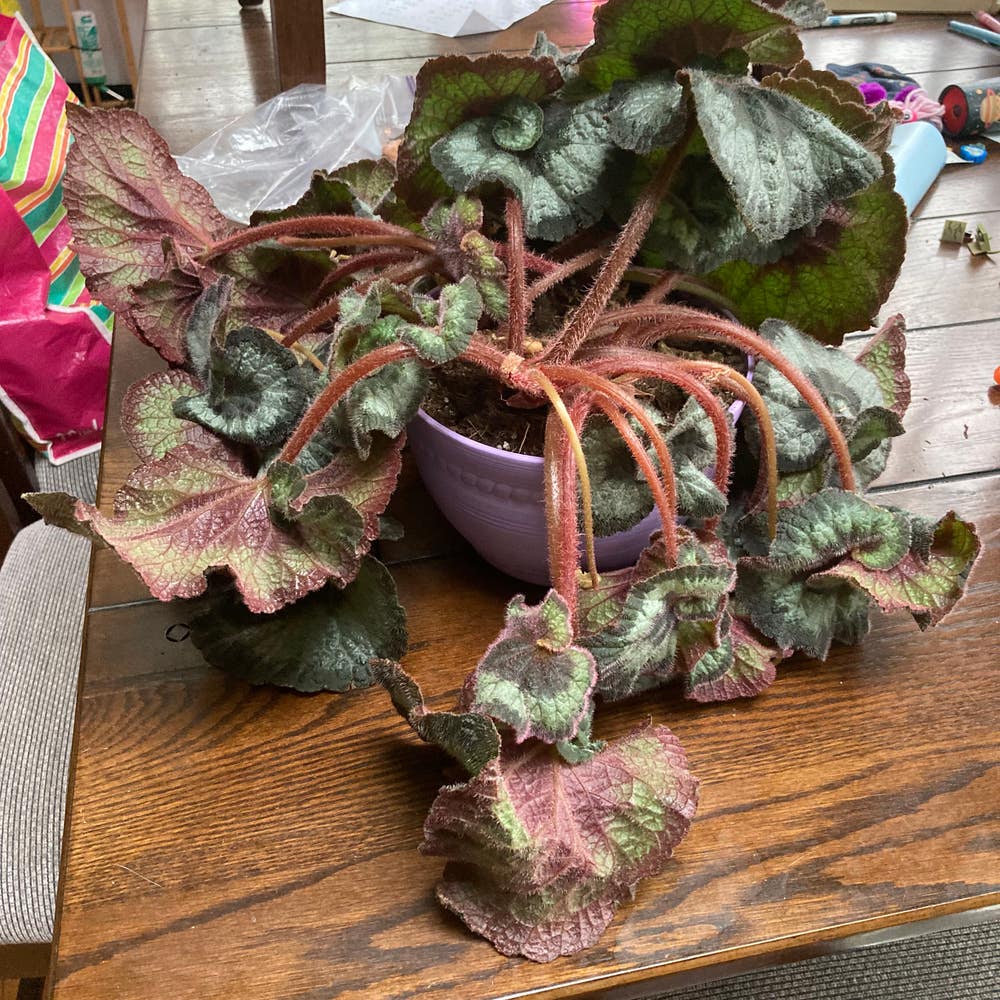
🐌 Why Are My Rex Begonia 'Escargot' Leaves Curling?
Begonia 'Escargot'
By the Greg Editorial Team
Jun 18, 2024•3 min read
This article was created with the help of AI so we can cover more plants for you. May contain errors. See one? Report it here.
Discover why your Rex Begonia 'Escargot' leaves are curling 🌀 and learn to fix it for lush, healthy growth! 🌿
- Spot leaf curling early by checking for discoloration or stunted growth.
- Balance watering and drainage to prevent root issues; touch soil to gauge moisture.
- Maintain 60°F-75°F and steady humidity to keep your Rex Begonia stress-free.
Spotting the Signs of Trouble
🌿 Recognizing Leaf Curling
When Rex Begonia 'Escargot' leaves start to mimic a fiddlehead fern more than their natural spiral, it's time to take note. Early signs of trouble include leaves that twist or curl more than usual, departing from their typical elegant swirl.
🔄 Differentiating Between Natural and Problematic Curling
Understanding what's normal for your Rex Begonia 'Escargot' is key. Natural curling is part of its snail-like charm, but when leaves start to look like they're in a perpetual state of shrinkage, that's your cue. Problematic curling often comes with other distress signals like discoloration or stunted growth. Keep an eye out for these anomalies; they're your plant crying out for help.

Rooting Out the Causes
💧 When Thirst Goes Wrong
Watering your Rex Begonia 'Escargot' is a balancing act. Too much water, and the roots might as well be fish; too little, and your plant's thirstier than a marathon runner without a water station. Proper drainage is crucial—it's the difference between a plant that thrives and one that just survives.
🌡️ The Climate Factor
Temperature and humidity swings are like unexpected plot twists for your Rex Begonia—they don't appreciate the surprise. Keep the thermometer steady between 60°F and 75°F, and maintain a humidity level that doesn't swing more than a trapeze artist. Inconsistency is the nemesis of those spiraled leaves.
🌱 Soil and Roots: The Hidden Culprits
Soil quality and root health are the unsung heroes of the plant world. If your Begonia's roots are as unhappy as a cat in a bath, it's time to check the soil. It should be well-draining, like a sieve, not a swamp. Root health is paramount; neglect it, and you'll see more curls than in a hair salon.

Turning Over a New Leaf
💧 Balancing the Watering Equation
Watering your Rex Begonia 'Escargot' is less about sticking to a strict schedule and more about understanding its needs. Check the top inch of soil; if it's dry, it's time to water. If it's damp, wait it out. Overwatering leads to a soggy mess, while underwatering leaves your plant high and dry. Aim for moist, not drenched, soil.
🌡️ Creating the Ideal Microclimate
Your Rex Begonia thrives in stable conditions. Avoid placing it in the path of harsh drafts or direct heat sources. Use a humidifier or pebble tray to maintain consistent humidity levels. Think of it as creating a cozy bubble where your plant can flourish without the shock of sudden environmental changes.
🌱 Soil and Root Rehab
Healthy roots need the right soil mix. Ensure your soil is well-draining yet retains enough moisture. If it's too dense, mix in some perlite or sand. If it's too loose, consider adding some peat. When repotting, trim away any rotted roots to prevent disease and encourage new growth. Remember, your plant's roots are its lifeline—treat them with care.

Keeping Pests and Diseases at Bay
🐜 Spotting the Invaders
Pests and diseases can turn your Rex Begonia 'Escargot' into a battleground. Vigilance is your best defense. Look for telltale signs like sticky honeydew from aphids or the fine webs of spider mites. Fungal diseases often manifest as discolored spots on leaves.
💪 Effective Treatment Strategies
Once you've identified the culprits, it's time for action. For pests, insecticidal soaps or neem oil can be your first line of defense. Apply thoroughly, ensuring you cover the undersides of leaves. For fungal issues, remove affected foliage and consider a fungicide. Remember, improving air circulation can prevent future outbreaks. Keep your tools clean and your plants quarantined when necessary to stop the spread of disease.
⚠️ Safety First
This content is for general information and may contain errors, omissions, or outdated details. It is not medical, veterinary advice, or an endorsement of therapeutic claims.
Always consult a qualified healthcare professional before using any plant as food, medicine, or supplement.
Never eat any plant (or feed one to pets) without confirming its identity with at least two trusted sources.
If you suspect poisoning, call Poison Control (800) 222-1222, the Pet Poison Helpline (800) 213-6680, or your local emergency service immediately.
Spotted an error? Please report it here.
Solve your Rex Begonia 'Escargot' leaf-curl conundrum effortlessly 🕵️♂️ with Greg's tailored environment tracking and care tips.