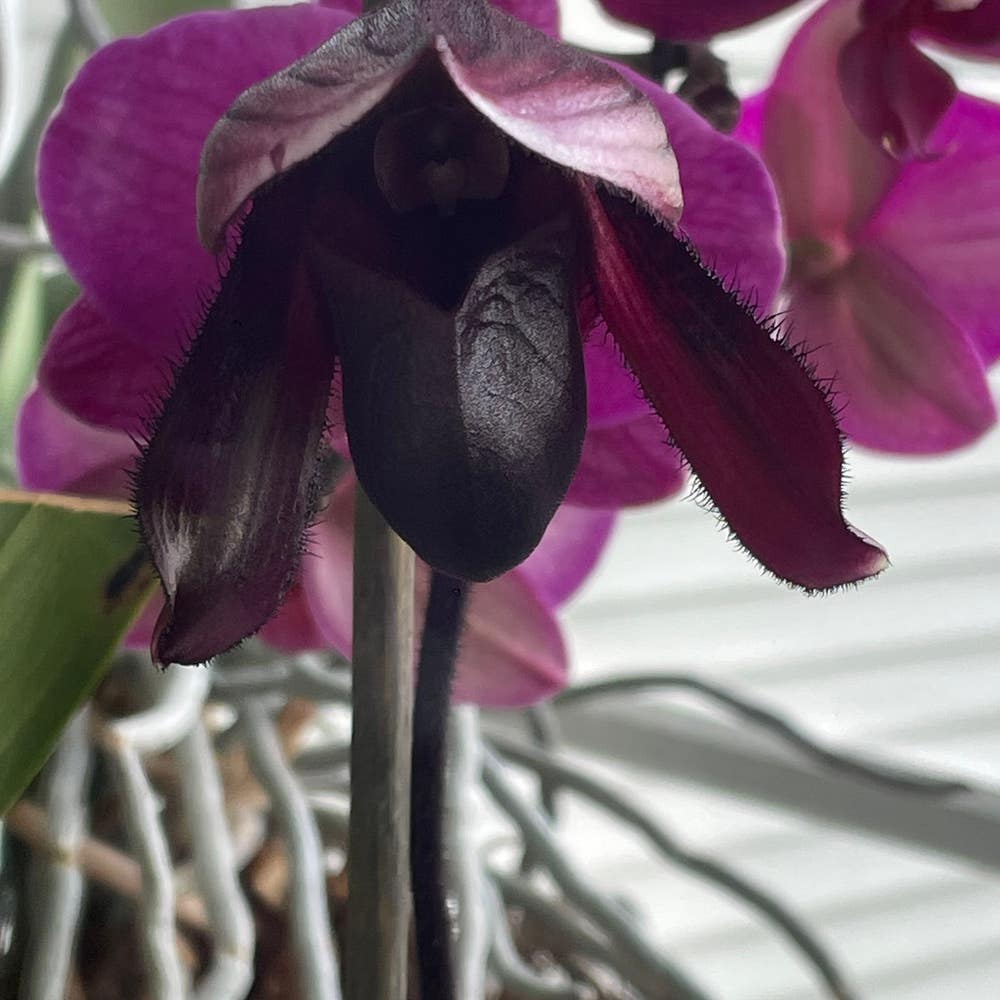
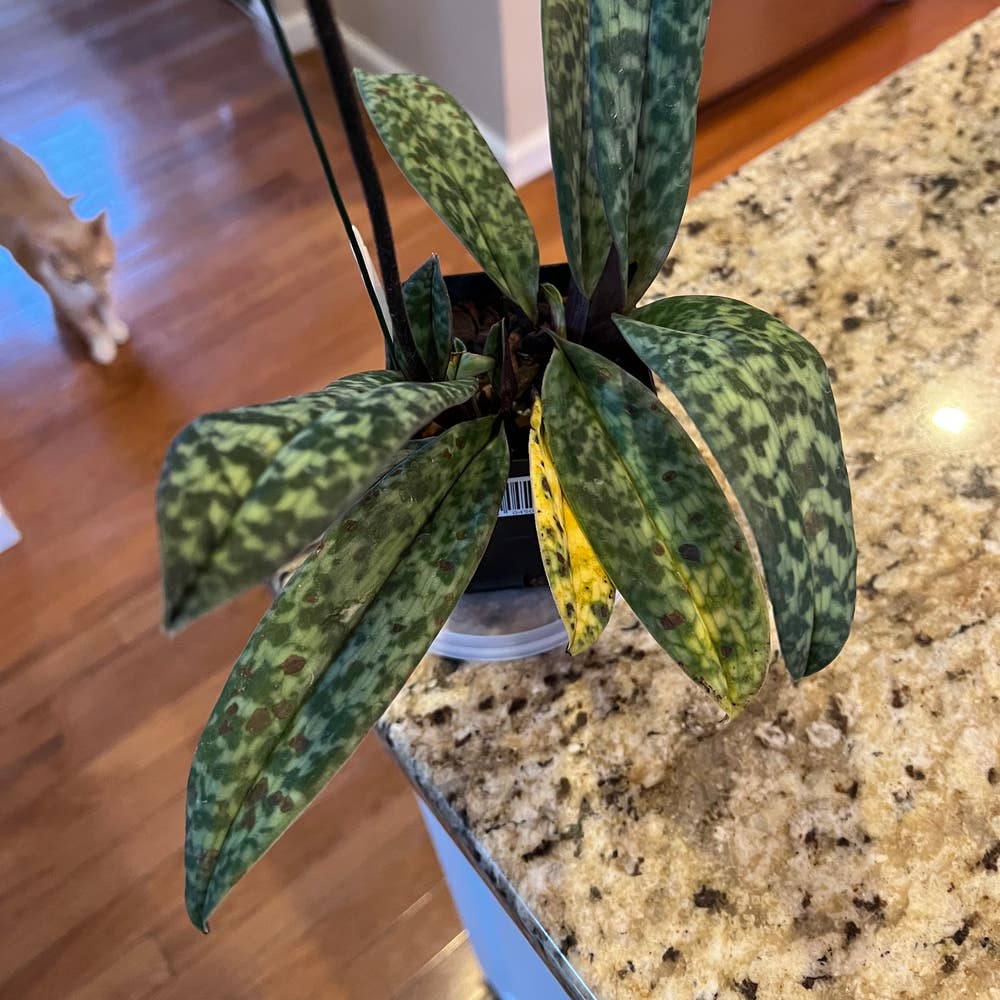
Paphiopedilum 'maudiae Femma' Leaves Falling Over
Paphiopedilum 'Maudiae Femma'
By the Greg Editorial Team
Mar 06, 2024•4 min read
This article was created with the help of AI so we can cover more plants for you. May contain errors. See one? Report it here.
- Overwatering and underwatering can both cause leaf droop; balance is key.
- Well-draining soil and pots prevent root rot and promote healthy roots.
- Stable environment with indirect light and proper humidity keeps leaves perky.
When Water Works Against You
💧 Too Much H2O: The Perils of Overwatering
Spotting the signs of overindulgence in water
Overwatering can turn your Paphiopedilum 'Maudiae Femma' into a soggy mess. Yellow leaves and a heavy pot are tell-tale signs you've been too generous with the watering can. If the soil emits a stench reminiscent of forgotten laundry, it's a red flag.
Fine-tuning your watering routine
To avoid waterlogging your orchid, let your fingers be the judge. The soil should feel damp, not drenched. Adjust your watering to when the top inch of soil feels dry. Embrace a routine that's more rhythm, less random, to keep your plant's hydration in check.
💦 When Thirst Strikes: The Underwatering Balancing Act
Recognizing a parched 'Maudiae Femma'
Underwatering leaves your orchid as crispy as autumn leaves. If the foliage has the texture of a stale cracker, it's time to up your watering game. A moisture meter can be your secret weapon against dehydration, offering a clear verdict on when to water.
Crafting the perfect watering schedule
Strike a balance with a watering schedule that's just right. Water deeply but infrequently, allowing the soil to reach that moist chocolate cake consistency. Monitor changes in weather and indoor conditions, adjusting your watering accordingly. Remember, consistency is key – your plant craves regular sips, not a feast-or-famine approach.
The Ground Beneath Their Feet: Soil and Drainage
🚰 The Pitfalls of Poor Drainage
Identifying drainage disasters is crucial for your Paphiopedilum 'Maudiae Femma'. Soggy soil is like a silent alarm for potential root rot. If the pot's base is more waterlogged than a marshland, you've got trouble. Ensure your pots have enough holes to make a colander jealous.
Mixing up the ideal home for your orchid involves choosing the right potting medium and container. A mix of bark, charcoal, and perlite or sand ensures a light, airy soil that lets water run through it like it's late for an appointment. Remember, the pot size matters too—too big, and you risk water retention; too small, and your orchid becomes root-bound.
🌱 Repotting for Relief
When your orchid's leaves start to droop, it might be time to give it a fresh start. Repotting isn't just about upgrading real estate; it's about refreshing the roots' environment. Aim to repot every 1-2 years or when you notice the potting mix breaking down.
How to repot? Gently remove your orchid, trim any dead or rotting roots, and place it in a new pot that's snug but not tight. This isn't just a change of scenery—it's a full-blown intervention. With fresh, well-draining soil and a pot with proper drainage holes, you're setting the stage for a comeback.
Keeping the Peace: Environmental Harmony
🛡️ Shielding from the Storm: Temperature and Drafts
Temperature stability is crucial for the 'Maudiae Femma'. Aim for warm (80-90°F days, 65-70°F nights), intermediate (70-80°F days, 55-65°F nights), or cool (60-70°F days, 50-55°F nights) conditions, depending on your specific orchid's needs.
Avoid placing your orchid near drafty windows or vents; these can cause sudden temperature fluctuations. Instead, find a spot where the air is calm, and the temperature is as consistent as your favorite diner's pie recipe.
🚪 Draft-proofing your plant's environment
Keep a vigilant eye on the thermostat to prevent your orchid from experiencing temperature-induced shock. Use a sheer curtain to protect your plant from direct sunlight, which can cause leaf scorch.
Good air circulation is vital but avoid strong drafts. A gentle fan can promote airflow without creating a miniature tornado in your living room.
🌞 Light and Humidity: The Dynamic Duo
Finding the right light is like tuning a guitar; it needs to be just perfect. Bright, indirect light will keep your 'Maudiae Femma' happy without the scorch of direct sun. If your orchid starts reaching for light, it's time to adjust its position.
Humidity is the silent partner in this relationship. Aim to mimic the orchid's natural habitat without turning your home into a tropical swamp. A humidifier, pebble tray, or simply grouping plants together can help maintain the right moisture levels.
Remember, the goal is to create a stable, harmonious environment that allows your 'Maudiae Femma' to thrive without turning your living space into a plant ICU.
Rooting for Health: The Root of the Problem
🕵️♂️ Inspecting the Invisible: Checking Root Health
Root health is crucial for your Paphiopedilum 'Maudiae Femma'. To inspect, gently remove the plant from its pot. Healthy roots are firm and green. If they're brown and mushy, that's root rot. Greyish-white? Your plant's thirsty.
🌱 Fostering Strong Roots
Consistent care is key to robust root growth. Ensure proper watering—only when the soil feels dry. Think of it as giving your plant a steady diet of hydration. Use a well-draining potting mix to prevent waterlogging, which can be fatal.
⚠️ Safety First
This content is for general information and may contain errors, omissions, or outdated details. It is not medical, veterinary advice, or an endorsement of therapeutic claims.
Always consult a qualified healthcare professional before using any plant as food, medicine, or supplement.
Never eat any plant (or feed one to pets) without confirming its identity with at least two trusted sources.
If you suspect poisoning, call Poison Control (800) 222-1222, the Pet Poison Helpline (800) 213-6680, or your local emergency service immediately.
Spotted an error? Please report it here.
Prevent your Paphiopedilum 'maudiae Femma' leaves from drooping by following a custom watering plan 🌱 from Greg, tailored to keep your orchid's roots healthy and hydrated without the guesswork.