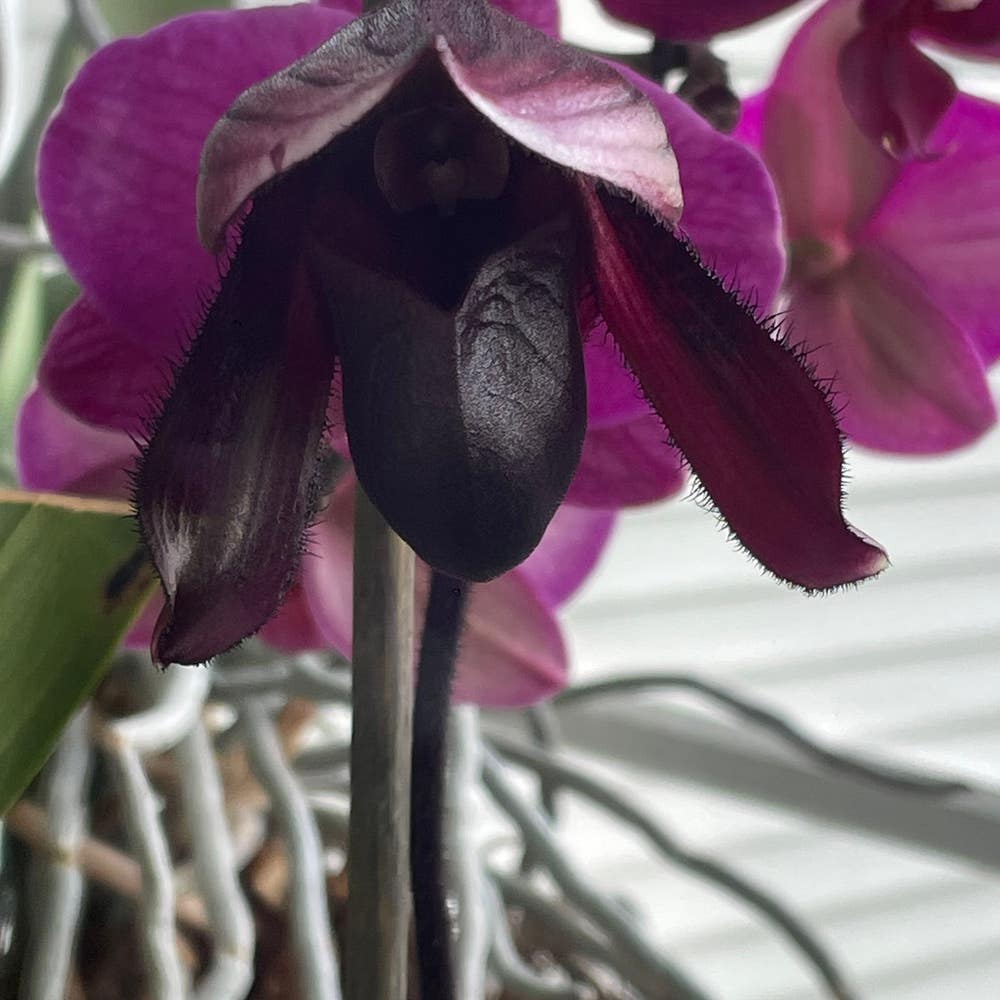
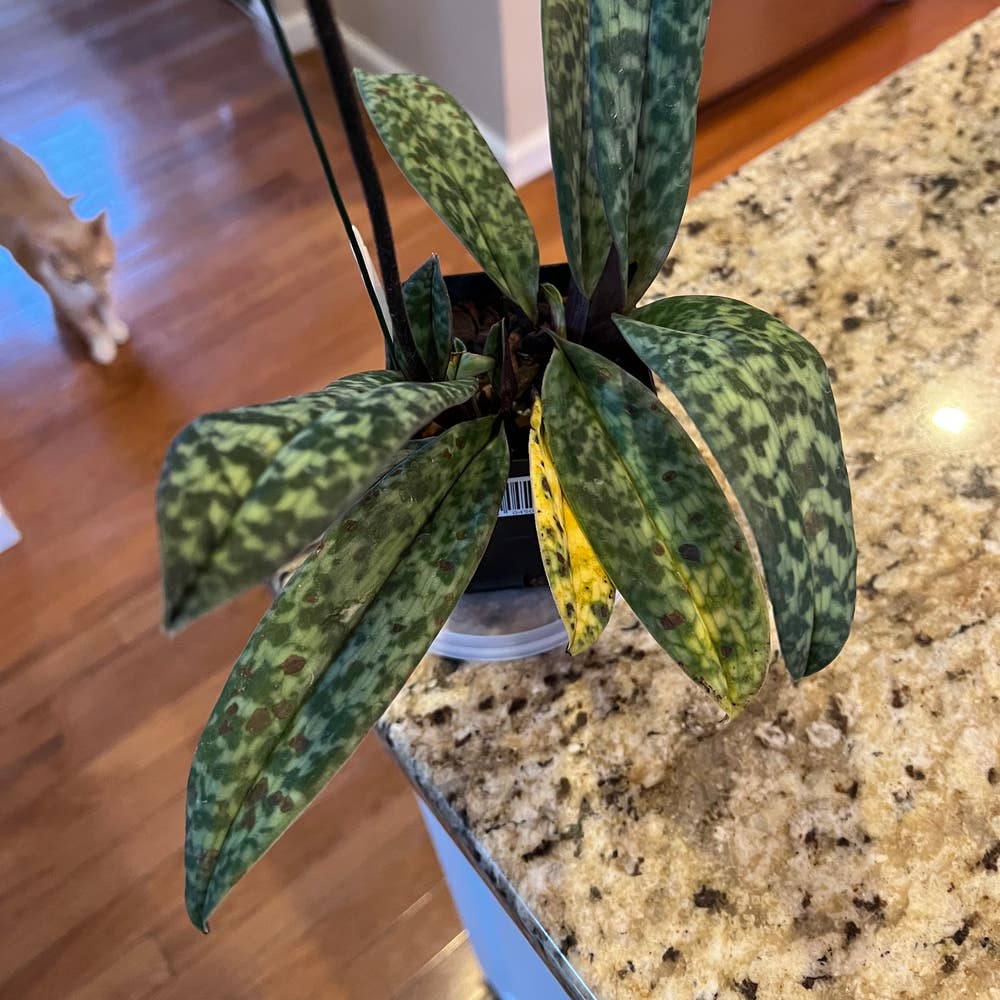
Why Are My Paphiopedilum 'Maudiae Femma' Leaves Curling?
Paphiopedilum 'Maudiae Femma'
By the Greg Editorial Team
Mar 06, 2024•5 min read
This article was created with the help of AI so we can cover more plants for you. May contain errors. See one? Report it here.
- 🌡️🌿 Temperature, humidity, and light affect leaf curling; balance is key.
- 💧 Water wisely—let topsoil dry slightly between waterings.
- 🥄 Feed carefully with balanced, water-soluble fertilizer to avoid deficiencies.
Spotting the Culprits: What's Making My Orchid Leaves Curl?
🌡️ Temperature and Humidity Troubles
Orchids are not fans of climate swings. Temperature and humidity dictate their mood swings—too hot or cold, and they'll protest with curled leaves.
Visual Signs of Distress
Look for leaves that seem to be throwing a tantrum—curling is their distress signal. Also, watch for dehydration wrinkles or a soggy base from overwatering.
Quick Fixes
Keep your 'Maudiae Femma' from throwing a fit by aiming for 40-70% humidity. Use a hygrometer to monitor levels and adjust with a humidifier or fan as needed.
💧 Water Woes: Too Much or Too Little?
Overwatering and underwatering can send your orchid's leaves into a spiral of despair.
Identifying the Signs
If the leaves are more wrinkled than a linen shirt, it's time to dial back the water. Soggy roots? Hold off on the H2O.
Perfecting the Watering Balance
Let the topsoil dry slightly between waterings. It's about consistency—orchids appreciate a predictable drink schedule.
🌞 Light Levels: Finding the Sweet Spot
Light is like an orchid's favorite food, but too much or too little can cause leaf curling drama.
Recognizing Symptoms
If your orchid's leaves are reaching for the sky or looking sunburnt, it's time to reassess their light diet.
Adjusting the Routine
Find that sweet spot of bright, indirect light. Rotate your plant to avoid growth tantrums and keep the leaves content.
Turning the Tide: How to Unfurl Those Leaves
🌿 Fine-Tuning Your Orchid's Environment
Creating a stable environment is crucial for your Paphiopedilum 'Maudiae Femma'. Orchids aren't fans of change, especially rapid ones. Ensure temperatures are consistent, avoiding fluctuations that could stress your plant.
Humidity is another piece of the puzzle. Aim for that sweet spot—not too dry, not a tropical storm. Use a humidity tray or a room humidifier to maintain moisture levels without going overboard.
💧 Mastering Moisture for Majestic Leaves
Overwatering and underwatering are the archenemies of orchid health. Check the top inch of the potting mix; if it's dry, it's time to water. If it's damp, give it a break.
Ensure drainage is on point. Your orchid's roots should never sit in water. Choose pots with drainage holes and use a potting mix that allows water to flow freely.
☀️ Let There Be (The Right Amount of) Light
Light is like an orchid's best friend—it just can't live without it. But too much of a good thing can lead to leaf burn, while too little results in a lackluster plant.
Place your 'Maudiae Femma' in bright, indirect light. If the leaves are dark green and limp, it's begging for more light. If they're bleached or reddish, it's screaming for some shade. Adjust as needed, and watch your orchid flourish.
Feeding Your 'Maudiae Femma': A Balanced Diet to Prevent Curling
🌱 Spotting Nutrient Deficiencies
Nutrient deficiencies in Paphiopedilum 'Maudiae Femma' can be as subtle as a whisper or as loud as a shout. Pale leaves curling inwards scream for iron and magnesium. On the flip side, a heavy hand with fertilizer leads to nutrient burn, and yes, more curling.
🌿 Fertilizing Do's and Don'ts
When it comes to feeding your 'Maudiae Femma', think of fertilizer as a spice—too much ruins the dish. A balanced, water-soluble fertilizer is your best bet. Use it sparingly; overfeeding is like giving your orchid a sugar rush it didn't ask for. Stick to the manufacturer's instructions to avoid the dreaded soil detox. Keep an eye out for brighter green leaves and new growth—it's like a thumbs-up from your orchid.
Keeping Curly Leaves at Bay: Ongoing Care Strategies
🕵️ Routine Checks and Balances
Regular vigilance is your Paphiopedilum 'Maudiae Femma's' best defense against the dreaded leaf curl. Establish a care schedule that's as reliable as your favorite morning brew. This means daily inspections—like a plant whisperer, you're tuning in to your orchid's subtle signals of distress.
The Art of Observation
Keep your eyes peeled for early warning signs: discoloration, strange patterns, or the beginning of curl. It's like being a plant sleuth, always on the case to prevent the curl before it becomes a full-blown botanical blunder.
🔄 Proactive Plant Check-Ups
Rotate your orchid periodically to promote even growth and avoid a lopsided look. Dusting the leaves is not just about keeping up appearances—it's crucial for efficient photosynthesis. Think of it as giving your plant a clear pair of glasses to soak in that sweet, sweet sunlight.
Adjusting Care to Seasons
Remember, your 'Maudiae Femma' can't move itself to a more comfortable spot—it's counting on you. Adjust watering during cooler months and tweak shade during the summer blaze. It's like adjusting the thermostat for someone who can't reach it—courtesy and care go hand in hand.
📊 Regular Monitoring and Adjustments
Catch pests early by inspecting the leaves with each watering. If you spot trouble, reach for insecticidal soap or neem oil. It's your first line of defense in the ongoing battle against the bugs that want a piece of your green paradise.
Watering Wisdom
Here's the Goldilocks principle of plant care: not too much, not too little, but just right. Ensure the soil is dry to the touch before watering again. Overwatering is the fast track to curl city, and we're not about that life.
Consistency is Key
Craft a watering and fertilizing schedule that's as dependable as your alarm clock. Regularity is the cornerstone of preventing leaf curl. It's less about doing a lot at once and more about doing a little with unwavering consistency.
⚠️ Safety First
This content is for general information and may contain errors, omissions, or outdated details. It is not medical, veterinary advice, or an endorsement of therapeutic claims.
Always consult a qualified healthcare professional before using any plant as food, medicine, or supplement.
Never eat any plant (or feed one to pets) without confirming its identity with at least two trusted sources.
If you suspect poisoning, call Poison Control (800) 222-1222, the Pet Poison Helpline (800) 213-6680, or your local emergency service immediately.
Spotted an error? Please report it here.
Ensure your orchid's leaves stay unfurled and fabulous 🌿 with Greg's custom reminders for the ideal watering and light conditions, keeping leaf curl at bay.