Why Is My Paphiopedilum 'Maudiae Femma' Dropping Leaves?
Paphiopedilum 'Maudiae Femma'
By the Greg Editorial Team
Mar 06, 2024•6 min read
This article was created with the help of AI so we can cover more plants for you. May contain errors. See one? Report it here.
- Normal vs. abnormal leaf drop: Learn to spot orchid distress signals.
- Balance in care is crucial: Temperature, humidity, light, and watering matter.
- Prevent pests and diseases: Regular checks and early treatment save leaves.
When Leaves Say Goodbye: Spotting Abnormal Leaf Drop
🍂 Normal vs. Abnormal Leaf Shedding
Orchids shed leaves, but knowing the difference between routine and SOS is key. If your Paphiopedilum 'Maudiae Femma' is dropping leaves faster than a clumsy waiter drops plates, it's time to pay attention. Normal shedding is like a graceful exit at a party—planned and discreet. Abnormal is the chaotic, uninvited exit that leaves everyone talking.
🚨 Signs of Distress in Leaves
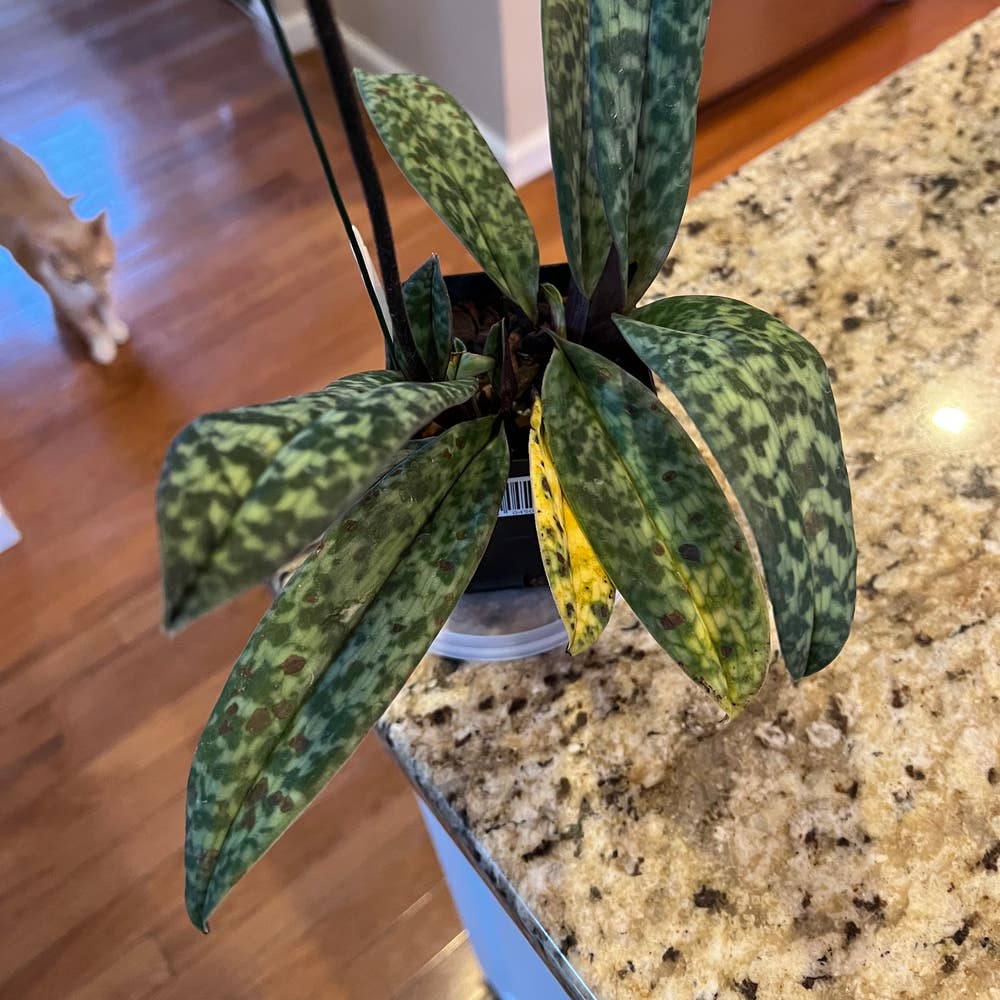
Yellow tips or an uptick in leaf drop, especially in new growth, should set off alarms. Consistent spotting or discoloration isn't a fashion statement; it's trouble. If the leaves of your orchid are throwing shade with weird spots or discoloration, they're not trying to be edgy—they're signaling distress.
Leaves that feel warmer than your morning coffee mug are crying out for cooler air and shade. Sunburned spots with a reddish-purple tint are not a trend; they're a cry for help. And if the pseudobulbs look shriveled, your orchid is screaming for hydration.
When leaves detach with a gentle touch, they're not playing hard to get; they're in trouble. Brown spots or mushy textures are your plant's way of sending an SOS. Detecting unnatural leaf drop is like realizing your quiet friend is actually screaming internally. Keep an eye out for wilting, which can indicate everything from water stress to temperature extremes. Remember, a plant's cry for help is often written in its leaves.
The Usual Suspects: Environmental and Care Factors
🔍 Playing Detective with Temperature and Humidity
Temperature and humidity are the Sherlock and Watson of orchid care—indispensable and complementary. Too hot or too cold, and your Paphiopedilum 'Maudiae Femma' might start shedding leaves faster than a dog sheds fur in summer. Aim for a steady temperature, avoiding fluctuations that stress your plant.
Humidity is the silent partner in the room, often overlooked but crucial. Your orchid doesn't want to live in a desert or a swamp. Strive for that 40%-60% humidity sweet spot to keep the leaves firm and happy.
💡 Light: How Much Is Too Much?
Light is like the Goldilocks of plant care—not too much, not too little, but just right. Direct sunlight can turn leaves into crispy critters, while too little light leaves them reaching for the sun. Provide bright, indirect light to keep your orchid's leaves from staging a dramatic exit.
Rotate your plant regularly to ensure even light exposure. This prevents the lopsided tan and promotes a balanced growth, keeping your orchid's leaves from dropping out of sheer embarrassment.
🚰 Water Woes: Finding the Balance
Watering is a high-stakes game of precision. Overdo it, and you risk root rot; skimp on it, and your orchid's leaves will wrinkle faster than a prune in the sun. The potting medium should be your guide—let it dry slightly between waterings, but never let it become as dry as a bone.
Remember, your orchid's watering needs change with the seasons and environmental conditions. Keep an eye out for yellow leaves—they're the snitches telling you you've gone overboard with the H2O.
Below the Surface: Roots and Nutrition
🌱 The Root of the Problem
Roots are the lifeline of your Paphiopedilum 'Maudiae Femma'. When leaves drop, it's a distress signal from below. Compacted soil or a decomposed medium suffocates roots, leading to leaf loss. It's time to play plant detective and inspect the potting mix. If it's denser than your last family gathering, it's too tight for comfort.
🥦 Feeding Frenzy: Nutrients Needed
Orchids aren't self-sufficient hermits; they need a steady diet of nutrients. A balanced fertilizer is like a multivitamin for your plant. But beware, overfeeding is like dumping the entire salt shaker on your meal—harmful. Stick to a half-strength liquid fertilizer every few weeks during growth spurts. In the off-season, let your orchid fast; it's not craving extra calories.
Orchid Enemies: Pests and Diseases
🐜 Uninvited Guests: Pests that Trigger Leaf Drop
Aphids, mealybugs, and scales are notorious for treating your Paphiopedilum 'Maudiae Femma' like a free buffet. These sap-suckers dehydrate leaves, prompting a distressing curl and drop. Regular checks are your orchid's bodyguards, with a strong water spray as the first line of defense.
Slugs and snails have a taste for the tender parts of your orchid, particularly the young roots and buds. Their feasting can lead to a weakened plant and subsequent leaf drop. Spotting slime trails? It's time to take action and protect your plant's vulnerable areas.
🦠 Disease: The Silent Leaf Thief
Fungal infections are the stealthy adversaries of your orchid. They thrive in moist conditions, so it's crucial to keep the leaves dry and water at the base. Pruning affected areas and applying fungicide can save your plant from these silent attackers.
Bacterial and viral infections often manifest as spots or discolorations on leaves. If left unchecked, these can lead to a weakened plant and leaf loss. Isolation of the affected plant is key, followed by a tailored treatment plan once the specific disease is identified.
Root rot and Fusarium wilt are particularly devastating. They attack the plant's lifeline, causing leaves to become dehydrated and drop. Cross-section checks for a purple ring can confirm Fusarium, necessitating immediate intervention.
Powdery mildew leaves a telltale white residue and demands increased air circulation and potential fungicide use. White patches on leaves should trigger a quick response to prevent spread.
In the battle against pests and diseases, proactive care is your orchid's armor. Regular inspections, targeted treatments, and a keen eye for the early signs of trouble can keep your Paphiopedilum 'Maudiae Femma' healthy and its leaves firmly in place.
Reviving the Fallen: Immediate and Preventative Care
🍂 First Aid for Fallen Leaves
When your Paphiopedilum 'Maudiae Femma' starts shedding leaves like a tree in autumn, it's crunch time. First, assess the soil; if it's soggy, let it dry out before the next watering. Conversely, if it's drier than a cracker, it's time to hydrate. Aim for consistently moist soil, not a swamp or a desert.
Keeping Leaves Loyal: Long-Term Care
For the long haul, think of your orchid care as a routine health check-up. Monitor your plant's response to light and water, and be ready to adjust. Keep a vigilant eye for pests and diseases, and don't hesitate to prune away any foliage that's past its prime. Remember, consistency is key to keeping your orchid's leaves from jumping ship.
⚠️ Safety First
This content is for general information and may contain errors, omissions, or outdated details. It is not medical, veterinary advice, or an endorsement of therapeutic claims.
Always consult a qualified healthcare professional before using any plant as food, medicine, or supplement.
Never eat any plant (or feed one to pets) without confirming its identity with at least two trusted sources.
If you suspect poisoning, call Poison Control (800) 222-1222, the Pet Poison Helpline (800) 213-6680, or your local emergency service immediately.
Spotted an error? Please report it here.
Keep your Paphiopedilum 'Maudiae Femma' thriving and leaf-drop free 🍃 with Greg's tailored care plans and proactive health monitoring, ensuring your orchid gets the perfect balance of light, water, and nutrients.