Black Spots on My Paphiopedilum 'Maudiae Femma' Leaves
Paphiopedilum 'Maudiae Femma'
By the Greg Editorial Team
Mar 06, 2024•4 min read
This article was created with the help of AI so we can cover more plants for you. May contain errors. See one? Report it here.
- Fungal, bacterial, or environmental causes lead to black spots.
- Fungicides and bactericides treat respective infections effectively.
- Prevent with airflow, humidity control, and proper watering.
Spotting the Culprit: Identifying Black Spots
🕵️ What Black Spots Look Like
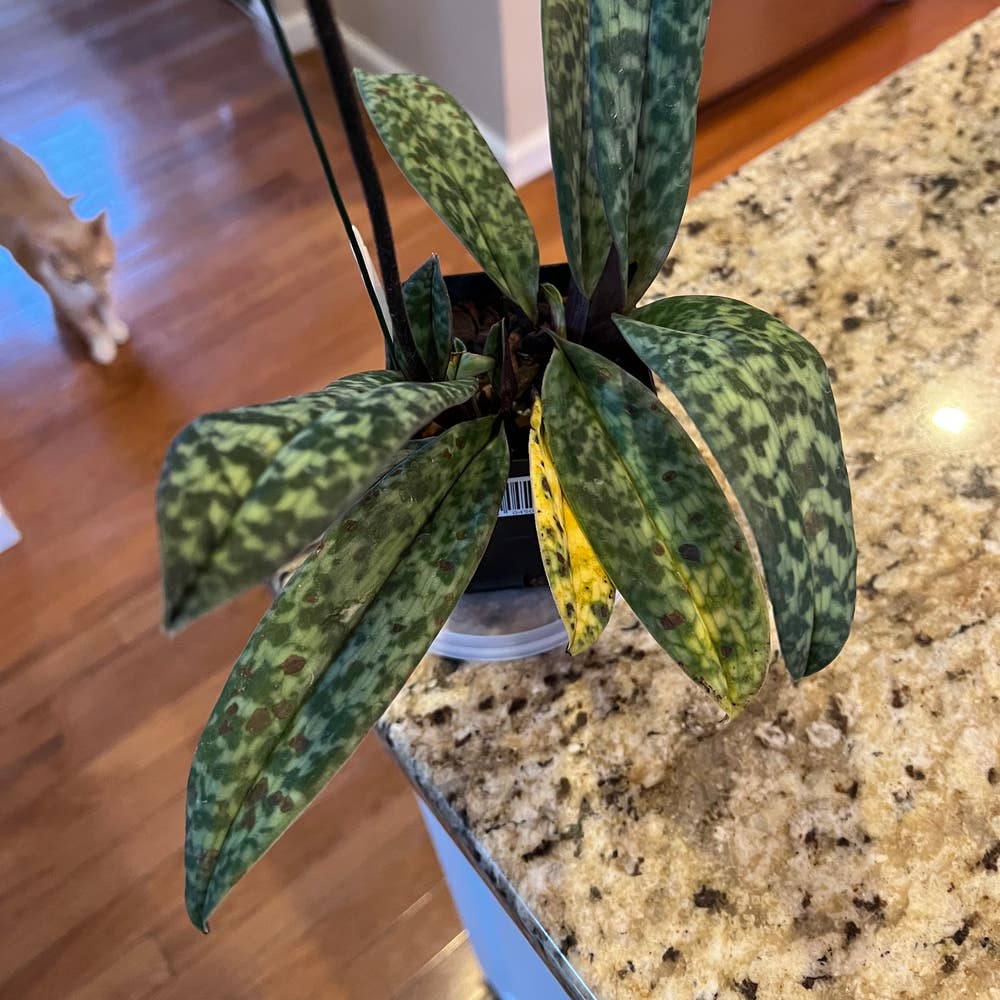
Black spots on your Paphiopedilum 'Maudiae Femma' are like unwanted guests at a party—they stand out. They may be circular or irregular, and less than ⅛ inch in diameter to start. Fungal spots might feel powdery, while bacterial ones could be slimy to the touch.
🕵️ Pinpointing the Problem
To figure out if the issue is fungal, bacterial, or environmental, you'll need to play detective. Check the texture and location of the spots. Fungal invaders often show up with circular lesions or a powdery coat. Bacterial spots are usually water-soaked and may start on lower leaves. If the spots are uniform or look sunburned, you might be dealing with environmental stress.
🦠 Fungal or Bacterial?
Fungal infections can present with concentric rings or dark margins. Bacterial issues might ooze or have a sticky residue. Both love moisture and can spread rapidly if not addressed.
🌿 Environmental Stressors
Spots from environmental stress lack the halos or ooze of infections. They might appear after your plant has been overwatered, exposed to excessive light, or suffered from poor air circulation.
🔍 Getting a Closer Look
If you're unsure, grab a magnifying glass. Look for fungal fruiting bodies or water-soaked areas. If you're still stumped, consider consulting a plant pathologist for a definitive diagnosis.
Unearthing the Causes
🍄 Fungal Foes
Fungi are the party crashers in the world of Paphiopedilum 'Maudiae Femma'. They thrive in the VIP section of dampness and poor air circulation. If you're not careful, they'll turn your orchid's leaves into their dance floor, leaving behind black spots as their signature move.
🦠 Bacterial Bullies
Bacteria, the silent assassins, are less about the razzle-dazzle and more about stealth attacks. Water-soaked lesions are their calling card, making leaves look like they've survived a monsoon. These bullies love to exploit stress factors, such as compromised immunity or the plant equivalent of a cluttered room.
🌍 Environmental Enemies
Then there's the environment—sometimes it's just not on your side. Sunburn is like a bad tan on your orchid's leaves, and physical trauma is as straightforward as a bruise. Watch out for toxins too; they're the sneaky saboteurs that can wreak havoc without you noticing.
Battling Black Spots: Treatment Tactics
🍄 Fungicide to the Rescue
When black spots invade your Paphiopedilum 'Maudiae Femma', it's time for fungicides to shine. Systemic fungicides are your best bet for entrenched infections, working from the inside out. For a preemptive strike, protectant fungicides are your shield, but they must be applied before the fungal fiesta begins. Remember, tebuconazole and triticonazole are the MVPs in this battle. Rotate your fungicides to outsmart any developing resistance.
💥 Bacteria Busters
Bacterial infections call for a different arsenal. Copper compounds and targeted bactericides are your first line of defense. Coverage is crucial; coat every leaf, both sides, like you're slathering sunscreen at the beach. Adjust your watering habits to avoid splashes and always sterilize your tools—think surgeon-level clean.
🌿 Fixing the Environment
Sometimes, the environment is the enemy. Too much love with water and light can lead to disaster. Fine-tune the balance—water at the base in the early morning and keep that humidity in check. Air circulation is your friend; it's like opening a window to clear out a bad smell. Keep your orchid's foliage dry; fungi love moisture as much as teenagers love a pool party.
Fortifying Your 'Maudiae Femma': Prevention Strategies
🌿 Cultural Strongholds
Airflow, humidity, and watering form the trifecta of orchid health. Prioritize these elements to prevent black spots from ever taking hold.
- Airflow: Keep the leaves dancing with a gentle breeze; a stagnant environment is a fungal playground.
- Humidity: Balance is key. Too much, and you're hosting a fungal fiesta; too little, and your orchid thirsts.
- Watering: Overwatering is the root of all evil—literally. It's an open invitation for pathogens.
👀 Regular Reconnaissance
Vigilance is non-negotiable. Regularly inspect your 'Maudiae Femma' for any signs of distress.
- Early Signs: Catching issues early can mean the difference between a quick fix and a full-blown crisis.
- Isolation: At the first hint of trouble, quarantine your plant. It's the ICU for orchids.
🌱 Tailored Environment
Craft an environment that's less 'black spot friendly' and more 'orchid utopia'.
- Light: Rotate your plant for even exposure, but shield it from harsh rays.
- Temperature: Consistency is comforting. Avoid dramatic fluctuations that stress your plant.
- Cleanliness: Sterilize pots and tools like you're prepping for surgery. Hygiene is a silent guardian.
- Soil: Choose well-draining soil that's rich in organic matter. It's the foundation of a healthy home.
⚠️ Safety First
This content is for general information and may contain errors, omissions, or outdated details. It is not medical, veterinary advice, or an endorsement of therapeutic claims.
Always consult a qualified healthcare professional before using any plant as food, medicine, or supplement.
Never eat any plant (or feed one to pets) without confirming its identity with at least two trusted sources.
If you suspect poisoning, call Poison Control (800) 222-1222, the Pet Poison Helpline (800) 213-6680, or your local emergency service immediately.
Spotted an error? Please report it here.